A Tale of Two Harvests
Picture a beekeeper in late summer.
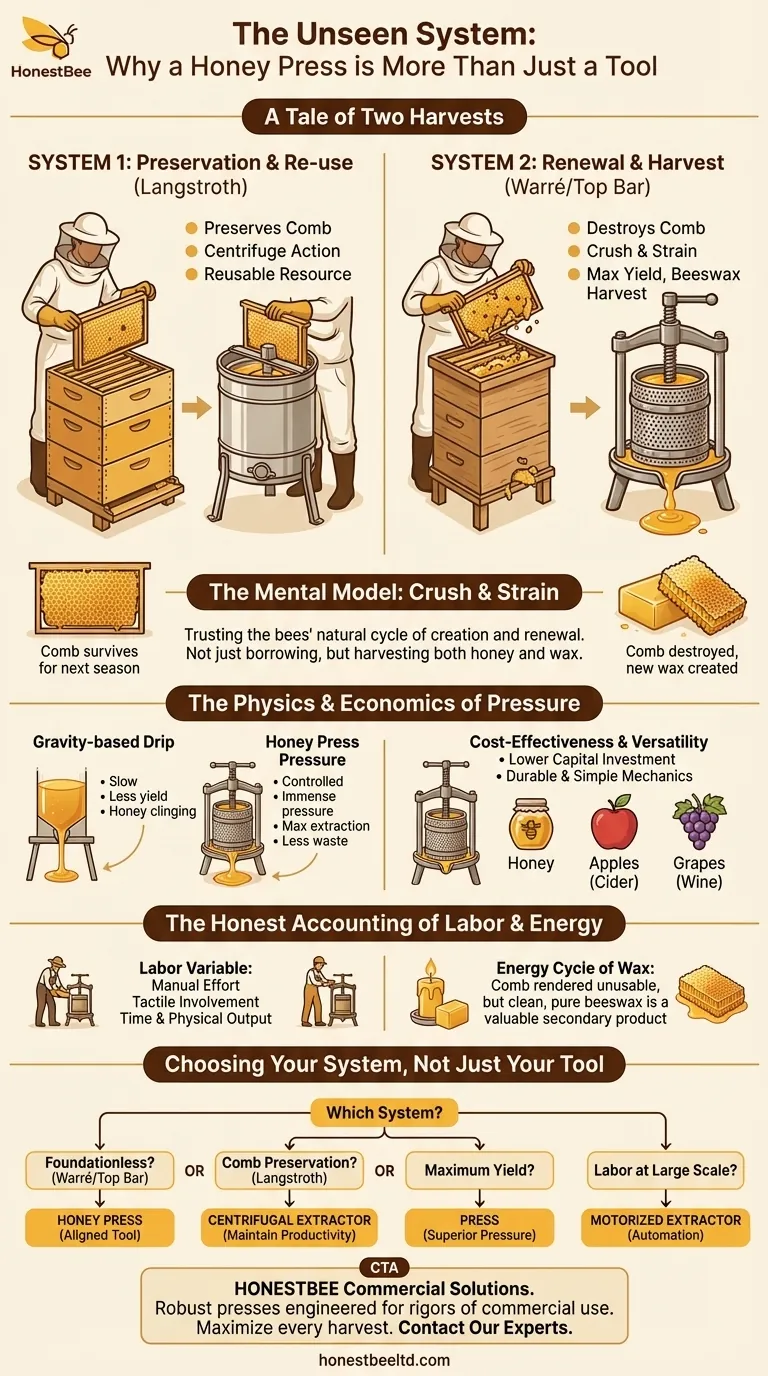
In one apiary, the beekeeper carefully pulls frames from a Langstroth hive. The comb is a precious resource, an architecture of wax that took thousands of bee-hours to build. Each frame is uncapped with surgical precision, placed in a centrifuge, and spun. The goal is preservation. The comb must survive to be used again.
In another apiary, a beekeeper lifts the top bar of a Warré hive. The comb, heavy with honey, is cut away whole. It is not a reusable asset; it is the harvest itself. It will be crushed, destroyed, and squeezed.
This isn't a story of right versus wrong. It's a story of two entirely different operating systems. And your tools must match your system.
The Mental Model of "Crush and Strain"
The decision to use a foundationless hive, like a Warré or Top Bar, is a psychological shift. It's a choice to trust the bees' instinct to build fresh comb each season, following a natural cycle of creation and renewal.
This philosophy directly dictates the harvest method: "crush and strain." You are not just borrowing the honey and returning the comb. You are completing the annual cycle by harvesting both the honey and the wax.
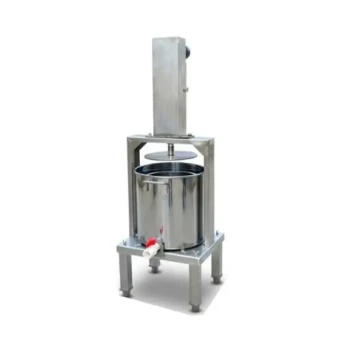
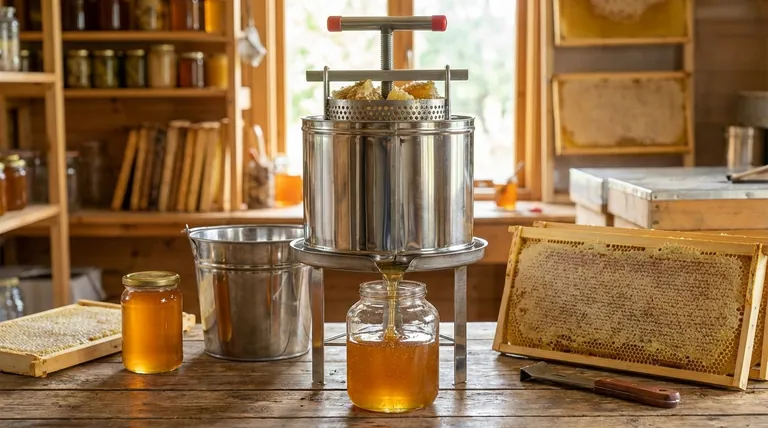
A honey press is the physical embodiment of this mental model. It is not designed for preservation. It is engineered for the elegant and efficient separation of honey from wax, honoring the principle that the comb has fulfilled its purpose.
The Physics and Economics of Pressure
Choosing a press is also a cold, calculated decision rooted in efficiency and physics. It’s about getting the most from your effort.
Maximizing Yield
Gravity-based drip-straining is a game of patience and inefficiency. It will always leave a significant amount of honey clinging to the wax.
A honey press changes the equation. By applying slow, steady, and immense pressure, it systematically collapses the wax cells, forcing out every last drop of honey. It's not brute force; it's a controlled process designed for maximum extraction. Less waste, more honey.
Cost-Effectiveness and Versatility
For small-to-medium scale operations, the economics are compelling. A robust honey press often requires a lower capital investment than a centrifugal extractor of similar capacity.
Its simple mechanical design—often just a screw, a plate, and a cage—also makes it incredibly durable and versatile. The same tool used for your honey harvest can be used to press apples for cider or grapes for wine, adding value far beyond the apiary.
The Honest Accounting of Labor and Energy
To choose a tool wisely, you must understand its true costs. A honey press demands an honest accounting of both human labor and the bees' energy.
The Labor Variable
There is no "easy button." A honey press is a manual tool. Crushing the comb, loading the press, turning the handle against mounting resistance, and cleaning the components—it all requires physical effort and time.
For some, this tactile involvement is a rewarding part of the process, a deeper connection to the harvest. For a commercial operation, it's a critical input variable that must be planned for.
The Energy Cycle of Wax
The press completely renders the comb unusable for the hive. To a Langstroth beekeeper, this looks like a catastrophic waste of the bees' energy.
But in a foundationless system, it's part of the design. The "cost" of destroyed comb is balanced by the "income" of a secondary harvest: clean, pure beeswax. It's a different energy balance sheet, one that prizes hygienic new comb and a valuable secondary product over the reuse of old wax.
Choosing Your System, Not Just Your Tool
The decision between a press and an extractor is rarely about the tools themselves. It's about which tool correctly serves your underlying beekeeping system.
- If your system is foundationless (Warré/Top Bar): A honey press is the most philosophically and practically aligned tool for your harvest.
- If your system values comb preservation (Langstroth): A centrifugal extractor is the necessary choice to maintain hive productivity.
- If your goal is maximum yield from a crush-and-strain harvest: The pressure of a press is superior to any other method.
- If your primary constraint is labor at a very large scale: The automation of a motorized extractor might outweigh the benefits of a press.
For commercial apiaries and distributors committed to the foundationless method, having a durable, efficient honey press isn't an option—it's a cornerstone of the operation. At HONESTBEE, we supply robust honey presses engineered for the rigors of commercial use, ensuring you get the most out of every single harvest.
If your operation is built on the philosophy of natural cycles, you need equipment that supports that vision. Contact Our Experts to discuss how the right tools can perfect your process.
Visual Guide
Related Products
- Stainless Steel Manual Honey Press with Guard for Pressing Honey and Wax
- Stainless Steel Honey Press Wax Press with Tank
- Electric Honey Press Machine for Squeezing Honey Comb Press Equipment
- Easy Use Manual Stainless Steel Honey Press for Honey Comb
- 10L Stainless Steel Electric Honey Press Machine
Related Articles
- Why a Honey Press is the Smart Choice for Small-Scale Beekeepers
- The Last Drop: Maximizing Yield and Purity with a Stainless Steel Honey Press
- Beyond Brute Force: Why Your Honey Press Is Costing You Quality and Yield
- Why Your Honey Press Is a Sticky, Contaminated Mess—And How to Fix It Permanently
- Are You Throwing Away Profit? Why Commercial Apiaries Need a Honey Press