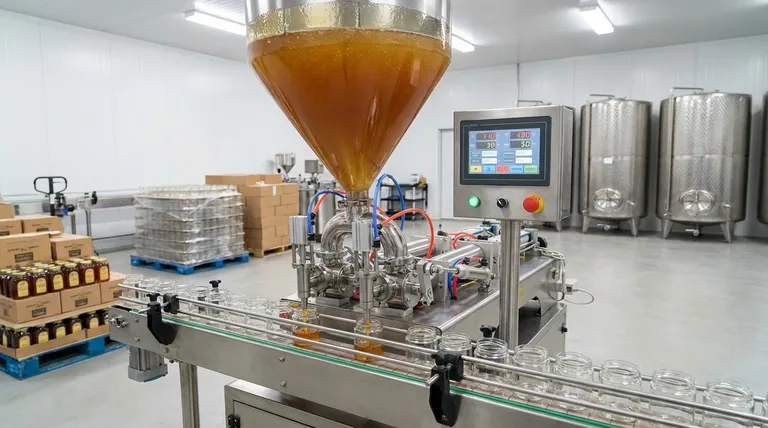
It’s 2 PM on a Tuesday. The morning production run was flawless—every jar filled to the perfect weight, the line humming along smoothly. But now, everything has gone wrong. Honey is "stringing" from the nozzle, creating a sticky mess on the jars and conveyor. The digital scale shows weights are all over the place; some jars are under-filled, others are spilling over. Your team is frustrated, the line is stopped for cleanup, and you're watching valuable product and time go down the drain. If this scenario feels painfully familiar, you're not alone.
The Endless Cycle of Tweaking and Wasting
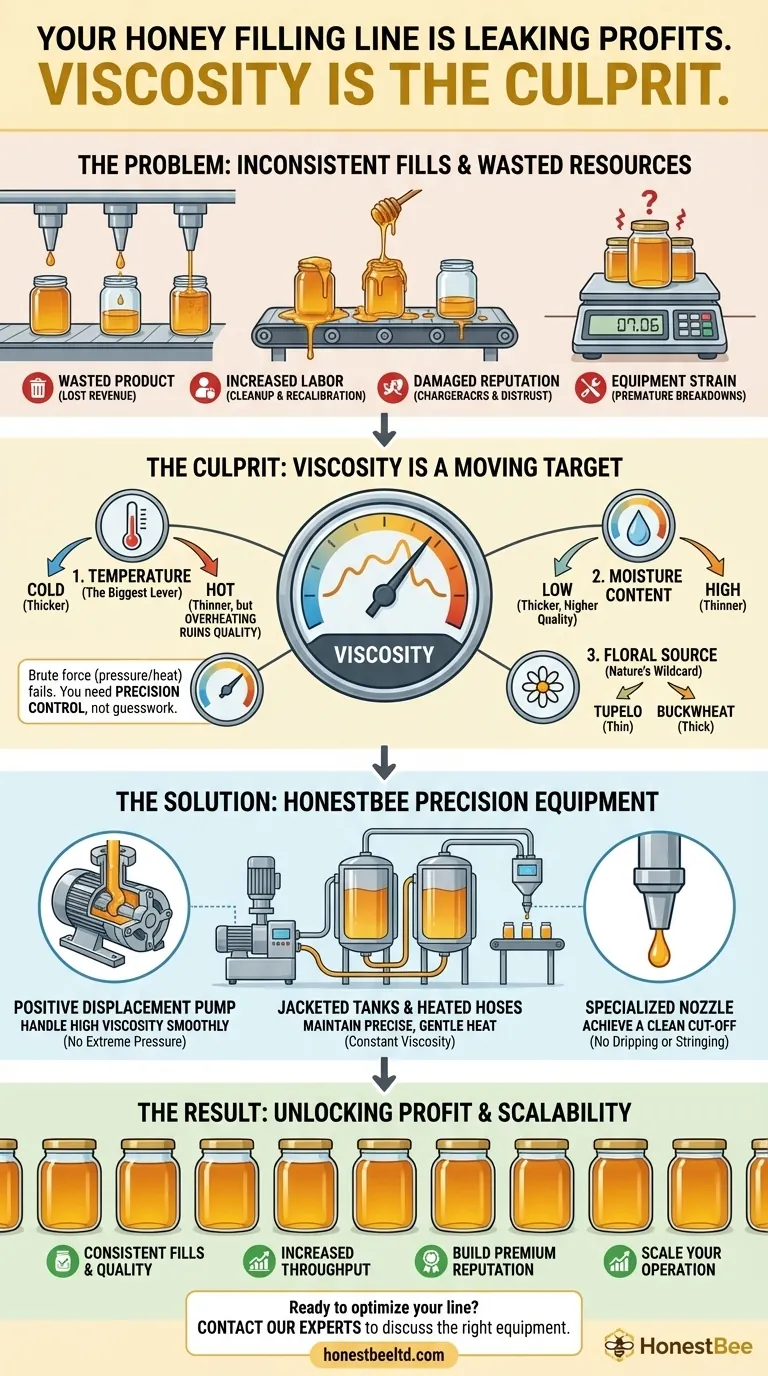
For commercial apiaries and bottlers, inconsistent fills are more than just a minor annoyance; they are a direct hit to the bottom line. This single, persistent problem triggers a cascade of negative business consequences:
- Wasted Product: Every over-filled or spilled jar is lost revenue. For premium honey, this adds up fast.
- Increased Labor Costs: Your team spends more time on manual cleanup, recalibrating machinery by "feel," and spot-checking weights than on productive packing.
- Damaged Brand Reputation: Inconsistent fills lead to chargebacks from distributors and erode customer trust. A professional operation delivers a consistent product, every single time.
- Equipment Strain: Constantly "powering through" thick honey with high pressure puts unnecessary wear and tear on pumps and motors, leading to premature and costly breakdowns.
In response, most operators get caught in a reactive loop. They might crank up the heat on the holding tank, increase the pump pressure, or endlessly adjust nozzle settings. These "fixes" might provide temporary relief, but the problem always returns. Why? Because they are only treating the symptoms, not the underlying cause.
The Real Culprit: You're Fighting a Moving Target
The common mistake is to think of honey's thickness as a static obstacle to be overcome. The truth is far more complex: honey's viscosity is a dynamic variable that is constantly changing.
Viscosity is simply a fluid's resistance to flow. Water has low viscosity; molasses has high viscosity. Your problem isn't that honey is viscous; it's that its viscosity level is a moving target, influenced by three key factors:
1. Temperature: The Biggest Lever
This is the most significant factor. Even a few degrees of change in ambient temperature or in your holding tank can dramatically alter how easily your honey flows. Heating honey makes it thinner (less viscous), but as the source article warns, overheating is a disaster. It destroys the delicate enzymes and flavor profiles that make your honey valuable, effectively "cooking" away your profits.
2. Moisture Content: The Unseen Variable
Honey with lower moisture content is higher quality, but it's also naturally thicker and harder to pump. A batch of honey harvested on a dry week will behave completely differently from one harvested after a period of rain.
3. Floral Source: Nature's Wildcard
The type of nectar the bees collected fundamentally changes the honey's composition. A batch of light, thin Tupelo honey requires completely different machine settings than a batch of thick, dark Buckwheat honey.
This is why your "fixes" fail. When you increase pressure, you're just brute-forcing the issue, straining your equipment. When you carelessly apply heat, you risk ruining the product. You're trying to use a hammer on a problem that requires a thermometer and a finely tuned wrench.
From Brute Force to Precision Control: The Right Equipment for the Job
To master a dynamic variable like viscosity, you need more than guesswork; you need precise control. You need equipment designed not just to move honey, but to manage its properties intelligently throughout the filling process.
This means investing in a system that allows you to:
- Handle High Viscosity with Ease: Use pumps, like positive displacement pumps, that are engineered to move thick liquids smoothly without extreme pressure or strain.
- Apply Gentle, Consistent Heat: Employ jacketed tanks and heated hoses that maintain a precise, stable, and safe temperature from the tank all the way to the nozzle. This ensures viscosity remains constant throughout the run.
- Achieve a Clean Cut-Off: Utilize nozzles specifically designed to prevent dripping and stringing, regardless of whether the honey is thick or thin.
This is precisely why we at HONESTBEE focus on supplying robust, wholesale-focused equipment for serious beekeeping operations. Our solutions are built on a deep understanding of these challenges. We don't just sell machinery; we provide the tools to give you command over the variables that dictate your profitability. Our high-performance pumps, precision temperature control systems, and advanced nozzles are designed to work together, transforming your filling line from a source of frustration into a model of efficiency.
Beyond the Fix: Unlocking Speed, Quality, and Scalability
When you stop fighting viscosity and start managing it, everything changes. The chronic, day-to-day problems disappear, freeing you up to focus on growing your business.
- Run Different Honeys with Confidence: Switch from a thin clover honey to a thick wildflower batch without hours of painful recalibration.
- Increase Throughput Without Sacrificing Quality: Fill faster and more consistently, knowing that your honey's delicate properties are preserved.
- Build a Reputation for Excellence: Deliver perfectly filled, unblemished jars to your distributors and customers run after run, strengthening your brand as a premium supplier.
- Scale Your Operation: With a reliable and efficient process in place, you can confidently take on larger orders and expand your market reach.
You're no longer just "getting through" a production run; you're engineering a profitable, scalable, and professional honey business.
Your filling line shouldn't be a bottleneck; it should be the engine of your growth. If you're ready to move beyond the daily struggle with inconsistent fills and unlock the true potential of your operation, our team can help you identify the right equipment for your specific honey types and production volumes. Contact Our Experts to discuss how you can turn your biggest operational headache into your greatest competitive advantage.
Visual Guide
Related Products
- Fully Automatic Honey Filling Packaging Machine for Processing Line
- Precision Durable Efficient HONESTBEE Rotary Honey Filling Machine
- Commercial Rotary Honey Filling Machine for Production
- Small Honey Filling Machine Sachet Packing Equipment Single Nozzle
- Automatic Honey Filling and Filtering Machine for Beekeeping Bottle Filling
Related Articles
- The Bottleneck and the Bottom Line: A Systems Approach to Choosing Your Honey Filling Machine
- Are Manual Honey Filling Methods Bottlenecking Your Apiary's Growth?
- The Unseen Cost of Manual Honey Filling: A Case for Automation
- The Bottleneck and the Balance Sheet: A Strategic Guide to Honey Filling Machines
- The Bottleneck in a Bottle: Why Manual Honey Filling Limits Your Apiary's Growth