As a commercial beekeeper or honey packer, producing a visually perfect, golden jar of honey is essential for commanding premium retail prices. A common challenge many apiaries face occurs right after the initial extraction and filtration phase: despite passing the honey through standard strainers, tiny, stubborn black specks remain suspended in the liquid.
Here is a comprehensive guide on how to identify, remove, and prevent these microscopic impurities to achieve the pristine clarity your market demands.
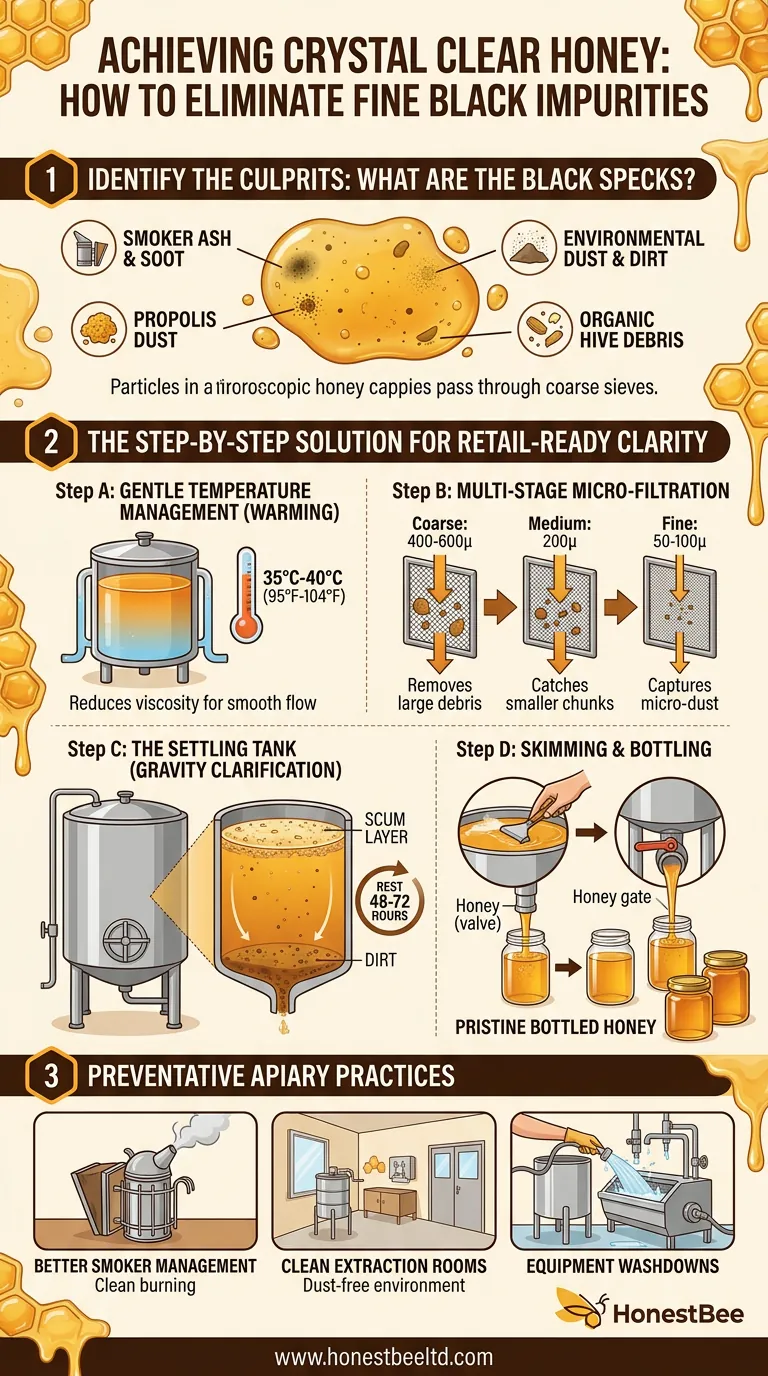
1. Identify the Culprits: What Are the Black Specks?
Before removing the impurities, it helps to understand what they are. In most commercial apiaries, these fine black specks are typically:
- Smoker Ash & Soot: Microscopic ash particles from the smoker during hive inspections or harvesting.
- Propolis Dust: Highly brittle propolis that shatters into microscopic, dark flakes during the uncapping and spinning process.
- Environmental Dust & Dirt: Windblown debris from the apiary site that sticks to the comb.
- Organic Hive Debris: Minuscule remnants of cocoon casings, bee parts, or even traces of wax moth residue.
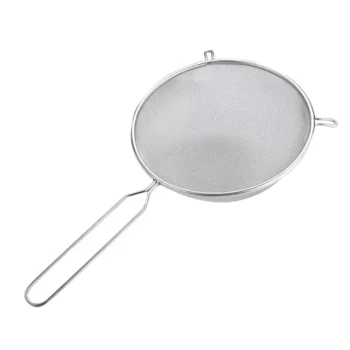
Because these particles are exceptionally fine, they easily slip through standard 40-mesh (400-micron) coarse sieves.
2. The Step-by-Step Solution for Retail-Ready Clarity
To successfully remove these microscopic impurities and meet stringent bottling standards, you must employ a combination of temperature management, fine filtration, and gravity clarification.
Step A: Gentle Temperature Management (Warming)
Cold honey is highly viscous, meaning it suspends fine debris and prevents it from passing through fine filters or rising to the surface.
- The Fix: Gently warm the honey to a temperature between 35°C and 40°C (95°F – 104°F). You can achieve this using a water-jacketed heating tank or a commercial warming cabinet.
- The Benefit: This temperature significantly lowers the viscosity, allowing the honey to flow smoothly without destroying its natural enzymes or raw status.
Step B: Multi-Stage Micro-Filtration
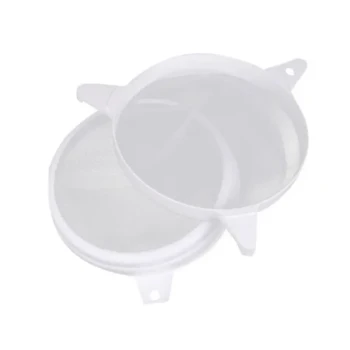
A single coarse sieve is insufficient for commercial bottling. You need a multi-stage approach to catch progressively smaller particles without clogging your line.
- Stage 1 (Coarse): 600 to 400 microns (removes large wax cappings and bee parts).
- Stage 2 (Medium): 200 microns (catches smaller propolis and pollen chunks).
- Stage 3 (Fine): 100 to 50 microns (essential for capturing fine smoker ash and micro-dust).
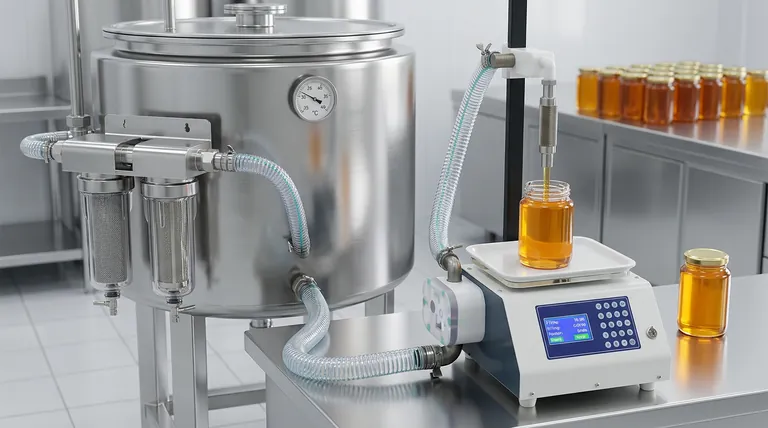
- Pro Tip: Do not force or squeeze honey through the filters. High-pressure pumping through a single clogged filter will actually push fine, flexible debris straight through the mesh. Use inline stainless steel baffle strainers or commercial-grade nylon micron bags.
Step C: The Settling Tank (Gravity Clarification)
Even with the best filters, microscopic specks and air bubbles can still pass through. The absolute best tool for removing these is time and gravity.
- Pump the warmed, filtered honey into a large stainless steel settling tank (clarifier).
- Allow the honey to rest undisturbed in a warm room for 48 to 72 hours.
- The Magic of Gravity: During this time, heavy microscopic dirt particles will sink to the very bottom, while lighter impurities (like ultra-fine wax, propolis fragments, air bubbles, and ash) will float to the top, forming a foamy scum layer.
Step D: Skimming and Bottling
After the settling period, the honey in the middle of the tank will be crystal clear.
- Carefully skim off the top layer of foam and debris using a sterile food-grade scraper or a layer of plastic wrap (press it to the surface and peel it back to lift the scum).
- Bottle from the bottom: Utilize the honey gate (valve) located at the bottom of your settling tank to draw out the purified honey. (Note: discard or repurpose the very first few ounces if heavy dirt has settled below the valve).
3. Preventative Apiary Practices
To reduce the load on your processing equipment, consider these proactive steps in the field:
- Better Smoker Management: Avoid over-smoking frames during harvest. Ensure your smoker fuel burns clean and isn't blowing raw ash onto exposed honeycomb.
- Clean Extraction Rooms: Maintain a dust-free extracting environment with positive air pressure if possible.
- Equipment Washdowns: Regularly rinse your honey extractor, uncapping machines, and sump tanks between batches to prevent propolis and dirt buildup.
Upgrade Your Operations with HONESTBEE
Are you a commercial apiary or a beekeeping equipment distributor looking to elevate your honey processing standards?
At HONESTBEE, we specialize in providing heavy-duty, commercial-grade beekeeping equipment designed to solve your toughest processing challenges. From multi-stage stainless steel inline filters and heavy-duty nylon micron strainers, to advanced water-jacketed settling tanks that guarantee perfect gravity clarification—we have the wholesale solutions you need to produce crystal clear, premium honey at scale.
Don't let inadequate equipment hold your honey back from premium retail shelves. 👉 Contact the HONESTBEE B2B Wholesale Team Today to request our latest catalog, discuss bulk pricing, and custom-outfit your extraction facility with industry-leading processing equipment. Let's build a more efficient, profitable apiary together.
Visual Guide
Related Products
- Honey Concentrating and Filtering Dehumidifier Machine 2T Capacity for Honey
- Electric Double Wall Honey Filtering Machine Purifier Equipment for Honey Processing Plant
- Professional Stainless Steel Honey Filtering Machine with Water Bath Heating for Beekeeping
- 0.5T Capacity Honey Dehumidifier Dryer with Vacuum Heating and Thickening Filtering Machine
- Two-Stage Plastic Honey Filter for Buckets
Related Articles
- Beyond the Strainer: The Engineering of Trust in Commercial Honey Production
- Beyond Purity: How Honey Filtering Machines Engineer Trust at Scale
- The Sticky Bottleneck: Why Your Honey Filtering Fails and How to Fix It for Good
- How Honey Filtration Machines Preserve Natural Quality and Boost Beekeeper Profits
- From Chaos to Clarity: The Physics and Psychology of Honey Filtering