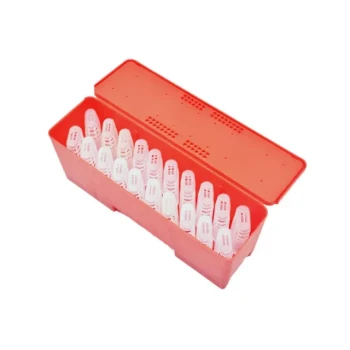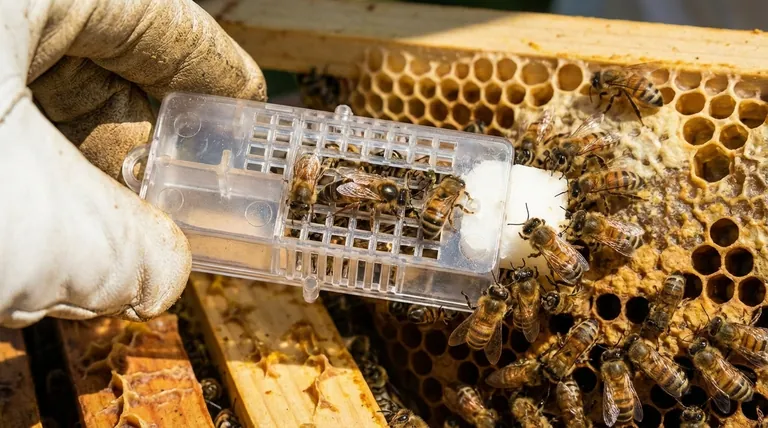
The Most Dangerous Introduction in the World
Imagine holding a small box containing a single, precious insect. Inside are a queen bee and a few attendants. Outside, 50,000 worker bees, her potential subjects, are genetically programmed to kill her on sight.
Your job is to manage this introduction. The success of an entire colony—its productivity, health, and survival—depends on this one moment.
This is not just agriculture; it's high-stakes social engineering. And your most critical instrument is the humble queen cage.
The Anatomy of Rejection
To understand why the cage is so crucial, we have to understand the psychology of the hive. A honeybee colony is a superorganism, bound together by a single, invisible force: the queen's pheromones.
A Pheromonal Fingerprint
Every queen produces a unique scent that serves as the colony's passport. It signals to every bee that she is their mother, their leader, and that all is well. Her scent is their identity.
An unfamiliar queen carries the wrong passport. She is an invader.
The Lethal Response: "Balling"
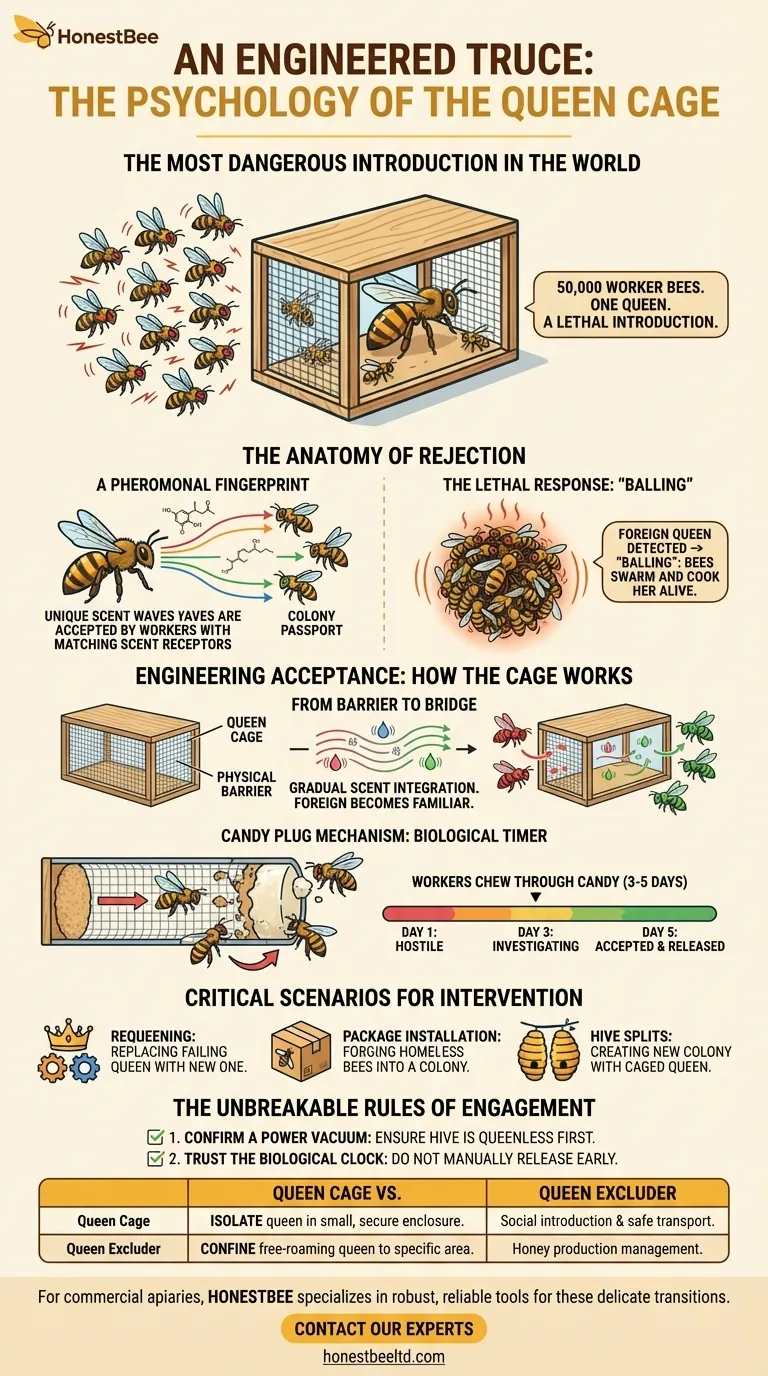
When worker bees detect a foreign queen, their response is swift and brutal. They swarm her, forming a tight, vibrating ball. They don't sting her; they cook her alive, raising their body temperature until she perishes from the heat.
This instinctive, defensive act is called "balling." The queen cage is an engineered truce, designed to prevent this fatal outcome.
Engineering Acceptance: How the Cage Works
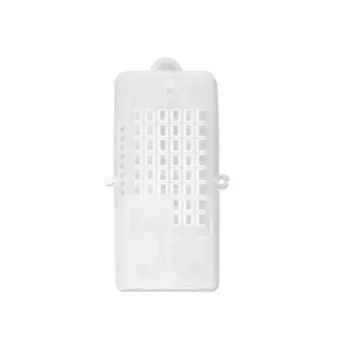
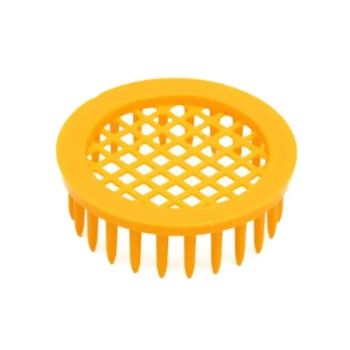
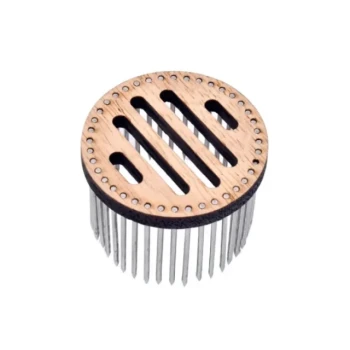
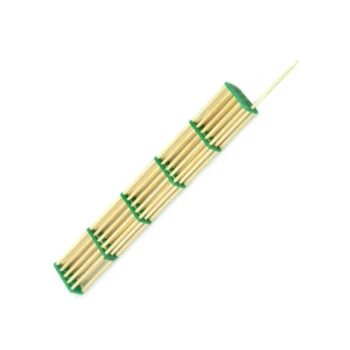
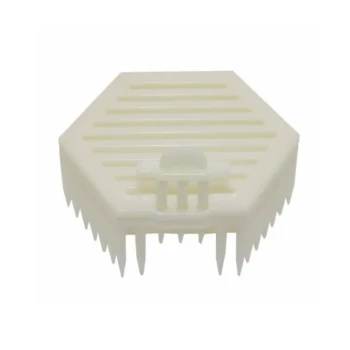
A queen cage is not merely a physical container. It is a tool designed to manipulate the social dynamics of the hive, turning a lethal instinct into gradual acceptance.
From Barrier to Bridge
Initially, the cage's mesh or plastic screen is a physical barrier, protecting the queen from the workers' aggression. But it’s a permeable barrier.
Over several days, the new queen's pheromones slowly waft through the hive. The workers, initially hostile, begin to investigate. They touch the cage, taste her scent, and slowly, their internal chemistry begins to change. The foreign scent becomes familiar.
The Genius of the Candy Plug
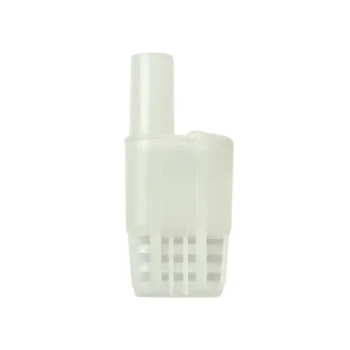
Most queen cages contain a simple, brilliant mechanism: a channel blocked with hardened sugar paste, or a "candy plug." This is not just food; it's a biological timer.
The worker bees on the outside begin to chew through the candy to get to the queen. It’s a job that takes them three to five days. By the time they break through and free her, they have been living with her scent for days. They have fed her through the mesh.
She is no longer an invader. She is their queen. The bees themselves decide when she is released, making it the perfect, behavior-driven release mechanism.
Critical Scenarios for Intervention
This engineered truce is deployed in several high-stakes beekeeping operations, where failure means the loss of a colony.
- Requeening: When an old queen is failing, a beekeeper must perform a "throne succession." The old queen is removed, and a new one is introduced in a cage to prevent a chaotic and violent transition.
- Package Installation: A new bee package is a box of homeless refugees with a caged, unrelated queen. The cage is the tool that forges them into a cohesive colony.
- Hive Splits: To expand an apiary, a beekeeper creates a new colony by splitting an old one. The new, queenless half receives a caged queen to become its new matriarch.
The Unbreakable Rules of Engagement
The process is elegant, but it is not foolproof. It relies on the beekeeper following strict protocols that respect the colony's biology.
- Confirm a Power Vacuum: You can never introduce a new queen into a colony that already has one. The first and most critical step is to ensure the hive is truly queenless.
- Trust the Biological Clock: Do not manually release the queen early. The temptation to "help" is strong, but a premature release circumvents the entire social acclimation process and often results in her death. Trust the bees to chew through the candy.
Queen Cage vs. Queen Excluder
It's vital not to confuse these tools. They operate on different principles.
| Tool | Function | Purpose |
|---|---|---|
| Queen Cage | To isolate a queen completely within a small, secure enclosure. | Social introduction and safe transport. |
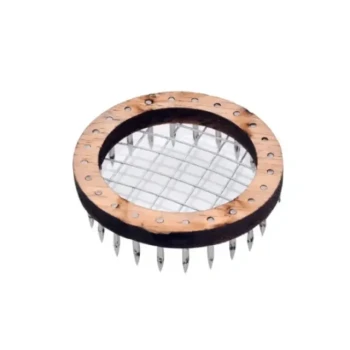
| Queen Excluder | To confine a free-roaming queen to a specific area of the hive (e.g., brood boxes). | Honey production management. |
For commercial apiaries, managing these delicate colony transitions at scale is fundamental to the business. The health of a hundred hives rests on these small, critical interventions. Ensuring they are executed flawlessly requires not just skill, but dependable equipment designed for the rigors of professional beekeeping. HONESTBEE specializes in providing these robust, reliable tools for wholesale distributors and large-scale apiaries.
Contact Our Experts to equip your operation for success.
Visual Guide
Related Products
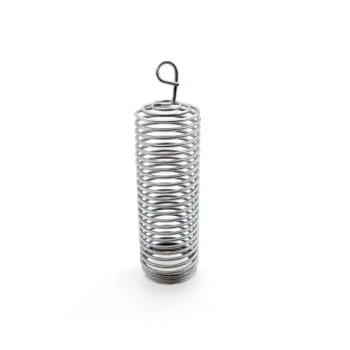
- Durable Galvanized Steel Spring Queen Bee Cage
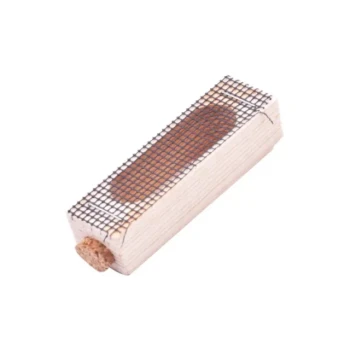
- Classic Wooden and Mesh California Queen Cage
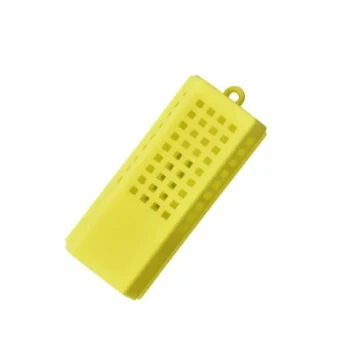
- Professional Queen Bee Introduction and Transport Cage
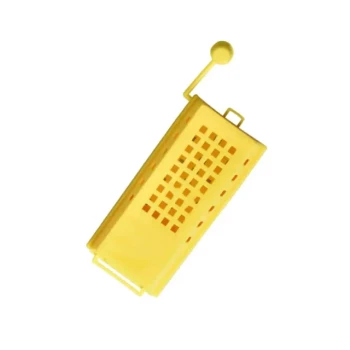
- Professional Queen Cage with Sliding Gate and Feeder Plug
- Professional Multi-Compartment Queen Cage with Sliding Lid
Related Articles
- Maximizing Queen Cage Value: A Beekeeper's Guide to Safe Reuse & Long-Term Savings
- A Timed Release of Power: The Social Engineering of the Queen Cage
- The Queen Cage's Ledger: A Systems Approach to Apiary Biosecurity
- The Diplomatic Interface: Why Queen Cage Maintenance is a Study in Risk Management
- How to Introduce a Queen Bee Successfully Using Queen Cages: A Beekeeper’s Guide