The Unseen Gatekeeper
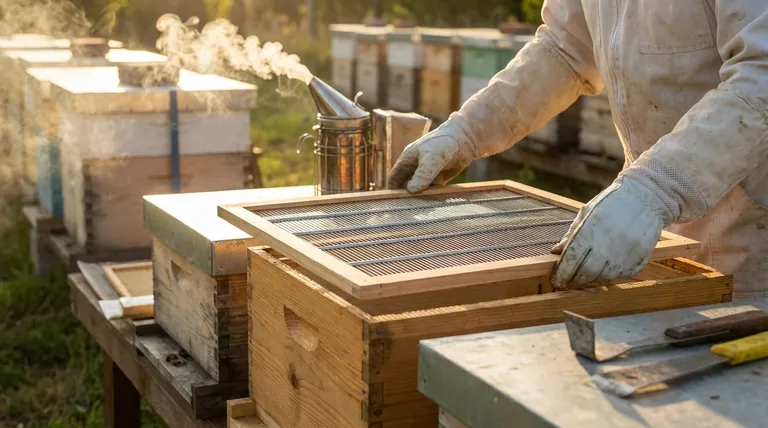
Imagine lifting a honey super at the peak of the season. The weight is a physical confirmation of success, a measure of the colony's productivity. But the purity of that honey, and the efficiency of its harvest, was determined months earlier by a decision about a simple piece of equipment: the queen excluder.
This perforated barrier is more than just a screen. It's a fundamental management tool, the silent gatekeeper separating the nursery from the pantry. It is an instrument of order in the complex system of a commercial apiary.
The Psychology of a Simple Choice
Choosing a queen excluder material—plastic, galvanized steel, or stainless steel—is not merely a technical decision. It's a reflection of your operational philosophy and your time horizon.
Are you optimizing for the lowest possible upfront cost, or are you investing to eliminate future problems? The answer reveals how you weigh the certainty of today's expenses against the potential friction of tomorrow's labor. At its core, the choice is about managing complexity, risk, and time.
A Material Science Breakdown for the Apiary
Each material offers a distinct set of compromises. Understanding them is key to aligning your equipment with your goals.
H3: Plastic: The Currency of Now
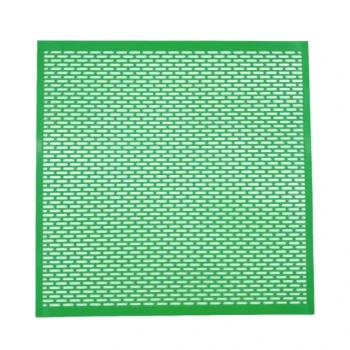
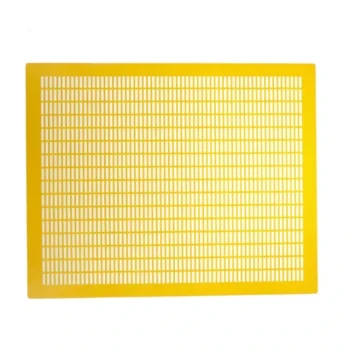
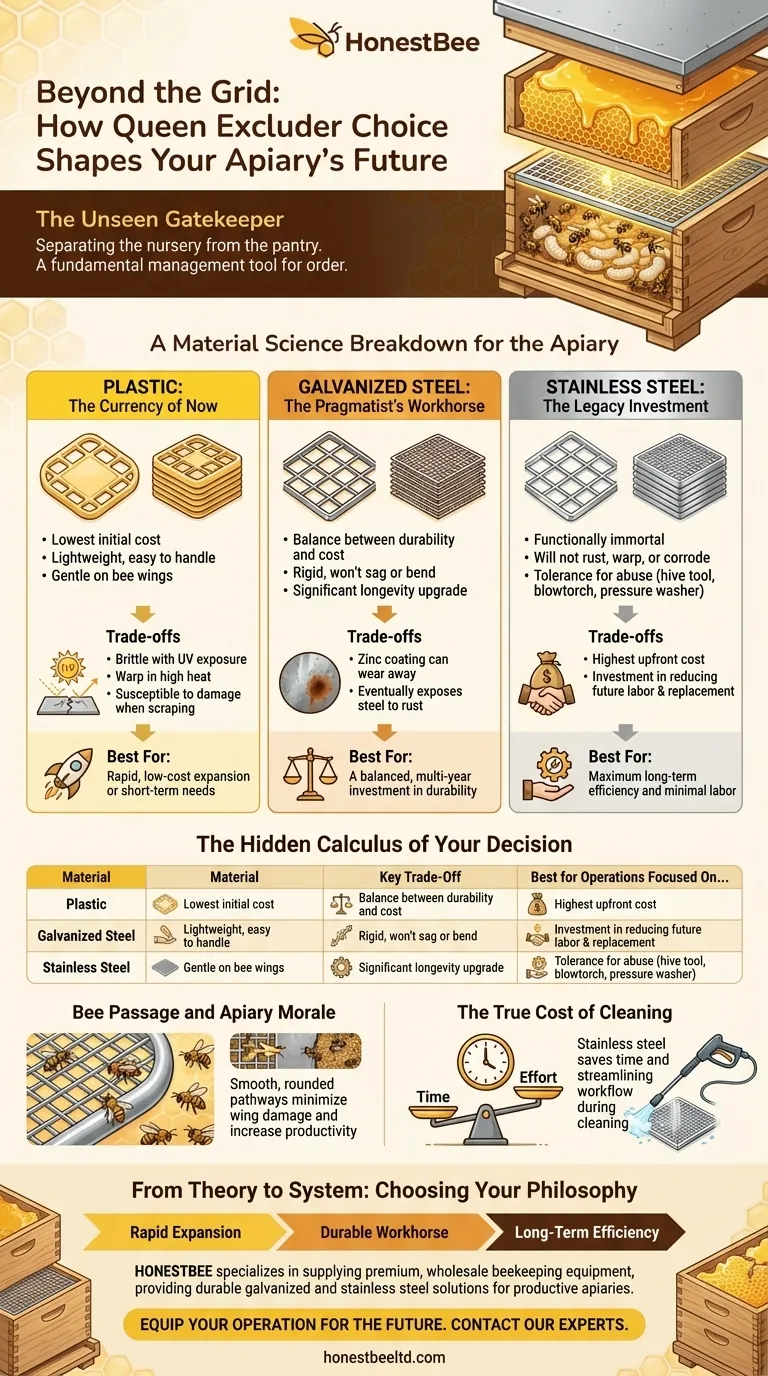
Molded plastic excluders are the most affordable entry point. They are lightweight, easy to handle, and their flexibility can be gentle on bee wings, preventing the damage sometimes caused by sharper metal edges.
However, this low initial cost comes with a trade-off. Plastic can become brittle with UV exposure, warp in high heat, and is susceptible to damage when scraping away burr comb and propolis. It serves the present but asks for replacement in the future.
H3: Galvanized Steel: The Pragmatist's Workhorse
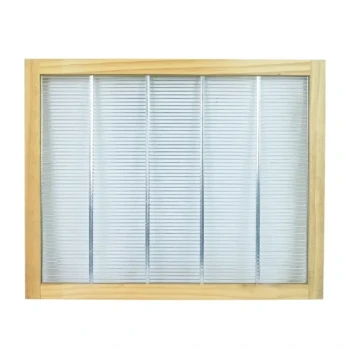
Galvanized steel excluders represent a deliberate balance between durability and cost. Constructed from zinc-coated welded steel wire, they provide the rigidity that plastic lacks. They won't sag under the weight of bees or bend during aggressive inspections.
This is the material for the pragmatist. It offers a significant upgrade in longevity over plastic without the premium price of stainless steel. Its weakness is finite; over years of scraping and use, the zinc coating can wear away, eventually exposing the steel to rust.
H3: Stainless Steel: The Legacy Investment
Stainless steel is the embodiment of a "buy it once, buy it right" philosophy. It is functionally immortal in the context of a beehive. It will not rust, warp, or corrode.
Its defining characteristic is its tolerance for abuse. You can clean it aggressively with a sharp hive tool, a blowtorch, or a pressure washer without a second thought. The upfront cost is higher, but it is an investment in reducing future labor, replacement costs, and worry. It is the choice for building a system that lasts for decades.
The Hidden Calculus of Your Decision
The true cost of an excluder isn't its price tag. It's the sum of its price, the labor it demands over its lifetime, and the problems it prevents (or creates).
| Material | Key Trade-Off | Best for Operations Focused On... |
|---|---|---|
| Plastic | Lowest initial cost vs. lowest durability & cleanability | Rapid, low-cost expansion or short-term needs |
| Galvanized Steel | Good durability vs. eventual wear and tear | A balanced, multi-year investment in durability |
| Stainless Steel | Highest initial cost vs. near-zero future costs | Maximum long-term efficiency and minimal labor |
Bee Passage and Apiary Morale
Modern welded-wire excluders, both galvanized and stainless, offer smooth, rounded pathways. This design detail is not trivial. It minimizes wing damage and allows worker bees to pass through with less hesitation. An apiary with less friction is an apiary that is more productive.
The True Cost of Cleaning
In a commercial operation, time is the most valuable commodity. Stainless steel's greatest advantage may be the time it saves. The ability to clean equipment quickly and thoroughly without fear of damage streamlines your workflow, especially during disease management or seasonal resets. Plastic and even galvanized steel demand a more delicate, time-consuming approach.
From Theory to System: Choosing Your Philosophy
The right queen excluder isn't the most expensive one; it's the one that best fits the system you are trying to build.
- For rapid expansion on a tight budget, plastic provides immediate function.
- For a durable, cost-effective workhorse apiary, galvanized steel is the logical, pragmatic choice.
- For an operation designed for maximum long-term efficiency and minimal maintenance, stainless steel is the unparalleled investment.
As a commercial apiary or beekeeping distributor, these decisions compound. The right equipment choice reduces labor, improves honey quality, and increases the long-term resilience of your business. HONESTBEE specializes in supplying premium, wholesale beekeeping equipment that meets the demands of professional operations. We provide the durable galvanized and stainless steel solutions that form the backbone of a productive and profitable apiary.
To equip your operation for the future and make an investment that pays dividends for years to come, Contact Our Experts.
Visual Guide
Related Products
- High Performance Plastic Queen Excluder for Beekeeping and Apiary Management
- Professional Plastic Queen Excluder for Modern Beekeeping
- Lightweight Durable Plastic Queen Excluder Scraper for Beekeeping
- Metal Queen Bee Excluder for Beekeeping
- Premium Wood Framed Metal Wire Queen Bee Excluder
Related Articles
- How Plastic Queen Excluders Improve Hive Longevity and Colony Health
- Plastic Queen Excluders vs. Alternatives: A Beekeeper’s Guide to Smarter Hive Management
- Why Plastic Queen Excluders Outperform Metal and Wood: Science, Savings, and Hive Protection
- How to Choose Queen Excluders Based on Colony Behavior and Queen Traits
- The Geometry of Order: Why the Queen Excluder is a Beekeeper's Most Strategic Tool