The Illusion of a Clean Frame
At the end of a season, a beekeeper is faced with a mountain of used frames. They are caked in wax, stained with propolis, and dotted with old cocoons. The instinct is to grab a hive tool and scrape them down until they look clean.
But this addresses only the visible problem.
The greatest threat to a colony's future isn't the wax you can see, but the microscopic pathogens you can't. A frame that looks clean to the human eye can be a biological minefield, harboring spores for chalkbrood or the devastating American Foulbrood (AFB). The psychology is simple: we prioritize solving problems we can see. The discipline of successful beekeeping is in managing the invisible risks.
Sanitation Is a System, Not a Task
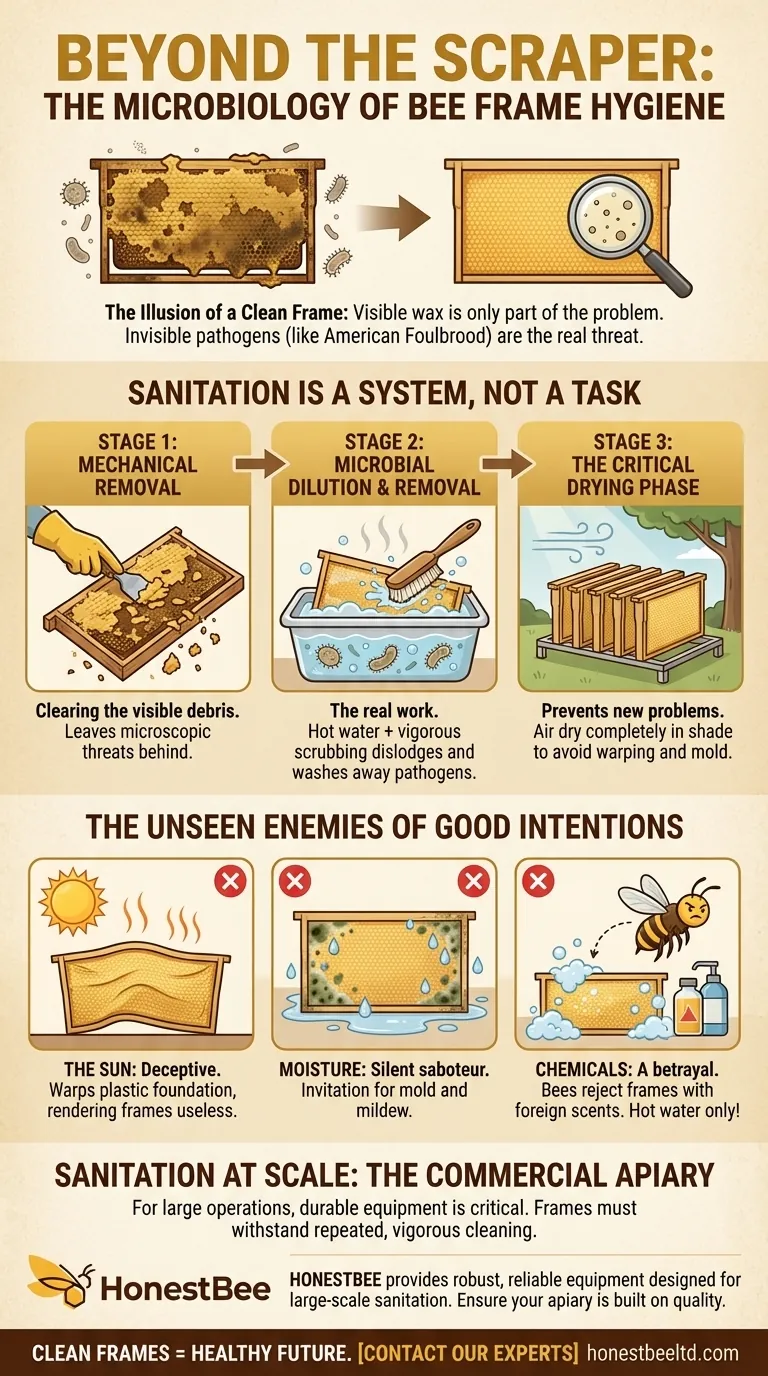
Thinking of frame cleaning as a single task is a mistake. It’s a multi-stage sanitation system designed to systematically break the chain of infection and reset the hive environment. Each step has a distinct purpose.
Stage 1: Mechanical Removal
Scraping away excess wax and propolis is the obvious first step. It’s satisfying work that yields a tangible result. But this stage is merely clearing the way for the critical work that follows. It removes the gross debris, but leaves the microscopic threats attached to the frame and foundation.
Stage 2: Microbial Dilution and Removal
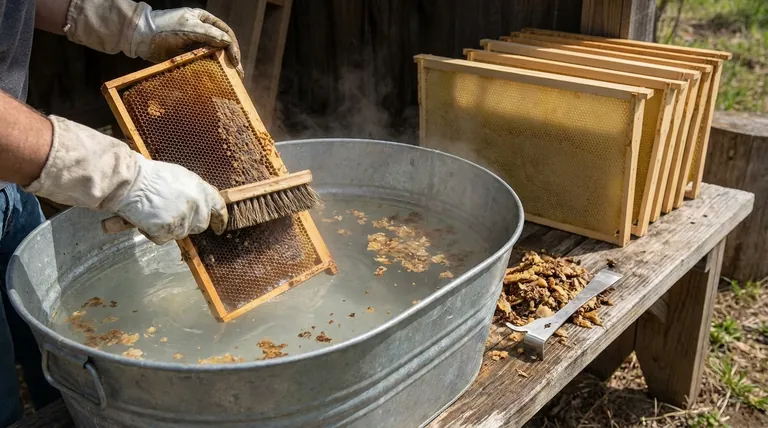
This is where the real work happens. Scrubbing the frames with the hottest water you can safely handle isn't about "disinfecting" in a sterile, chemical sense. It's about a powerful combination of heat and mechanical action.
- Hot Water: Loosens remaining wax and propolis that can shield pathogens.
- Vigorous Scrubbing: Physically dislodges spores and bacteria from the cell walls and frame corners, moving them into the water.
The goal is to remove and wash away the vast majority of the pathogenic load, creating a biologically safer environment for the next colony to inhabit.
Stage 3: The Critical Drying Phase
Once scrubbed and rinsed, how you dry the frames is as important as how you wash them. This final stage prevents creating a new set of problems.
Rinse each frame thoroughly to remove all dislodged particles. Then, stand them upright in a shaded, well-ventilated area. This prevents two key failures.
The Unseen Enemies of Good Intentions
A robust process is one that anticipates failure. In frame sanitation, the failures are often subtle and driven by a desire for efficiency that backfires.
The Sun: A Deceptive Friend
Drying frames in the sun seems logical and fast. It's also a catastrophic mistake for plastic foundation. Even on a mild day, direct sunlight can generate enough heat to warp the plastic, rendering the entire frame useless. Shade and airflow are your allies.
Moisture: The Silent Saboteur
Putting away frames that feel "mostly dry" is an invitation for disaster. Any residual moisture trapped in the wood or cell corners can become a breeding ground for mold and mildew. A frame must be bone-dry before it's stored or returned to a hive.
Chemicals: A Betrayal of Trust
It’s tempting to use soap or detergents for a "deeper clean." This is a fundamental misunderstanding of bee biology. Bees are incredibly sensitive to foreign scents and chemical residues. A frame with even a trace of detergent can be rejected by the colony, or in worst cases, cause them to abscond. Hot water is all you need.
Sanitation at Scale: The Commercial Apiary
For a hobbyist, cleaning a few dozen frames is an afternoon's work. For a commercial apiary, cleaning thousands is a core operational process directly tied to profitability and herd health. At this scale, equipment failure is not an option.
The constant cycle of scraping, scrubbing, and handling puts immense stress on the equipment. Frames must be durable enough to withstand repeated, vigorous cleanings without breaking. The plastic foundation must be of high quality to resist warping and provide a perfect template for the bees, season after season.
This is why commercial operations rely on wholesale suppliers like HONESTBEE. We provide robust, reliable beekeeping equipment designed for the rigors of large-scale use. Investing in quality frames isn't just about longevity; it's about ensuring your sanitation system is built on a foundation that won't fail you.
Below is a summary of the cleaning system:
| Cleaning Step | Key Action | Underlying Purpose |
|---|---|---|
| Preparation | Use hottest safe water & stiff brush. | Loosen wax and propolis effectively. |
| Scrubbing | Scrub frame and foundation vigorously. | Physically remove debris and disease spores. |
| Rinsing | Rinse thoroughly with clean water. | Wash away all dislodged microscopic particles. |
| Drying | Air dry completely in a shaded, ventilated area. | Prevent plastic warping and future mold growth. |
Ultimately, a clean frame is an investment in your bees' future. It's one of the most effective preventative health measures you can take. To ensure your apiary is built on a foundation of quality and biosecurity, Contact Our Experts
Visual Guide
Related Products
- Professional Stainless Steel Frame Cleaner with Ergonomic Wood Handle
- Heavy Duty Stainless Steel Frame Cleaner with Plastic Handle
- Ergonomic Plastic Frame Spacer Tool for Rapid Hive Management Beekeeping
- Professional Frame Comb Fork and Lifter for Efficient Handling
- Lightweight Aluminum Frame Grip
Related Articles
- Beyond the Scraper: Why Your Frame Cleaning Method Might Be Harming Your Apiary
- Beyond the Scrape: Why Your Hive Frame Cleaning Strategy Is Costing You Money
- How Frame and Comb Selection Transforms Hive Health and Honey Production
- How to Extract Pure Beeswax Efficiently Using Hot Water Methods
- Your Bee Brush Is Slowing You Down. Here’s What Commercial Apiaries Use Instead.