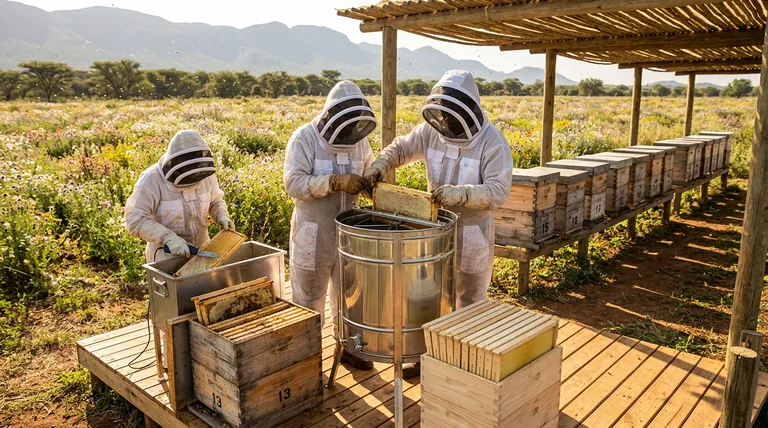
A Guide for African Commercial Beekeepers and Cooperatives
In the vast landscapes of Africa, the potential for honey production is limitless. However, many commercial farms and cooperatives face a common bottleneck: they believe the only way to get more honey is to buy more beehives.
This is a misconception.
The secret to profitability isn't just "keeping" more bees; it is managing the existing colonies efficiently. By understanding the behavior of the African Honey Bee (Apis mellifera scutellata) and upgrading your equipment, you can double your production per unit.
Here is the roadmap to transforming your apiary’s efficiency.
1. The Architecture of Efficiency: Move to Movable Frames
Traditional log hives and fixed-comb baskets force the beekeeper to destroy the honeycomb during harvest. This is the single biggest destroyer of yield. When a comb is crushed, bees must consume approximately 8kg of honey just to produce 1kg of wax to rebuild their home.
The Strategy: Transition your operations to Langstroth or Kenya Top Bar Hives (KTBH). These systems allow you to inspect the colony and harvest honey without destroying the brood nest.
The Commercial Solution: Scaling this transition requires a reliable supply chain. Sourcing quality woodware and frames locally can be inconsistent. This is where HONESTBEE steps in. As a dedicated B2B supplier, HONESTBEE provides commercial farms and distributors with standardized, durable hive components and frames in wholesale quantities, ensuring your entire operation is built on a uniform, efficient foundation.
2. Master the "Flow": Using Centrifugal Extractors
If you are still crushing combs to get honey, you are throwing money away.
The Science: By using a centrifugal honey extractor, you spin the honey out of the comb and return the intact wax comb to the hive. Because the bees don't have to rebuild the wax, they immediately start refilling the empty cells with nectar. This allows for multiple harvests per season rather than just one.
Upgrade Your Gear: For large-scale operations, durability is key. HONESTBEE specializes in supplying stainless steel extractors (from manual 2-frame units to electric radial extractors) designed for high-volume processing. Providing your cooperative members with access to HONESTBEE extraction equipment can instantly boost the collective yield of the group.
3. Reduce "Absconding" Through Environment Management
African bees are prone to absconding (abandoning the hive) if they feel threatened or overheated. An empty box produces zero honey.
Actionable Steps:
- Shade Management: Ensure hives are shaded from the midday sun. Overheated bees stop foraging and start "fanning" to cool the hive, wasting energy.
- Pest Control: Use grease on hive stands to stop ants and termites.
- Supplemental Feeding: During the dry season (dearth), feed colonies sugar syrup. This keeps the population high so they are ready to forage the moment the rains return.
4. Confidence Brings Yields: Protective Equipment
It is a simple fact: if a beekeeper is afraid of getting stung, they will not inspect the hives often enough. African bees can be highly defensive. Regular inspections are vital to prevent swarming and check for disease.
The Safety Standard: Your team needs protection they can trust. Cheap, thin suits lead to stings and poor management. HONESTBEE supplies wholesale protective gear—including ventilated suits and heavy-duty leather gloves—specifically designed to withstand the sting of defensive bee varieties. When your staff feels safe, they work better, and your hives get the attention they need.
5. Genetic Selection (Re-Queening)
In the wild, an old queen lays fewer eggs. In a commercial setting, you cannot rely on luck.
The Strategy: Practice regular re-queening. A young, vigorous queen ensures a populous colony. A hive with 60,000 bees produces exponentially more honey than a hive with 20,000 bees, because a higher percentage of the population can go out to forage.
Partnering for Growth
Increasing yield is about combining knowledge with the right tools. While you provide the local knowledge and management skills, your equipment supplier must provide reliability.
For equipment dealers and large-scale apiaries looking to streamline their operations, HONESTBEE offers a comprehensive B2B solution. From hives and frames to industrial extractors and protective gear, HONESTBEE supports the African honey industry by delivering professional-grade tools at wholesale prices.
Conclusion: Don't just add more boxes to your field. Upgrade your technology, protect your workers, and manage your bees scientifically. By optimizing the hives you already have with the help of partners like HONESTBEE, you will see your production—and your profits—soar.
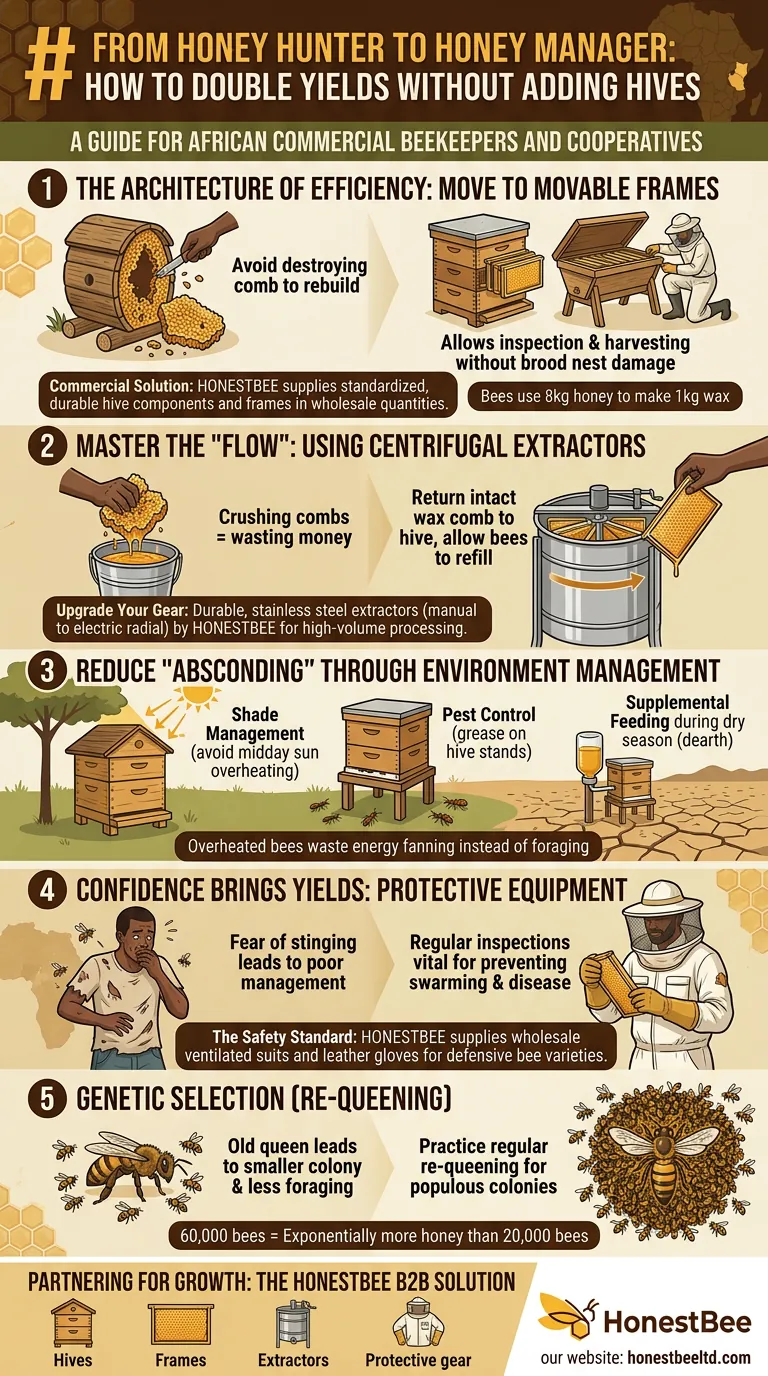
Visual Guide
Related Products
- Durable Plastic Hive Number Set for Beekeeping
- Stainless Steel Round Beehive Air Vents for Ventilation
- HONESTBEE Professional Hive Top Bee Feeder Feeding Solution
- Professional Large-Format Hive Number Set for Beekeeping
- HONESTBEE Professional Long Handled Hive Tool with Precision Cutting Blade
Related Articles
- Hive Thermodynamics: The Unseen Clock Governing Winter Survival
- How Beekeepers Can Diagnose Queen Issues and Prevent Colony Collapse
- The Material Calculus: A Beekeeper's Choice Between Nature and Durability
- Rethinking the Beehive: Why Material Choice is a Bet on Your Time and Sanity
- The Tipping Point: How the 7/10 Rule Prevents a Beehive's Silent Collapse


















