The Misunderstood Battle of Winter
To the casual observer, a beehive in winter appears dormant. To the commercial beekeeper, it represents a high-stakes bet against the elements. The common assumption is that the primary threat is cold. This is an incomplete truth.
The real, invisible enemies are far more insidious: catastrophic energy depletion and lethal internal moisture. For an apiary with hundreds of colonies, these aren't just biological threats; they are systemic financial risks. A lost colony is not just a tragedy; it's lost production, lost pollination contracts, and lost genetic investment. Understanding the physics of their struggle is the first step to securing that investment.
The Colony as a Living Furnace
A honey bee colony does not heat its hive. That would be an impossible, Sisyphean task.
Instead, they perform a marvel of bio-engineering: they form a tight winter cluster and generate their own heat. By vibrating their massive flight muscles, bees in the core of the cluster create a pocket of life-sustaining warmth. The outer bees form a living, insulating mantle.
The fuel for this furnace is honey. Every degree of warmth is purchased with calories meticulously stored from the summer's nectar flows. The colder the outside air, the faster the fuel burns.
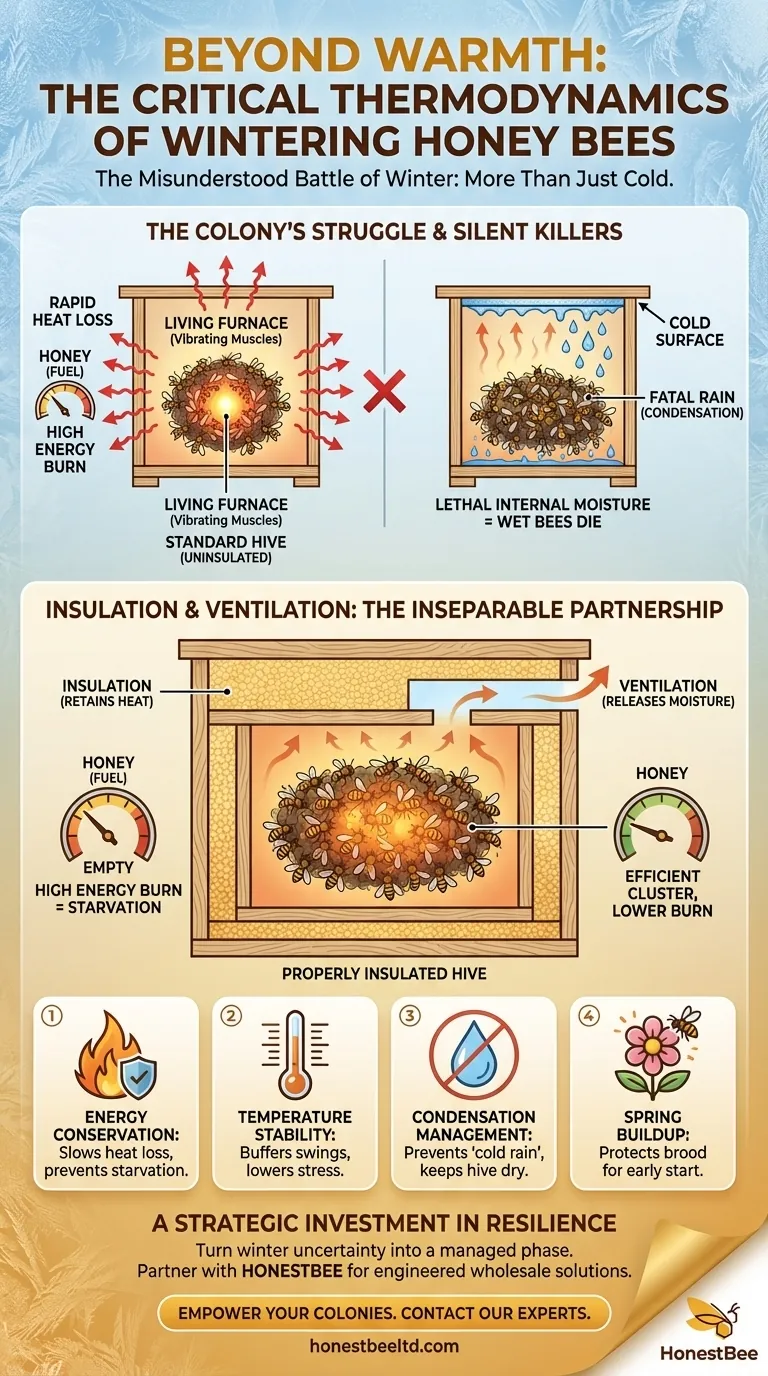
A standard wooden Langstroth hive, for all its utility, is a terribly inefficient structure in winter. It's a wooden tent. The heat generated by the bees' desperate effort radiates away almost as quickly as it's produced. This forces the colony into a state of constant, high-energy consumption simply to stay alive.
The Two Silent Killers
In an uninsulated hive, the colony fights a war on two fronts. One is a battle of attrition, the other is a sudden, fatal event.
The Economics of Energy Loss
The single greatest predictor of winter survival is the colony's food stores. When heat dissipates rapidly through thin wooden walls, the bees must burn through their honey at an unsustainable rate. They are literally burning their savings to stay warm.
Starvation in late winter or early spring is rarely a sign of poor provisioning. More often, it is a sign of poor thermal management. The colony had enough food, but it was forced to spend it all just to survive the physics of its inadequate housing.
The Physics of a Fatal Rain
As the colony metabolizes honey, it produces two key byproducts: heat and water vapor. This warm, humid air rises.
In a cold, uninsulated hive, it hits the frigid inner cover and ceiling. The result is immediate condensation. This moisture coalesces and drips back down—not as gentle dew, but as a freezing, life-extinguishing rain directly onto the bees below. A wet bee is a dead bee. This phenomenon is one of winter's most efficient killers.
Insulation as a System Stabilizer
Proper insulation fundamentally changes the equation. It's not about making the hive "warm." It's about empowering the colony to efficiently manage its own environment. The benefits are a cascade of positive effects.
| Key Benefit | Impact on the Colony's System |
|---|---|
| Energy Conservation | Slows the rate of heat loss, drastically reducing honey consumption and preventing starvation. |
| Temperature Stability | Buffers against wild temperature swings, lowering colony stress and unnecessary energy expenditure. |
| Condensation Management | Keeps the hive ceiling warmer than the dew point, preventing the formation of deadly "cold rain" above the cluster. |
| Spring Buildup | Protects the first generations of new brood from late cold snaps, ensuring a powerful workforce for the first nectar flow. |
The Inseparable Partnership: Insulation and Ventilation
Here lies the most common and fatal mistake in winterizing a hive: believing insulation means creating an airtight seal.
Insulation without ventilation is a death trap.
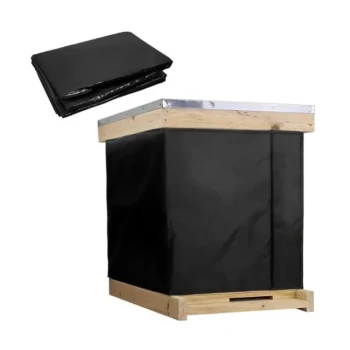
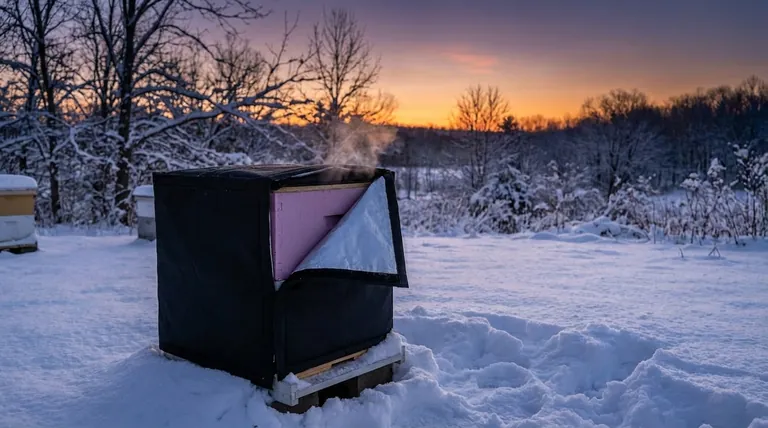
The goal is not a thermos, but a high-performance, breathable structure. The moisture produced by the bees must have a path to escape. The ideal system involves wrapping the hive bodies and, most critically, placing a thick layer of rigid insulation on top. This is paired with a small upper entrance or a dedicated ventilation box.
This setup keeps the heat in while allowing water vapor to rise and exit, creating the warm, dry conditions that are the hallmark of successful wintering.
A Strategic Investment in Colony Resilience
For a commercial operation, managing the colony's environment at scale is non-negotiable. It's the difference between entering spring with powerful, productive hives and facing devastating losses. This requires a systematic approach.
Durable, high-performance insulation and ventilation equipment aren't just accessories; they are essential tools for risk management. By partnering with HONESTBEE, commercial apiaries and distributors gain access to wholesale supplies engineered to solve these exact thermodynamic challenges. We provide the systems that allow beekeepers to turn the brutal uncertainty of winter into a managed, predictable phase of the apiary's annual cycle.
Empower your colonies to do what they do best—survive and thrive. Contact Our Experts
Visual Guide
Related Products
- Professional Insulated Winter Hive Wrap for Beekeeping
- Professional Insulated Plastic Bee Hives
- Inner Beehive Cover for Beekeeping Bee Hive Inner Cover
- Stainless Steel Round Beehive Air Vents for Ventilation
- Metal Hive Feet Bee Hive Stand for Ant Protection
Related Articles
- The Cold Deception: Why Beehive Wintering is About Moisture, Not Warmth
- Beyond Warmth: The Physics of Beehive Survival in Winter
- How to Secure Beehive Covers: Weatherproof Strategies for Every Hive Type
- Beyond the Cold: The Physics of a Winter Beehive and Why Our Instincts Fail Us
- How to Time Hive Insulation for Maximum Winter Bee Survival