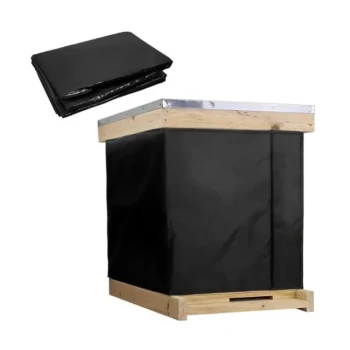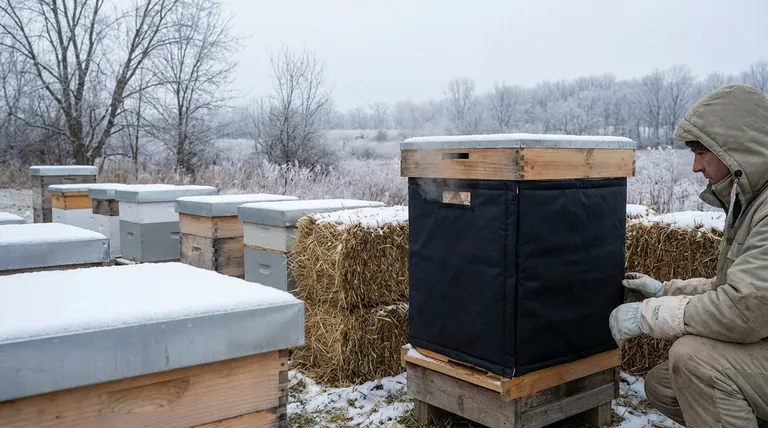
The Caretaker's Fallacy
Picture a beekeeper in late autumn. The air has a sharp edge, and the first frost is near. The instinct is primal, almost parental: protect the colony. We envision wrapping the hive tightly, sealing every crack, creating a warm, impenetrable fortress against the coming cold.
This intuition, born of good intentions, is one of the most dangerous in beekeeping.
We fundamentally misdiagnose the problem. We see the cold as the enemy, but for bees, it's merely the landscape. The true adversaries are far more subtle—they are the byproducts of the bees' own survival mechanism. The greatest threats to a winter hive are not external, but internal: starvation, moisture, and exposure.
The Winter Engine and Its Fuel
Bees don’t heat their hive. They heat themselves.
In a remarkable feat of social thermoregulation, the colony forms a tight cluster around the queen. Bees on the inside vibrate their wing muscles, generating immense heat, while bees on the outer layer insulate the core. This living furnace consumes one thing for fuel: honey.
Starvation is a simple, brutal equation. If the fuel runs out before the winter ends, the engine stops. The beekeeper's first role is not as a builder of walls, but as a quartermaster, ensuring the pantry is full.
- Assess: In the fall, a hive's weight is a direct proxy for its fuel reserves.
- Supplement: If stores are low, feeding sugar syrup is not a crutch; it's a critical refueling before a long, arduous journey.
The Silent Killer: A Problem of Physics
As the bee cluster "engine" burns through honey, it produces an exhaust: warm, moist air. Here, the laws of physics become unforgiving.
Warm air holds significantly more water vapor than cold air. As this humid air rises from the cluster, it hits the cold inner cover of the hive—the ceiling. The temperature drops past the dew point, and the vapor condenses into liquid water.
The result is a cold, continuous rain falling directly onto the bees. A wet bee is a dead bee. This internal condensation is infinitely more dangerous than the external cold.
This creates the central paradox of winterizing: to keep the bees safe, you must let some of the precious heat escape.
The Counter-Intuitive Solution: Ventilation
The goal is not to create an airtight seal. It is to facilitate a slow, steady exchange of air.
- An Upper Entrance: A small hole or gap near the top of the hive is non-negotiable. It acts as an exhaust port, allowing the warm, moist air to escape before it can condense.
- Reduced Lower Entrance: The main entrance should be reduced to prevent drafts and keep mice out, but it must remain open to allow for air intake and for bees to exit on warmer "cleansing flights."
A cold, dry hive is a survivable environment. A warm, wet hive is a tomb.
Amplifying the Strain: The Unseen Force of Wind
While bees can generate their own heat, they cannot fight a relentless thief. Wind is that thief.
It strips away the thin boundary layer of insulating air around the hive, a phenomenon known as convective heat loss. This forces the cluster to burn through its honey reserves at a dramatically accelerated rate to maintain its core temperature.
A simple windbreak—bales of hay, a fence, or even the strategic placement of the hive itself—can reduce this energy tax by a staggering amount. It's the difference between running a marathon and running it into a headwind.
A System of Calculated Interventions
For commercial apiaries, where a mistake is multiplied across hundreds of colonies, winterizing isn't an art; it's a calculated, systems-level process. The reliability of your equipment is paramount.
The Right Tools for a Delicate Balance
| Challenge | Intervention | Tool of Choice |
|---|---|---|
| Starvation | Ensure adequate honey stores | Feeders for fall supplementation |
| Moisture | Facilitate air exchange | Vented inner covers, shims, or quilt boxes |
| Wind | Block prevailing winds & drafts | Hive wraps & entrance reducers |
Using professional-grade equipment is a form of risk management. A flimsy hive wrap that tears in a January storm or a poorly designed ventilator can doom a colony. At scale, consistency is survival. HONESTBEE provides the durable, wholesale-focused supplies commercial apiaries and distributors depend on to execute their winterizing strategies reliably, ensuring every hive has the best possible chance of emerging strong in the spring.
Managing a winter hive is a lesson in humility. It teaches us to look past the obvious threat and see the more complex, interconnected system at play. Success isn't about fighting the cold; it's about creating a stable micro-environment where the bees' own incredible survival strategy can succeed. To do that, you need the right understanding and the right tools. Contact Our Experts
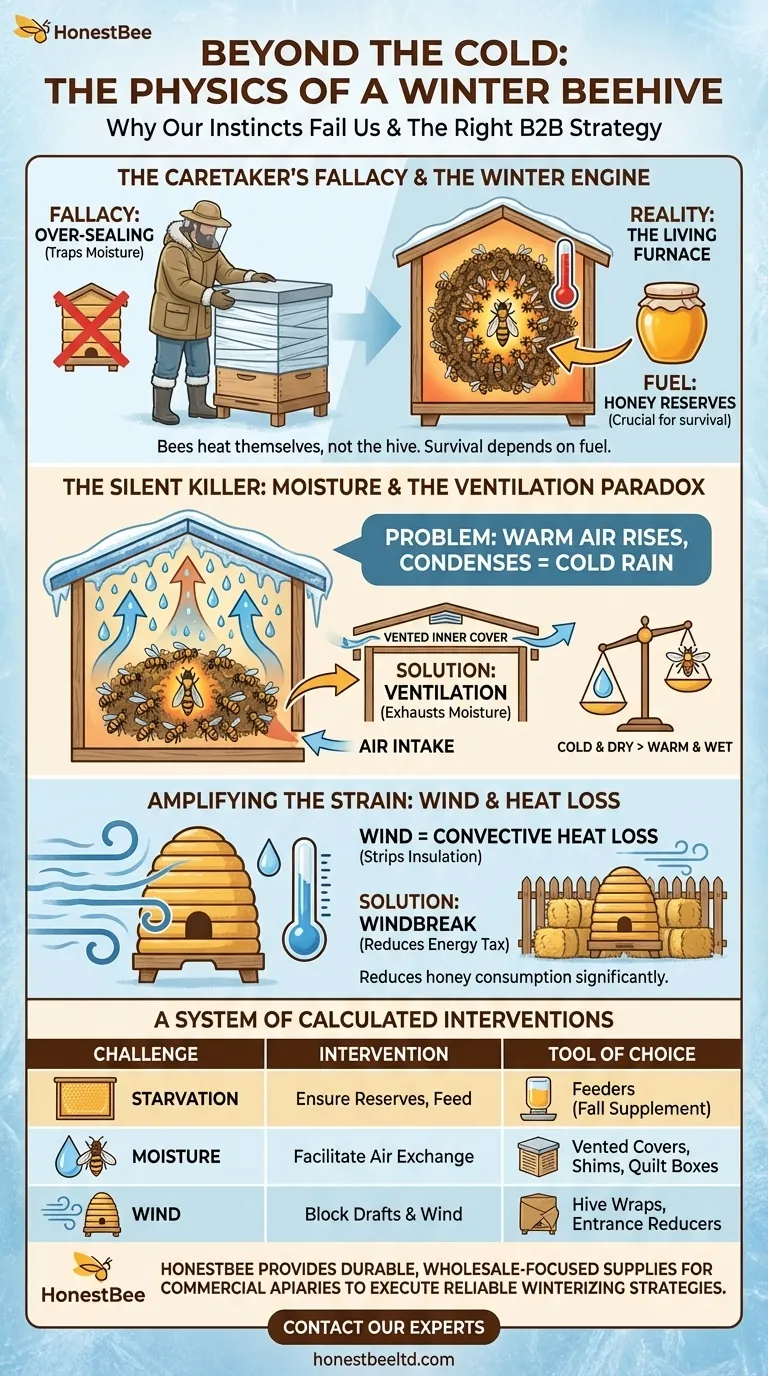
Visual Guide
Related Products
- Professional Insulated Winter Hive Wrap for Beekeeping
- Professional Insulated Plastic Bee Hives
- Inner Beehive Cover for Beekeeping Bee Hive Inner Cover
- Wholesales Dadant Size Wooden Bee Hives for Beekeeping
- Stainless Steel Round Beehive Air Vents for Ventilation
Related Articles
- The Cold Deception: Why Beehive Wintering is About Moisture, Not Warmth
- Beyond Warmth: The Physics of Beehive Survival in Winter
- How to Secure Beehive Covers: Weatherproof Strategies for Every Hive Type
- How to Time Hive Insulation for Maximum Winter Bee Survival
- Beyond Warmth: The Critical Thermodynamics of Wintering Honey Bees