The Beekeeper's Fallacy
Ask a new beekeeper what their primary job is in the fall, and they'll likely say, "To keep the bees warm for winter."
This is a noble goal, but a flawed one. It’s a fundamental misunderstanding of the hive’s physics and the colony's biology. Honey bees don't need us to keep them warm. They are masters of thermal regulation.
Our real job is far more subtle and important. It's not to be a furnace, but to be an architect—to create a stable, dry, and food-rich environment where the bees' own incredible survival engine can function without fail.
A Self-Heating Superorganism
A honey bee colony in winter operates as a single superorganism. The key to its survival is the "winter cluster."
This is a tight ball of thousands of bees, with the queen protected in the warm center. The bees on the inside vibrate their wing muscles, generating tremendous heat. As the bees on the outer layer of the cluster cool, they cycle back into the center.
This is a remarkable feat of engineering. The cluster can maintain its core temperature even when the air outside is freezing. But this engine requires two things: a massive population to generate the heat and a constant supply of fuel to burn.
The Three Killers of Winter
When a colony dies in winter, it's almost never because it simply got "too cold." The failure is systemic. It's a breakdown in one of three interconnected areas.
Threat #1: Starvation—The Fuel for the Engine
The heat generated by the winter cluster comes from one source: honey. A colony is a living furnace, and it will burn through 60 to 90 pounds of honey over a long, cold winter.
Starvation isn't just about an empty pantry. Bees can freeze to death just inches from full frames of honey. As the cluster consumes the honey in one frame, it must be able to move to the next. If the honey frames are too far apart, the cluster can become "marooned" in a cold snap, unable to break formation to reach distant food.
This makes consolidating honey frames into a contiguous block in the fall a critical logistical task. If stores are low, feeding a thick 2:1 sugar syrup is not a sign of failure—it's a necessary investment in survival.
Threat #2: Varroa Mites—The Unseen Saboteur
A colony entering winter with a high load of Varroa mites is like a marathon runner starting the race with the flu. It's already fatally compromised.
Varroa mites weaken bees by feeding on their essential fat body tissues and transmitting a host of debilitating viruses. These "winter bees," born in the fall, are physiologically different; they are built for long-term survival. A mite infestation destroys their resilience before winter even begins.
Aggressive Varroa management in the late summer and fall is not just another task on the checklist. It is the non-negotiable foundation for everything else.
Threat #3: Moisture—The Silent Assassin
This is the most misunderstood threat, and the one that reveals the beekeeper’s fallacy. In the name of keeping the hive "warm," many beekeepers seal it up too tightly. This is a fatal mistake.
Moisture is more dangerous than cold.
As the bees consume honey and respire, they release a tremendous amount of warm, moist water vapor. When this vapor rises and hits the cold inner cover or top of the hive, it condenses into water. This icy water then drips back down onto the bees.
Wet bees are dead bees. A cold, dry bee can survive. A cold, wet bee cannot.
Engineering the Hive for Survival
Our role is to mitigate these three threats by making precise architectural adjustments to the hive. It requires embracing a series of counterintuitive trade-offs.
The Insulation Paradox: Blocking Wind, Not Air
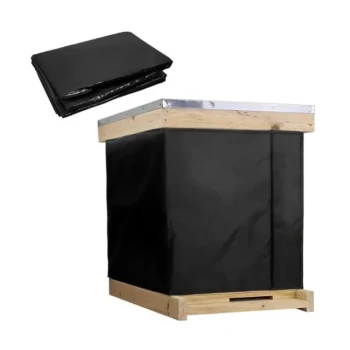
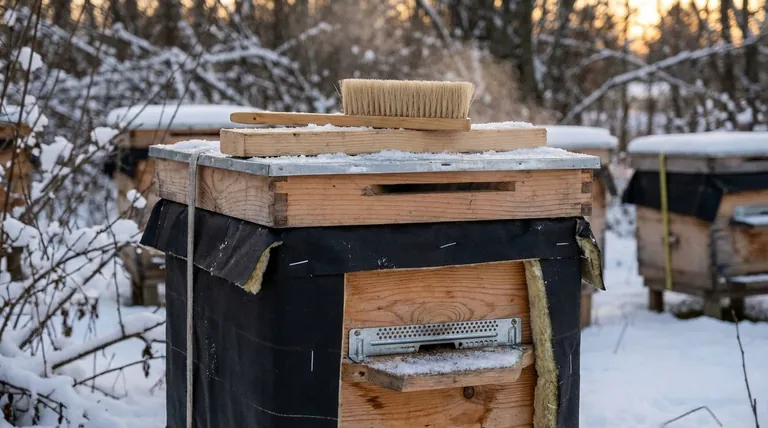
The primary goal of wrapping a hive is not to "keep it warm," but to block the wind. Wind drastically accelerates heat loss from the hive walls, forcing the cluster to burn more honey.
Wrapping the hive in a material like tar paper or a specialized hive wrap creates a still air pocket, reducing this convective heat loss. It provides a buffer against the elements, not an airtight seal.
The Ventilation Imperative: The Necessary Trade-off
To combat the lethal threat of moisture, you must provide ventilation. This almost always means creating a small upper entrance or vent.
Yes, this allows some heat to escape. This is the critical trade-off that many fail to make. Losing a small amount of heat is infinitely preferable to allowing condensation to build up and rain down on your colony. You are not trying to build a thermos; you are trying to build a breathable shelter.
Fortifying the Gates: Access Control
Finally, a winter hive is a tempting target for intruders. Mice seek warmth and will chew comb and disturb the cluster, while robbing bees may try to steal the precious honey stores.
Installing a simple entrance reducer and a mouse guard is the final step in securing the fortress. It makes the entrance defensible for the colony without sealing it off completely.
A Systems Checklist for Winter Success
Effective winterization is not about a single action, but about managing the entire system. Your strategy should be holistic, addressing each threat in turn.
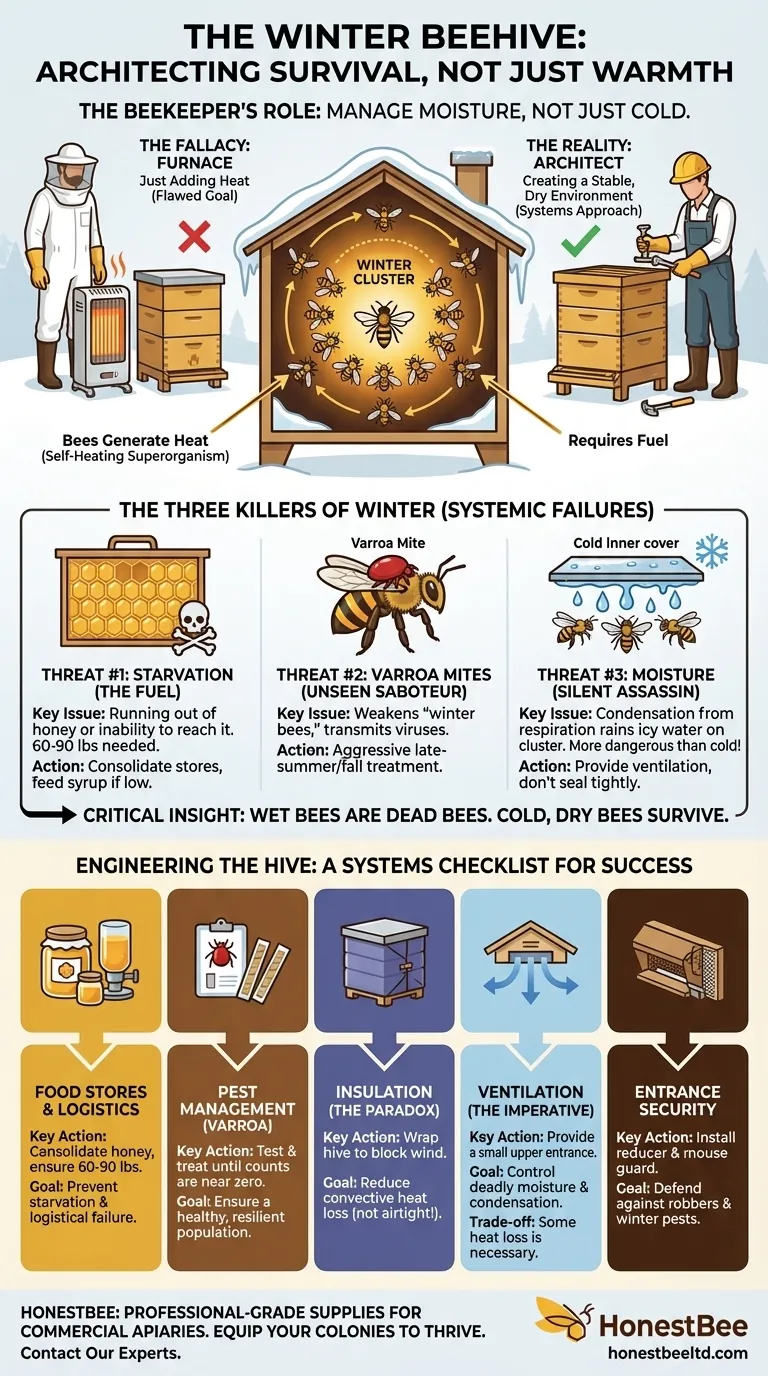
| Critical Winter Prep Task | Key Action | Primary Goal |
|---|---|---|
| Food Stores | Consolidate honey; ensure 60-90 lbs. Feed if needed. | Prevent starvation and logistical failure. |
| Pest Management | Test and treat for Varroa mites until counts are near zero. | Ensure a healthy, resilient bee population. |
| Insulation | Wrap the hive to create a windbreak. | Reduce convective heat loss. |
| Ventilation | Provide a small upper entrance for airflow. | Control deadly moisture and condensation. |
| Entrance Security | Install an entrance reducer and mouse guard. | Defend against robbers and winter pests. |
Managing these interconnected variables is the mark of a skilled beekeeper. It requires the right knowledge and the right equipment. HONESTBEE provides commercial apiaries and distributors with the durable, professional-grade supplies needed to execute this strategy at scale—from effective mite treatments and feeders to robust hive wraps and mouse guards. We equip you to be the architect your colonies need.
Protect your investment and ensure your bees emerge strong in the spring. Contact Our Experts
Visual Guide
Related Products
- Professional Insulated Winter Hive Wrap for Beekeeping
- Professional Insulated Plastic Bee Hives
- Inner Beehive Cover for Beekeeping Bee Hive Inner Cover
- Wholesales Dadant Size Wooden Bee Hives for Beekeeping
- Stainless Steel Round Beehive Air Vents for Ventilation
Related Articles
- The Cold Deception: Why Beehive Wintering is About Moisture, Not Warmth
- Beyond Warmth: The Physics of Beehive Survival in Winter
- How to Secure Beehive Covers: Weatherproof Strategies for Every Hive Type
- Beyond the Cold: The Physics of a Winter Beehive and Why Our Instincts Fail Us
- How to Time Hive Insulation for Maximum Winter Bee Survival