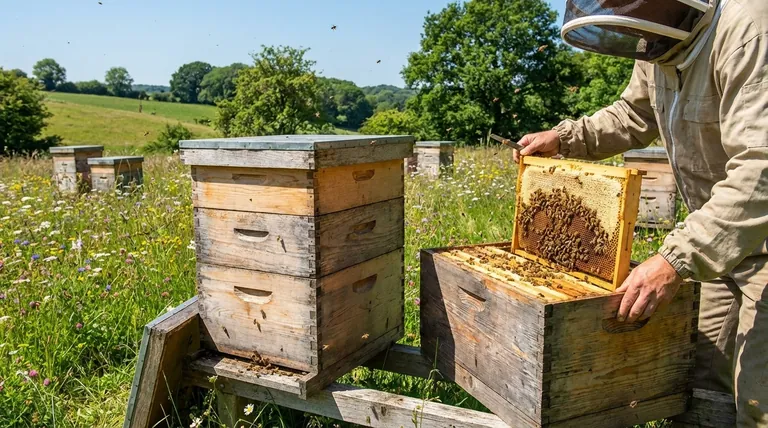
For beekeepers, maximizing hive productivity isn't just about adding more boxes—it's about strategically using each component to support colony health and honey production. This guide breaks down proven methods to leverage brood chambers and honey supers effectively, prevent swarming, and boost yields.
Langstroth Hive Architecture Essentials
Brood Chamber Dynamics: Space Requirements for Colony Expansion
The brood chamber is the engine of your hive. Research shows colonies need adequate space during peak growth to prevent swarming—a leading cause of productivity loss.
Key strategies:
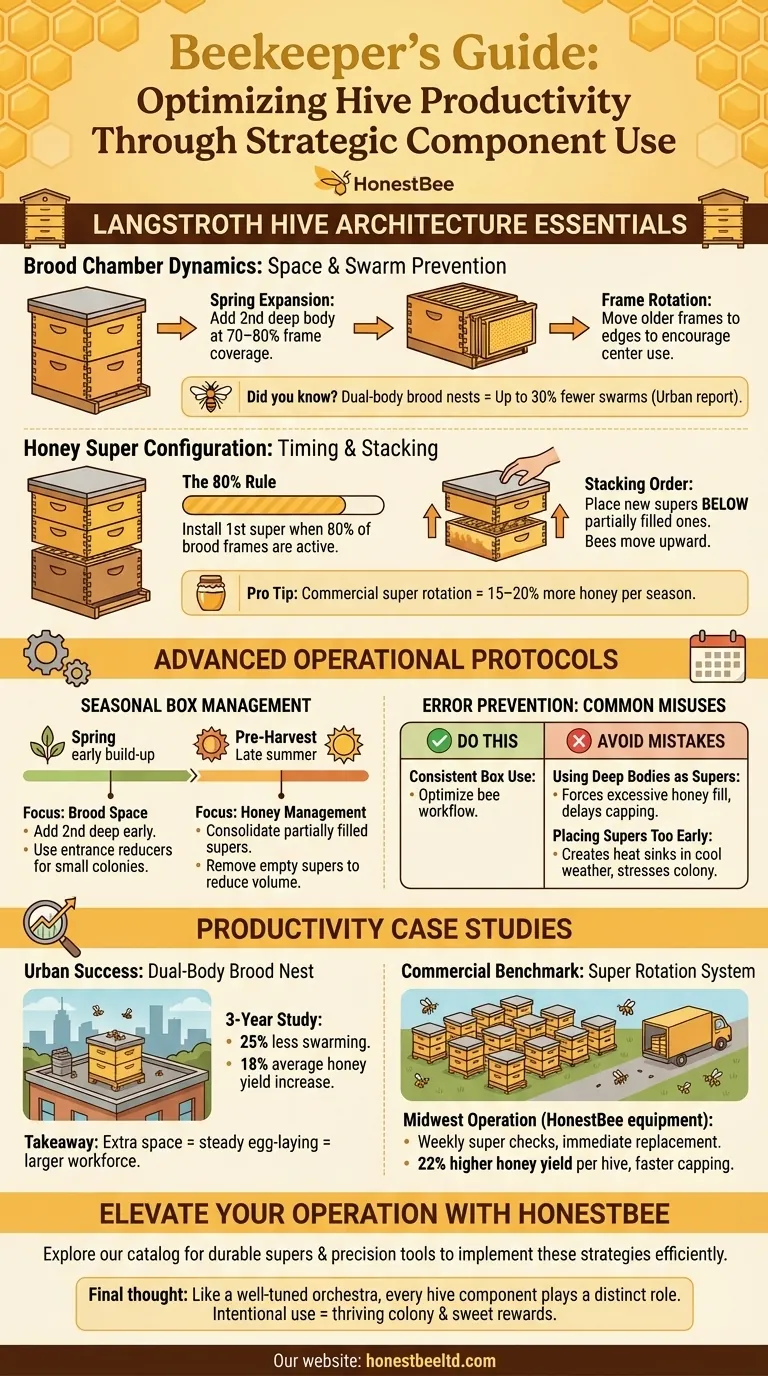
- Spring expansion: Add a second deep body when 70–80% of frames are covered with bees. This prevents congestion that triggers swarming.
- Frame rotation: Move older, darker brood frames to the outer edges of the box to encourage queen use of center frames for egg-laying.
Did you know? Urban beekeepers using dual-body brood nests report up to 30% fewer swarms compared to single-chamber setups.
Honey Super Configuration: Timing and Stacking Techniques
Supers should be added before nectar flows peak, not when the brood chamber overflows.
Best practices:
- "The 80% rule": Install the first super when 80% of brood frames contain bees or nectar.
- Stacking order: Place new supers below partially filled ones. Bees naturally move upward, improving honey storage efficiency.
Pro tip: Commercial apiaries using a super rotation system (swapping full supers with empties during inspections) harvest 15–20% more honey per season.
Advanced Operational Protocols
Seasonal Box Management: Spring Build-Up vs. Harvest Preparation
Spring: Focus on brood space.
- Add a second deep body early to accommodate population growth.
- Use entrance reducers to help smaller colonies defend their expanded space.
Pre-harvest (late summer): Shift to honey management.
- Consolidate partially filled supers to encourage capping.
- Remove empty supers to reduce hive volume, making winter clustering more efficient.
Error Prevention: Common Misuses of Interchangeable Components
While deep bodies and supers can be swapped, doing so haphazardly disrupts colony rhythms.
Avoid these mistakes:
- Using deep bodies as supers: This forces bees to fill excessive space with honey, delaying capping.
- Placing supers too early: Empty supers in cool weather act as heat sinks, stressing the colony.
Remember: Consistency in box type usage helps bees optimize their workflow—much like an organized workshop boosts human productivity.
Productivity Case Studies
Urban Beekeeper Success: Dual-Body Brood Nest Configuration
A 3-year study of rooftop apiaries showed:
- Colonies with two deep brood bodies swarmed 25% less often.
- Honey yields increased by an average of 18% due to stronger summer populations.
Takeaway: The extra space allows queens to maintain steady egg-laying, creating a larger workforce for nectar collection.
Commercial Apiary Benchmark: Super Rotation System
A Midwest operation using HONESTBEE equipment implemented:
- Weekly super checks during peak flow.
- Immediate replacement of filled supers with empty, pre-waxed units.
Results: 22% higher honey yield per hive, with faster capping times due to consistent comb availability.
Ready to Elevate Your Beekeeping Operation?
Whether you're managing three hives or three hundred, HONESTBEE’s wholesale beekeeping supplies—from durable supers to precision hive tools—help you implement these strategies efficiently. Explore our catalog today to equip your apiary for maximum productivity.
Final thought: Like a well-tuned orchestra, every hive component plays a distinct role. When each box is used intentionally, the entire colony thrives—creating sweet rewards for both bees and beekeepers.
Visual Guide
Related Products
- Heavy Duty Castellated Iron Frame Spacer for Honey Supers
- Efficient Hive Clearing: HONESTBEE 8-Way Plastic Bee Escape
- Professional Durable Two-Piece Plastic Bee Escape
- Australian Langstroth Beehive Boxes for Beekeeping Wholesales
- Durable 16 Way Circular Bee Escape for Efficient Honey Harvesting
Related Articles
- How Stored Honey Frames Accelerate Colony Recovery: A Beekeeper’s Guide
- The Art of Apiary Architecture: How a Simple Box Prevents a Beehive from Self-Destructing
- Hive Architecture: How One Empty Box Prevents a Colony's Collapse
- How Honey Frames Naturally Manage Queen Bees Without Compromising Colony Health
- Bee Space: The Architectural Principle Governing a Honeybee Society