Understanding honeybee behavior during brood nest expansion is key to maximizing honey production while maintaining colony health. This article explores the biological mechanisms behind sugar relocation and provides actionable strategies for beekeepers to align hive management with natural bee workflows.
Brood Nest Dynamics and Sugar Storage
The Biological Triggers of Brood Nest Expansion
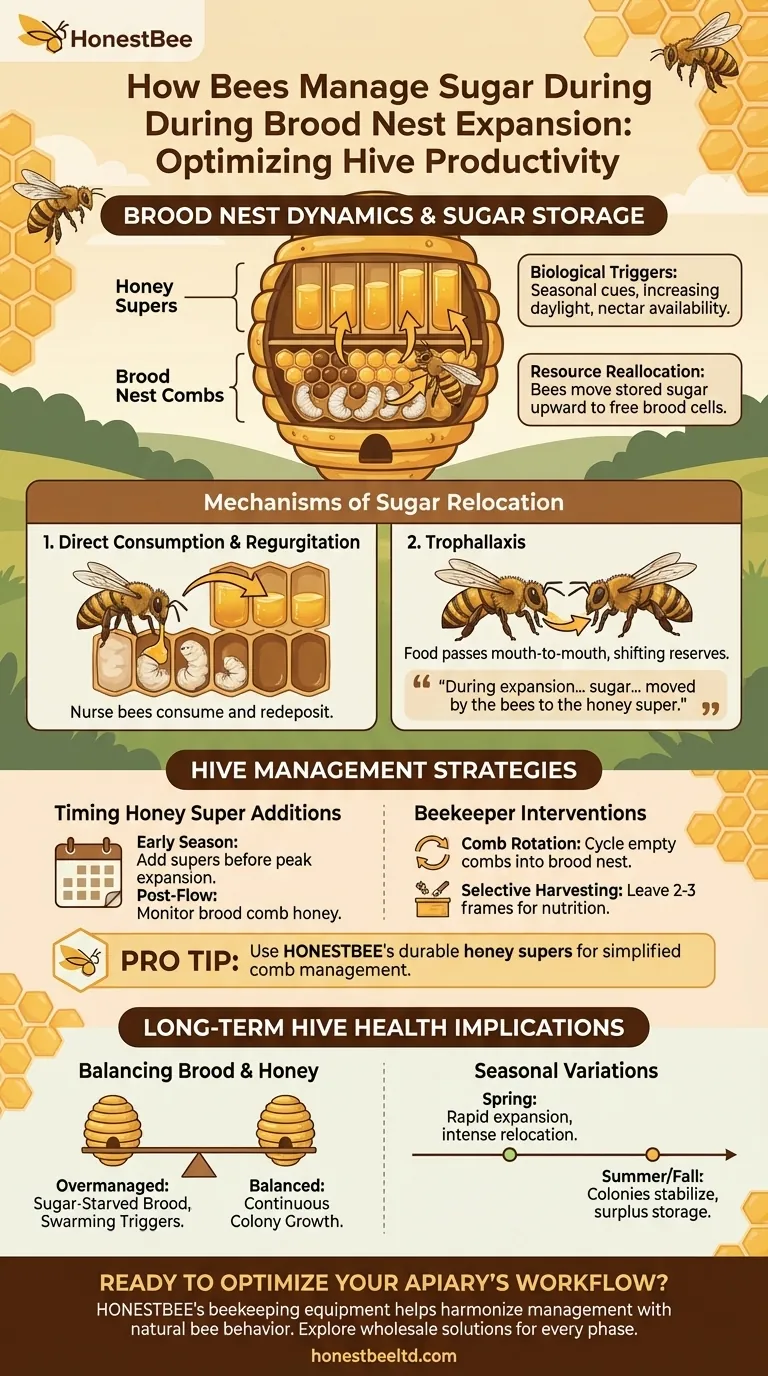
Brood nest expansion occurs when colonies respond to seasonal cues like increasing daylight and nectar availability. Worker bees instinctively prioritize brood rearing during peak foraging seasons, creating space by relocating stored sugar (honey) from brood combs to honey supers.
Key observations:
- Resource Reallocation: Bees move sugar reserves upward to free brood cells for larvae, ensuring continuous colony growth.
- Nectar Flow Dependency: Strong nectar flows accelerate this process, as incoming resources reduce reliance on stored honey.
Mechanisms of Sugar Relocation: From Brood Combs to Honey Supers
Bees employ two primary methods to redistribute sugar:
- Direct Consumption and Regurgitation: Nurse bees consume stored honey and redeposit it in honey supers as partially processed nectar.
- Trophallaxis: Food passes mouth-to-mouth between workers, gradually shifting reserves to upper hive sections.
"During expansion of the brood nest, sugar stored in brood nest combs may be moved by the bees to the honey super."
Hive Management Strategies
Timing Honey Super Additions with Brood Expansion
Beekeepers can boost honey yields by synchronizing super additions with brood nest growth phases:
- Early Season: Add supers before brood expansion peaks to provide relocation space.
- Post-Flow Period: Monitor brood comb honey levels; delayed super removal risks trapping sugar in brood areas.
Beekeeper Interventions to Maximize Honey Yield
- Comb Rotation: Cycle empty combs into the brood nest during expansion to reduce sugar relocation labor.
- Selective Harvesting: Leave 2–3 frames of honey in brood combs post-harvest to support colony nutrition.
Pro Tip: Use HONESTBEE’s durable honey supers with standardized frame sizes to simplify comb management during rapid hive growth.
Long-Term Hive Health Implications
Balancing Brood Rearing and Honey Storage
Overmanaged hives may exhibit:
- Sugar-Starved Brood: Aggressive honey harvesting can force bees to consume reserves needed for larvae.
- Swarming Triggers: Congested brood nests with inadequate sugar storage space increase swarming risk.
Seasonal Variations in Sugar Relocation Patterns
- Spring: Rapid brood expansion demands intense sugar relocation.
- Summer/Fall: Colonies stabilize, storing surplus honey in supers with minimal brood comb interference.
Ready to Optimize Your Apiary’s Workflow?
HONESTBEE’s beekeeping equipment helps commercial apiaries harmonize hive management with natural bee behavior. Explore our wholesale solutions to support every phase of colony growth—from brood expansion to honey harvest.
Visual Guide
Related Products
- HONESTBEE 15-in-1 Beekeeper Multi-Tool with Hammer and Pliers for Beekeeping
- Stainless Steel J Hook Hive Tool for Beekeeping
- Stainless Steel Queen Grafting Tool for Beekeeping and Bee Queen Grafting
- Multi-Function Plier-Style Frame Grip Hive Tool
- HONESTBEE Professional Mini J-Hook Hive Tool for Beekeeping
Related Articles
- Essential Beekeeping Tools: How to Choose and Use Gear for Safe, Efficient Hive Management
- Essential Beekeeping Tools: How Strategic Preparation Boosts Hive Health, Safety, and Honey Yields
- How to Choose Beekeeping Tools: A Practical Guide for Every Budget and Climate
- How to Master Essential Beekeeping Tools Safely and Efficiently
- The Human Interface: Why a Beekeeper's Calm is the Ultimate Hive Tool