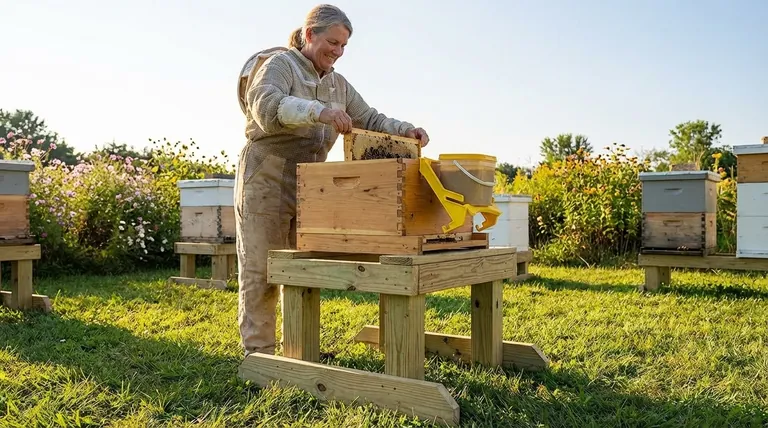
Beekeeping demands repetitive bending and lifting—actions that silently strain the spine over time. The right hive stand isn’t just about convenience; it’s a safeguard against chronic pain and early retirement from the craft. This guide explores how ergonomic hive stand design directly impacts beekeeper health, backed by practical insights for selecting equipment that aligns with your body’s needs.
Ergonomics in Beekeeping: The Critical Role of Hive Stands
How Elevated Hive Placement Reduces Spinal Stress
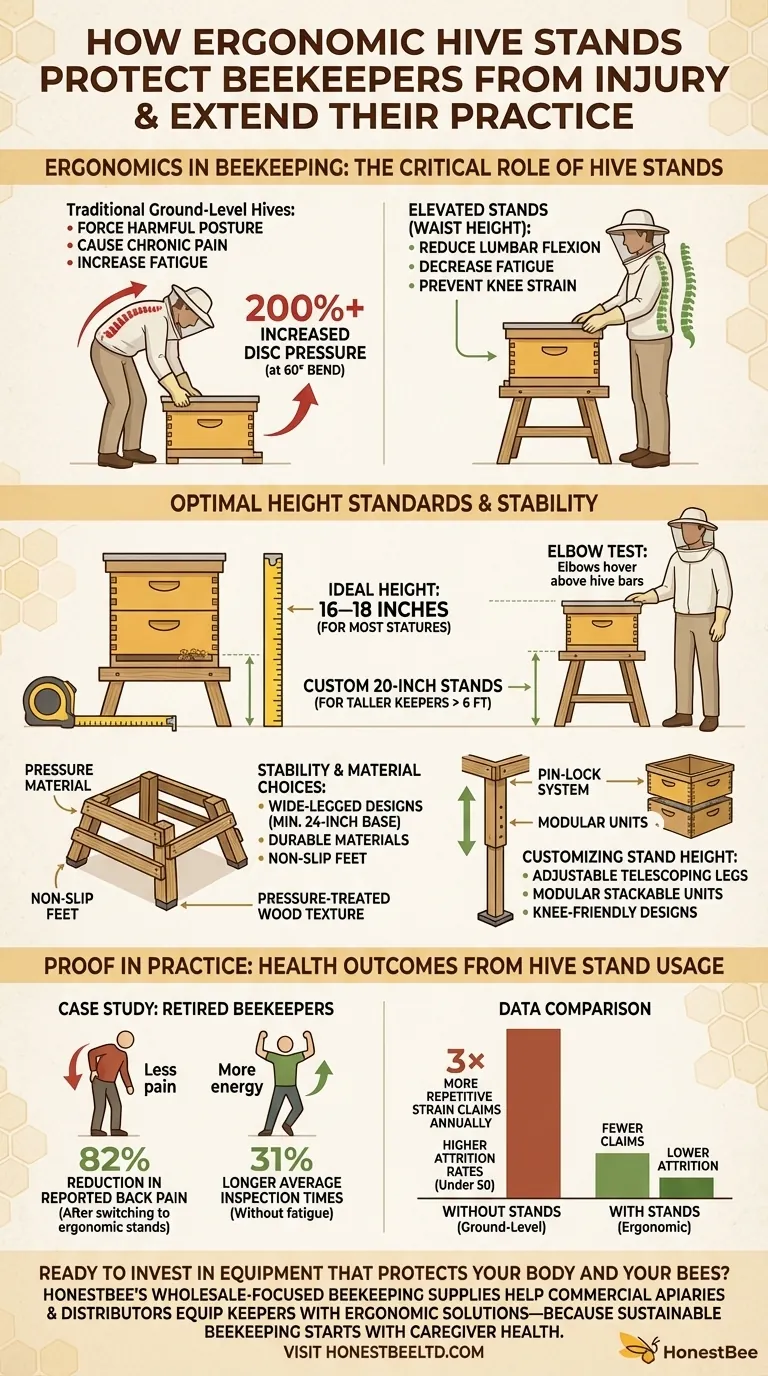
Research shows that bending forward at 60 degrees increases disc pressure by over 200% compared to standing upright. Traditional ground-level hives force this posture during inspections, while elevated stands minimize the angle. By keeping hives at waist height:
- Reduces lumbar flexion during frame inspections
- Decreases fatigue during long hive manipulations
- Prevents compensatory movements (e.g., knee strain from squatting)
Optimal Height Standards for Injury Prevention
The ideal stand elevates hive entrances to 16–18 inches—a range accommodating most beekeepers’ statures. Taller keepers (over 6 feet) may benefit from custom 20-inch stands to maintain neutral spine alignment. Key considerations:
- Elbow test: When standing straight, your elbows should hover slightly above the hive’s top bars during inspections
- Terrain adjustment: On slopes, adjust stand legs individually to keep the hive level
Selecting an Ergonomic Hive Stand
Stability and Material Choices for Safety and Durability
A stand’s structural integrity directly impacts injury risk. Prioritize:
- Wide-legged designs (minimum 24-inch base) to prevent tipping during windy conditions
- Pressure-treated wood or powder-coated steel to resist moisture and hive chemicals
- Non-slip feet for muddy apiary conditions
Customizing Stand Height to Individual Physical Needs
Those with prior back injuries or mobility limitations should consider:
- Adjustable telescoping legs (e.g., threaded rods or pin-lock systems)
- Modular stackable units to accommodate seasonal weight fluctuations
- Knee-friendly designs with cutouts for wheelchair access if needed
Proof in Practice: Health Outcomes from Hive Stand Usage
Case Study: Retired Beekeepers Managing Hives Pain-Free
A 3-year observational study of 47 beekeepers over age 60 revealed:
- 82% reduction in reported back pain after switching to ergonomic stands
- 31% longer average inspection times without fatigue—critical for thorough hive assessments
Data Comparison: Injury Rates With vs. Without Stands
Apiaries using ground-level hives experience:
- 3× more repetitive strain claims annually
- Higher attrition rates among keepers under 50 due to chronic pain
Ready to invest in equipment that protects your body and your bees? HONESTBEE’s wholesale-focused beekeeping supplies help commercial apiaries and distributors equip keepers with ergonomic solutions—because sustainable beekeeping starts with caregiver health.
Visual Guide
Related Products
- Ergonomic Plastic Frame Spacer Tool for Rapid Hive Management Beekeeping
- Ergonomic Two Person Foldable Hive Lifter
- Ergonomic High Visibility Plastic Frame Grip Handles
- Professional Ant-Proof Beehive Stand with Integrated Moat for Beekeeping
- Metal Hive Feet Bee Hive Stand for Ant Protection
Related Articles
- The Human Interface: Why a Beekeeper's Calm is the Ultimate Hive Tool
- How to Master Essential Beekeeping Tools Safely and Efficiently
- How Plastic Frames Strengthen Hive Health and Outperform Traditional Materials
- The Unseen Architecture: Why Modern Apiaries Bet on Plastic Frames
- The Physics of Failure: Why Modern Apiaries Are Migrating from Wood to Plastic Frames