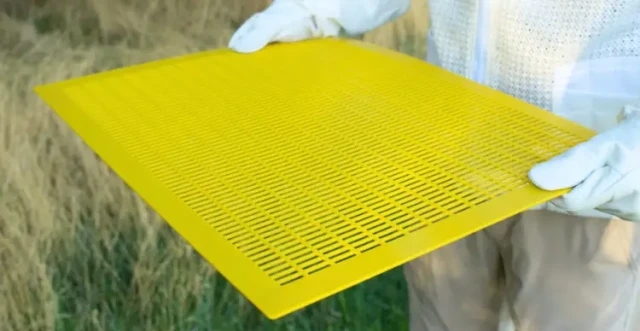
For commercial beekeepers and apiary managers, queen excluders are more than just metal or plastic grids—they’re precision tools that streamline honey production, simplify hive inspections, and protect harvest quality. This guide unpacks their mechanics, seasonal strategies, and alternatives, backed by biological insights and field-tested practices.
Queen Excluder Fundamentals
Structural Mechanics Behind Bee Differentiation
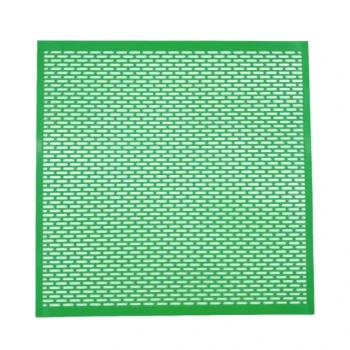
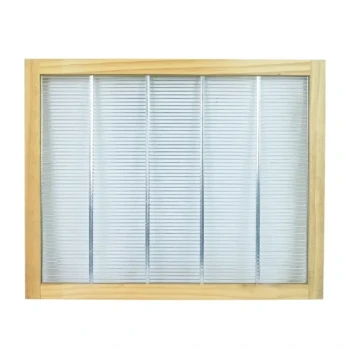
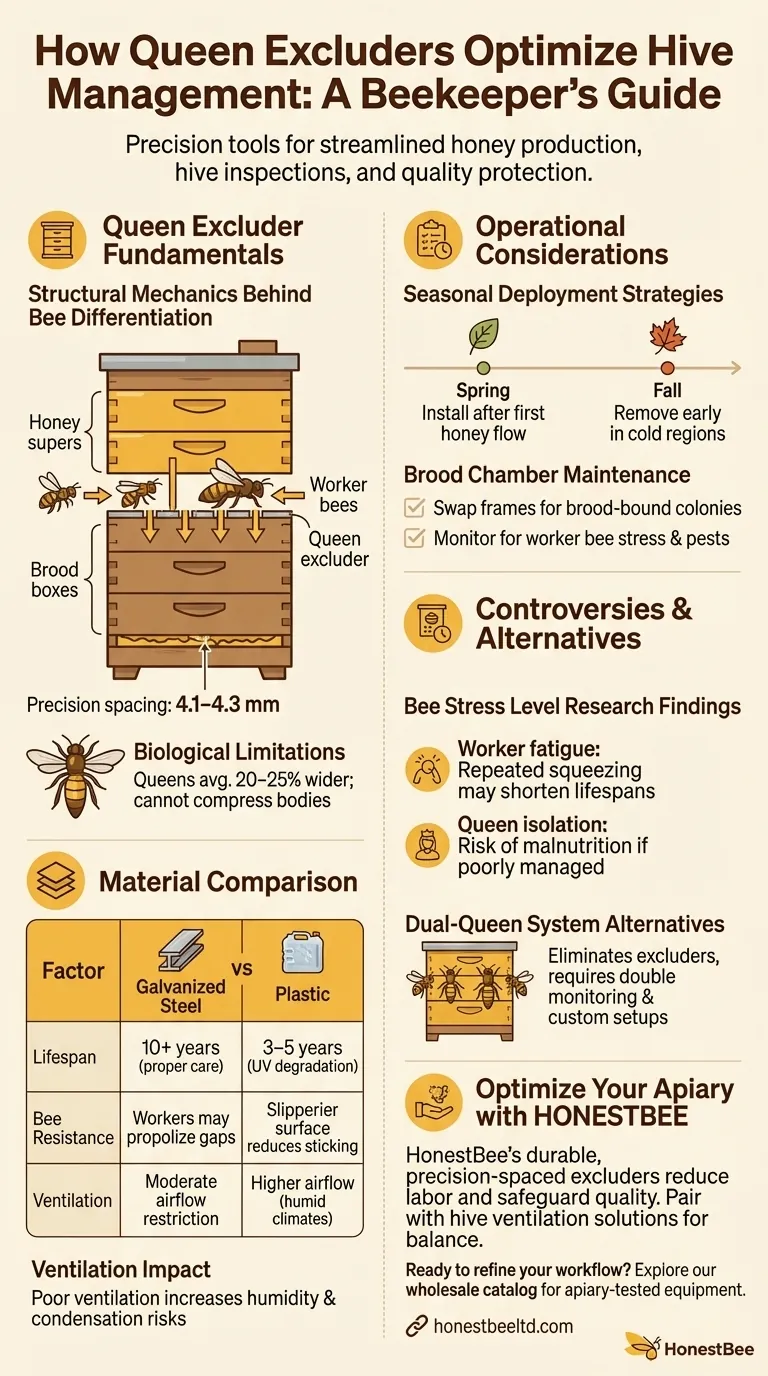
Queen excluders work by exploiting physiological differences between worker bees and queens. The spacing of wires or plastic bars (typically 4.1–4.3 mm apart) allows worker bees to pass through but blocks the queen’s larger thorax and abdomen.
Key design principles:
- Precision spacing: Wider gaps risk queen leakage; narrower gaps hinder worker mobility.
- Smooth edges: Prevents bee injuries during transit.
Biological Limitations of Queen Bee Physiology
Queens average 20–25% wider than workers due to their egg-laying anatomy. Research confirms they cannot compress their bodies to bypass excluders without injury—a natural constraint that beekeepers leverage for hive control.
Operational Considerations
Seasonal Deployment Strategies
Timing matters. In cold climates (e.g., northern U.S., Canada), excluders are removed in winter to let queens migrate upward with the cluster. In temperate zones like Australia, they may stay year-round with minimal brood disruption.
Best practices by season:
- Spring: Install excluders after the first honey flow to avoid trapping the queen below starving bees.
- Fall: Remove early in cold regions to prep for winter clustering.
Brood Chamber Maintenance Implications
Excluders simplify honey super management but require vigilance:
- Brood-bound colonies: If workers backfill brood cells with honey (due to excluded queens), swap frames to prevent swarming.
- Pest resistance: Cleaner honey supers deter wax moths, but monitor for worker bee stress (see Controversies below).
Material Comparison
Galvanized Steel vs Plastic Durability Analysis
| Factor | Galvanized Steel | Plastic |
|---|---|---|
| Lifespan | 10+ years with proper care | 3–5 years (UV degradation) |
| Bee resistance | Workers may propolize gaps | Slipperier surface reduces sticking |
| Ventilation impact | Moderate airflow restriction | Higher airflow (critical in humid climates) |
Ventilation Impact on Colony Health
Poorly ventilated excluders can elevate hive humidity by 15–20%, increasing condensation risks. Plastic models outperform metal in tropical apiaries but may warp under heavy honey loads.
Controversies & Alternatives
Bee Stress Level Research Findings
Studies note two potential stressors:
- Worker fatigue: Repeated squeezing through excluders may shorten lifespans in high-traffic hives.
- Queen isolation: Prolonged separation from honey stores risks malnutrition in poorly managed hives.
Mitigation: Limit excluder use to active honey flows and monitor colony temperament changes.
Dual-Queen System Alternatives
Some large-scale operations use dual-queen hives with divided brood chambers, eliminating excluders while maintaining honey purity. However, this demands:
- Double the queen monitoring
- Custom hive setups (e.g., Langstroth modifications)
Optimize Your Apiary with HONESTBEE
Queen excluders are just one tool in a holistic hive management system. For commercial beekeepers and distributors, HONESTBEE’s durable, precision-spaced excluders reduce harvest labor while safeguarding honey quality. Pair them with our hive ventilation solutions to balance efficiency and bee health.
Ready to refine your workflow? Explore our wholesale catalog for apiary-tested equipment that scales with your operation.
Products You Might Be Looking For:
Explore durable wooden queen excluders
Visual Guide
Related Products
- High Performance Plastic Queen Excluder for Beekeeping and Apiary Management
- Professional Plastic Queen Excluder for Modern Beekeeping
- Lightweight Durable Plastic Queen Excluder Scraper for Beekeeping
- Metal Queen Bee Excluder for Beekeeping
- Premium Wood Framed Metal Wire Queen Bee Excluder
Related Articles
- How Plastic Queen Excluders Improve Hive Longevity and Colony Health
- Plastic Queen Excluders vs. Alternatives: A Beekeeper’s Guide to Smarter Hive Management
- Why Plastic Queen Excluders Outperform Metal and Wood: Science, Savings, and Hive Protection
- How to Choose Queen Excluders Based on Colony Behavior and Queen Traits
- The Geometry of Order: Why the Queen Excluder is a Beekeeper's Most Strategic Tool