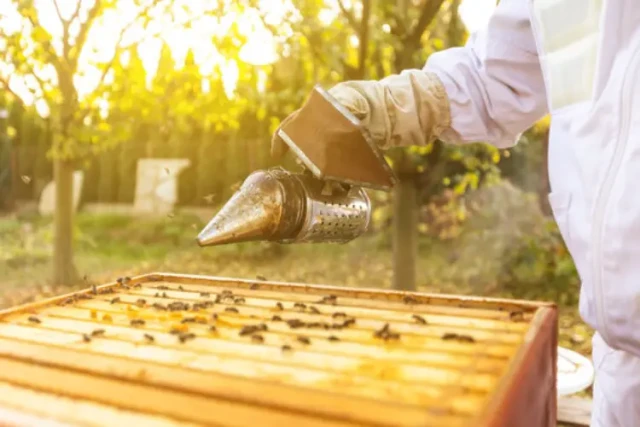
Key Benefit for Beekeepers: Master precision smoking methods that maintain colony health while ensuring safe inspections—backed by entomological research.
The Biological Purpose of Hive Smoking
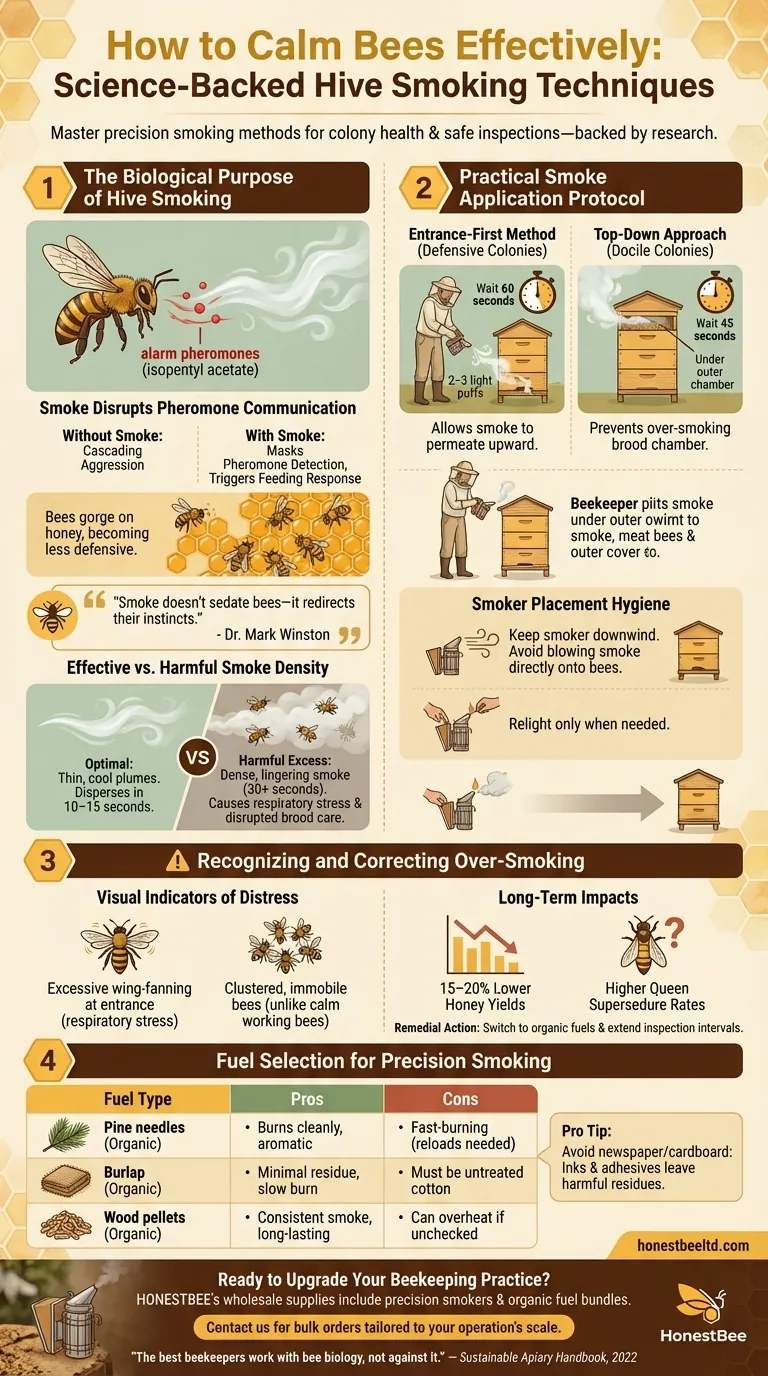
Smoke isn’t just a beekeeper’s tool—it’s a biological interruptor. When applied correctly, it temporarily alters honey bee behavior by targeting their communication systems.
How Smoke Disrupts Defensive Pheromone Communication
Bees rely on alarm pheromones (like isopentyl acetate) to coordinate colony defense. Research shows smoke:
- Masks pheromone detection, preventing cascading aggression.
- Triggers a feeding response, as bees interpret smoke as wildfire threat, causing them to gorge on honey (making them less likely to sting).
- Reduces agility, slowing defensive maneuvers without harming flight ability.
"Smoke doesn’t sedate bees—it redirects their instincts," explains entomologist Dr. Mark Winston. This distinction is critical for ethical beekeeping.
Thresholds for Effective vs. Harmful Smoke Density
- Optimal smoke: Thin, cool plumes that disperse within 10–15 seconds.
-
Harmful excess: Dense smoke that lingers over 30 seconds, causing:
- Respiratory stress (visible as bees fanning wings at hive entrance post-inspection).
- Disrupted brood care due to prolonged pheromone interference.
Practical Smoke Application Protocol
Spatial Targeting: Entrance vs. Top Puff Strategies
-
Entrance-first method (Recommended for defensive colonies):
- 2–3 light puffs at the hive entrance, waiting 60 seconds before opening.
- Allows smoke to permeate upward naturally, minimizing direct contact.
-
Top-down approach (For docile colonies during honey checks):
- Brief smoke under the outer cover, then inspect after 45 seconds.
- Prevents over-smoking the brood chamber.
Smoker Placement Hygiene During Inspections
- Keep smoker downwind of the hive to avoid blowing smoke directly onto bees.
- Relight only when needed—continuous burning wastes fuel and risks over-application.
Recognizing and Correcting Over-Smoking
Visual Indicators of Bee Distress Post-Smoking
- Excessive wing-fanning at the entrance (signaling respiratory stress).
- Clustered, immobile bees on frames (unlike calm bees that continue working).
- Delayed queen resumption of egg-laying (observed over 24–48 hours).
Long-Term Impacts on Honey Production and Queen Health
-
Colonies exposed to weekly over-smoking show:
- 15–20% lower honey yields due to disrupted foraging.
- Higher queen supersedure rates from chronic stress.
Remedial action: Switch to organic fuels (below) and extend intervals between inspections.
Fuel Selection for Precision Smoking
Low-Residue Organic Fuels vs. Traditional Combustibles
| Fuel Type | Pros | Cons |
|---|---|---|
| Pine needles | Burns cleanly, aromatic | Fast-burning (requires reloads) |
| Burlap | Minimal residue, slow burn | Must be untreated cotton |
| Wood pellets | Consistent smoke, long-lasting | Can overheat if unchecked |
Pro Tip: Avoid newspaper or cardboard—their inks and adhesives leave harmful residues.
Ready to Upgrade Your Beekeeping Practice?
HONESTBEE’s wholesale beekeeping supplies include precision smokers and organic fuel bundles—helping commercial apiaries balance efficiency with colony welfare. [Contact us] for bulk orders tailored to your operation’s scale.
"The best beekeepers work with bee biology, not against it." — Sustainable Apiary Handbook, 2022
Visual Guide
Related Products
- Stainless Steel Bee Hive Smoker Beekeeping Smoker for Wholesale
- Stainless Steel Honey Bee Smoker Hive and Honeycomb Smoker for Beekeeping
- Electric Bee Smoker European Style Bee Hive Smoker for Beekeeping
- European Stainless Steel Bee Smoker for Honey Bee Hive
- Premium Traditional Copper Bee Smoker with Bellows
Related Articles
- The End of 'Hot Hives': Why Your Bee Smoker Is More Important Than Your Suit
- Why Your Bee Smoker Keeps Going Out—And the 3-Layer Fix
- Why Your Bee Smoker Might Be Making Your Hives More Aggressive—And How to Fix It
- How to Operate a Bee Smoker Safely: Expert Techniques for Calmer Hives
- How to Clean Your Beehive Smoker Safely: A Beekeeper’s Guide to Efficiency and Disease Prevention



















