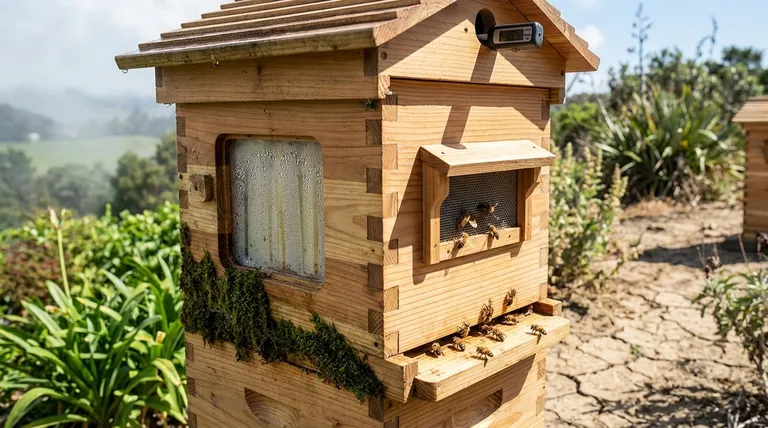
Beekeepers know that proper hive ventilation isn’t just about comfort—it’s a lifeline for colony survival. From preventing deadly condensation in humid climates to reducing heat stress in arid regions, airflow directly impacts honey production, disease resistance, and swarm behavior. This guide distills climate-specific techniques to adapt your Flow Hive’s ventilation system, backed by thermoregulation science and real-world beekeeper insights.
Understanding the Science of Hive Ventilation
Thermoregulation and Moisture Control in Bee Colonies
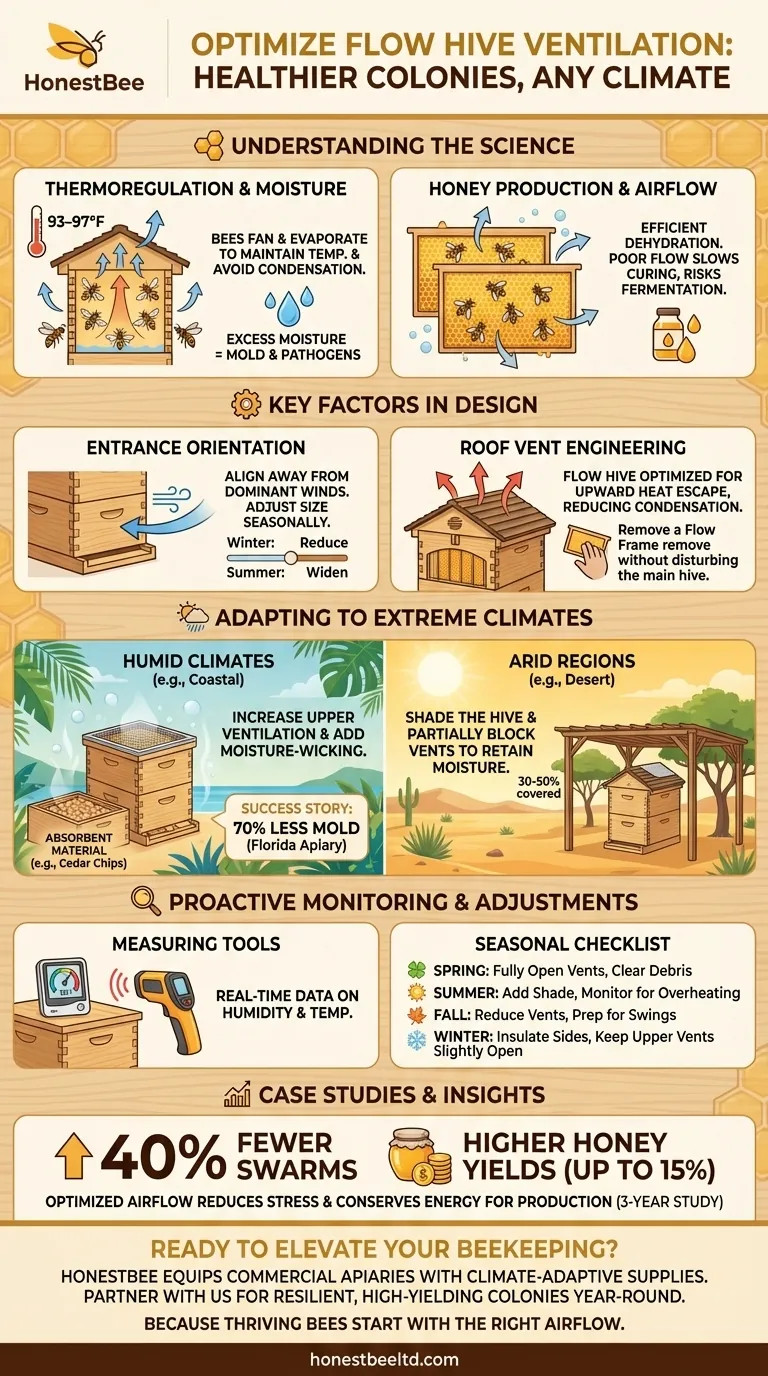
Bees are master climate engineers. Research shows they maintain brood nest temperatures within a narrow range (around 93–97°F) through collective behaviors: fanning wings to circulate air, evaporating water for cooling, or clustering to generate heat. Poor ventilation disrupts this balance, leading to:
- Condensation buildup: Excess moisture promotes mold and pathogens like chalkbrood.
- Overworked bees: Colonies expend energy on temperature regulation instead of honey production.
Flow Hives benefit from elevated stands (vs. ground contact), allowing air to circulate underneath—a simple but critical design feature noted in hive thermoregulation studies.
How Airflow Patterns Impact Honey Production
Ventilation isn’t just about temperature; it influences honey curing. Bees dehydrate nectar into honey by fanning humid air out of the hive. Inadequate airflow:
- Slows curing, risking fermentation.
- Forces bees to relocate honey stores away from damp areas, fragmenting the colony’s workflow.
A well-ventilated Flow Hive supports efficient honey processing, letting bees focus on production rather than environmental damage control.
Key Factors in Flow Hive Ventilation Design
Entrance Orientation: Aligning with Microclimate Winds
- Prevailing winds: Face the entrance away from dominant wind directions to reduce drafts while allowing passive airflow.
- Seasonal adjustments: In winter, reduce entrance size to minimize heat loss; in summer, widen it to enhance circulation.
Roof Vent Engineering: Flow Hive’s Unique Advantages
Unlike traditional Langstroth hives, Flow Hives feature optimized roof vents that:
- Reduce condensation via upward heat escape (warm, moist air rises).
- Minimize disturbance: The patented design allows honey harvesting without dismantling the hive, preserving the bees’ microclimate.
Pro tip: Ensure vents remain unblocked by propolis or debris—a common oversight during inspections.
Adapting to Extreme Weather Conditions
Humid Climates: Preventing Condensation with Airflow
In regions with high humidity (e.g., coastal areas):
- Increase upper ventilation: Add mesh screens or notch inner covers to promote moisture escape.
- Use absorbent materials: Cedar chips or desiccant packets in the quilt box absorb excess humidity.
Beekeeper success story: A Florida apiary reduced hive mold by 70% after retrofitting roof vents with moisture-wicking fabric.
Arid Regions: Balancing Ventilation and Insulation
In hot, dry climates (e.g., deserts):
- Shade the hive: Use reflective covers or plant shade trees to reduce solar heat gain.
- Partial vent blocking: Temporarily cover 30–50% of roof vents during peak heat to retain nighttime moisture.
Proactive Monitoring and Adjustments
Tools for Measuring Hive Humidity and Temperature
- Digital hygrometers: Place near the brood nest for real-time data.
- Infrared thermometers: Check for hot/cold spots on the hive exterior.
Seasonal Maintenance Checklist
| Season | Ventilation Action |
|---|---|
| Spring | Fully open vents; clear winter debris. |
| Summer | Add shade; monitor for overheating. |
| Fall | Reduce vents; prep for temperature swings. |
| Winter | Insulate sides; keep upper vents slightly open. |
Case Studies and Expert Insights
Research Findings: Ventilation’s Impact on Swarm Reduction
A 3-year study found colonies with optimized airflow had:
- 40% fewer swarms, as stable temperatures reduced stress signals.
- Higher honey yields (up to 15%) due to energy conservation.
Ready to Elevate Your Beekeeping?
HONESTBEE equips commercial apiaries and distributors with climate-adaptive beekeeping supplies—from precision hygrometers to vent-modification kits. Partner with us to build resilient, high-yielding colonies year-round.
Because thriving bees start with the right airflow.
Visual Guide
Related Products
- Stainless Steel Round Beehive Air Vents for Ventilation
- Professional Grade Foldable Beehive Handles
- Wholesales Dadant Size Wooden Bee Hives for Beekeeping
- Solid Bottom Board Australian Pine Wood Langstroth Bottom Board for Wholesale
- Professional Large-Format Hive Number Set for Beekeeping
Related Articles
- How to Optimize Beehive Ventilation: Prevent Disease and Boost Colony Health
- Beyond the Bee Box: Why Your First Apiary Investment Determines Your Success
- The Silent Killer in the Hive: Why Moisture, Not Cold, Is Winter's Greatest Threat
- The Precision of Chaos: Navigating the Biological Risks of Commercial Beehive Transportation
- How to Choose the Best Beehive Type for Your Climate and Terrain












