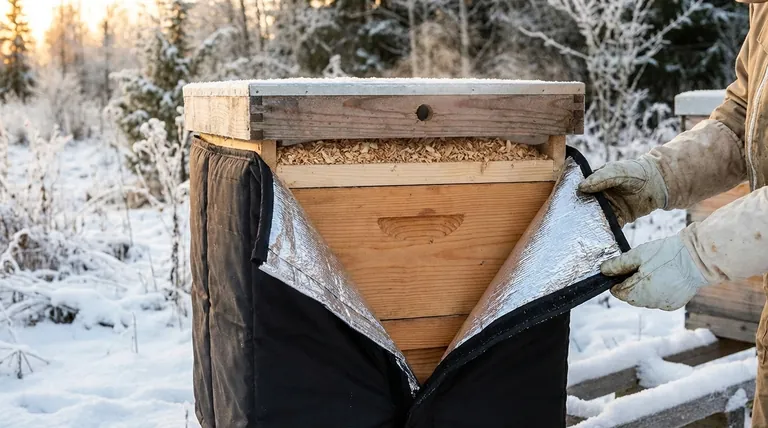
We Solve for the Wrong Variable
When winter approaches, our primate instincts kick in. We see a wooden box full of living creatures, and we think of our own homes. We think about insulation, drafts, and the furnace.
This is a profound, and often fatal, misunderstanding of hive physics.
The primary goal of winter preparation is not to keep the bees warm. It's to keep them dry. A healthy colony is a self-regulating furnace. But even the most powerful furnace will fail in a flood, and for bees, the flood comes from within.
The Bee's Elegant Engine
To appreciate the problem, we must first appreciate the bee's solution to winter. They don't heat their home; they only heat their family.
A Living, Breathing Sphere of Heat
Bees survive the cold by forming a tight cluster. The bees on the outer layer press together, creating a living mantle of insulation. Inside this sphere, other bees vibrate their wing muscles, generating heat without flying.
The core of this cluster stays warm enough to protect the queen, regardless of the blizzard outside. It is one of the most elegant thermal regulation systems in the natural world.
The Unseen Byproduct
But this process has a consequence. Like any living engine, the cluster's metabolism releases two things: heat and water vapor. Warm, humid air rises from the bees.
And this is where our "house" analogy breaks down.
The Physics of a Deadly Indoor Rain
When that warm, moist air rises and hits the cold inner cover of the hive, it instantly condenses. It’s the same physics that fogs up a car window on a cold day.
Water droplets form on the ceiling directly above the cluster.
Eventually, these droplets combine and drip down. A continuous, freezing rain falls directly onto the bees that are working so hard to stay warm. A cold bee can survive. A wet bee is a dead bee.
Condensation is the true killer of wintering colonies. Not cold.
Insulation as Climate Control, Not a Blanket
This is why insulation is so misunderstood. Its most important function is not to trap heat, but to manage the location of the dew point.
Shifting the Condensation Zone
By adding a layer of insulation to the top of the hive, the inner surface of the ceiling stays warmer. It remains above the dew point.
The warm, moist air no longer condenses directly above the bees. Instead, it continues to the colder hive walls to condense and run down the sides, or—ideally—it exits the hive through a ventilation port.
Buffering Against Thermal Shock
Insulation also acts as a thermal buffer, slowing down drastic temperature changes. This stability reduces stress and allows the colony to maintain its cluster temperature with less effort, conserving precious honey stores for the long winter ahead.
The Unforgivable Mistake
However, a well-intentioned beekeeper can turn a hive into a tomb with one simple error: insulating without ventilating.
If you seal the hive tightly, you trap all that moisture inside. The humidity skyrockets, and condensation becomes inevitable. You’ve created a swamp. Mold and mildew thrive, and the bees perish in a damp, cold environment.
Insulation and ventilation are two parts of the same system. One is useless, even dangerous, without the other. A small upper entrance or a ventilated quilt box is not optional; it is a requirement.
A Framework for Action
Your strategy should depend on your climate and your colony's strength. The goal is always the same: keep them dry.
| Scenario | Recommendation | Why It Works |
|---|---|---|
| Strong Colony, Moderate Climate | Minimal insulation. Prioritize a moisture quilt and upper ventilation. | The large cluster has enough thermal mass. Your only job is to give moisture an escape route. |
| Weaker Colony, Harsh Climate | Top insulation is critical. Consider a full hive wrap. | Insulation reduces energy loss and manages the dew point, giving smaller colonies a fighting chance. |
| All Scenarios | Always provide an upper exit for moisture. | No matter how well you insulate, the water vapor must have a path to escape. |
For commercial apiaries, where every colony represents a significant investment, managing this system isn't a hobby—it's a critical operational task. Getting it right at scale requires reliable, purpose-built equipment designed for hive health. HONESTBEE specializes in providing commercial-grade beekeeping supplies, from insulated hive components to specialized ventilation systems, ensuring your operation is built for resilience.
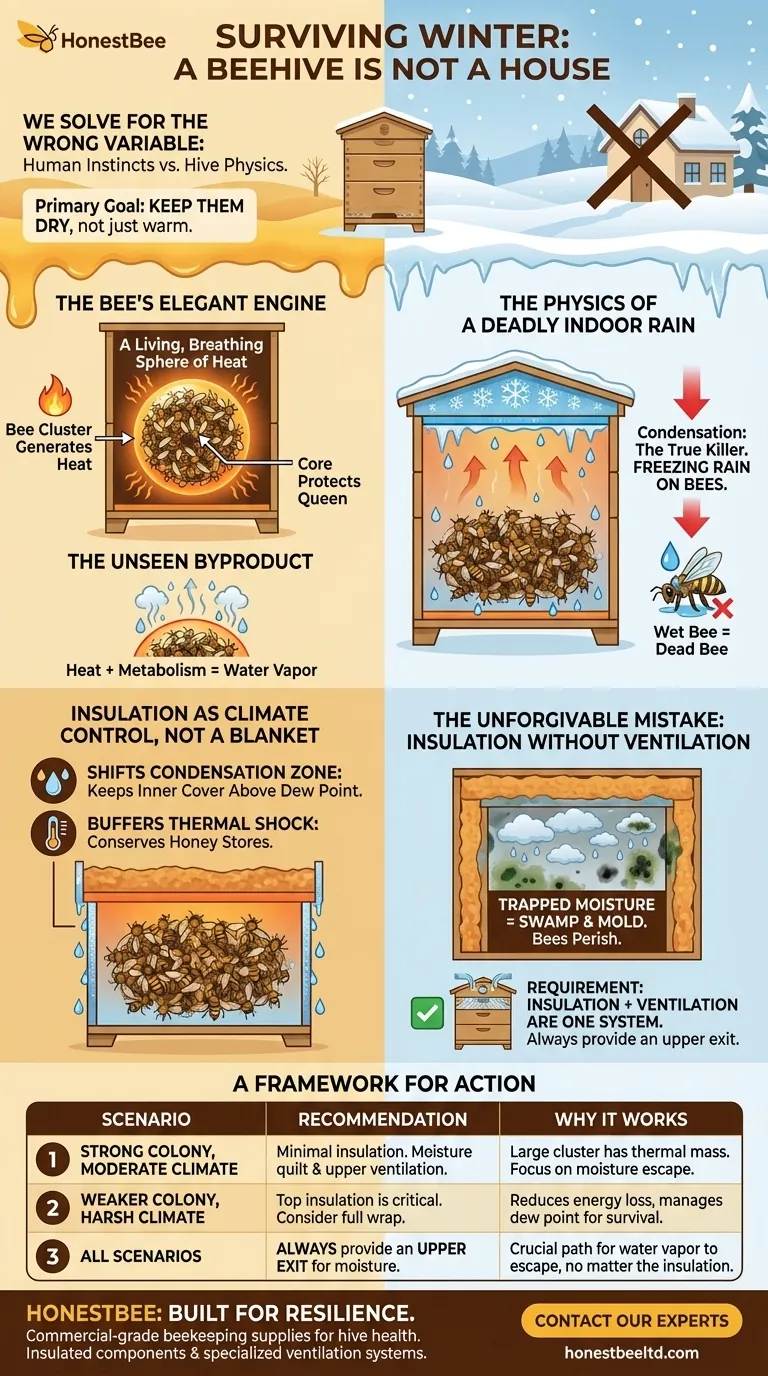
Visual Guide
Related Products
- Stainless Steel Round Beehive Air Vents for Ventilation
- Wholesales Dadant Size Wooden Bee Hives for Beekeeping
- Metal Hive Feet Bee Hive Stand for Ant Protection
- Metal Bee Hive Stand Bee Box Stand for Beekeeping
- Wooden Bee Hive Frames for Beekeeping and Wholesale
Related Articles
- How to Optimize Beehive Ventilation: Prevent Disease and Boost Colony Health
- Beyond the Bee Box: Why Your First Apiary Investment Determines Your Success
- The Silent Killer in the Hive: Why Moisture, Not Cold, Is Winter's Greatest Threat
- The Precision of Chaos: Navigating the Biological Risks of Commercial Beehive Transportation
- How to Choose the Right Beehive: A Practical Guide for Every Beekeeper













