The Unseen Pressure Within the Hive
Imagine a thriving city, its population booming and its warehouses overflowing. Every square inch is utilized, and the pressure to expand is immense. This isn't a metropolis; it's a healthy honeybee colony in late spring.
This internal pressure is a sign of success, but it presents the colony—and its beekeeper—with a critical dilemma. The colony's instinctual solution is to swarm, sending the old queen and half the workforce to find a new home. For the beekeeper, a swarm is a significant loss of productivity and population.
The solution isn't to suppress this instinct but to manage it. The key lies in understanding and manipulating the hive's vertical architecture.
The Hive as a Vertical City
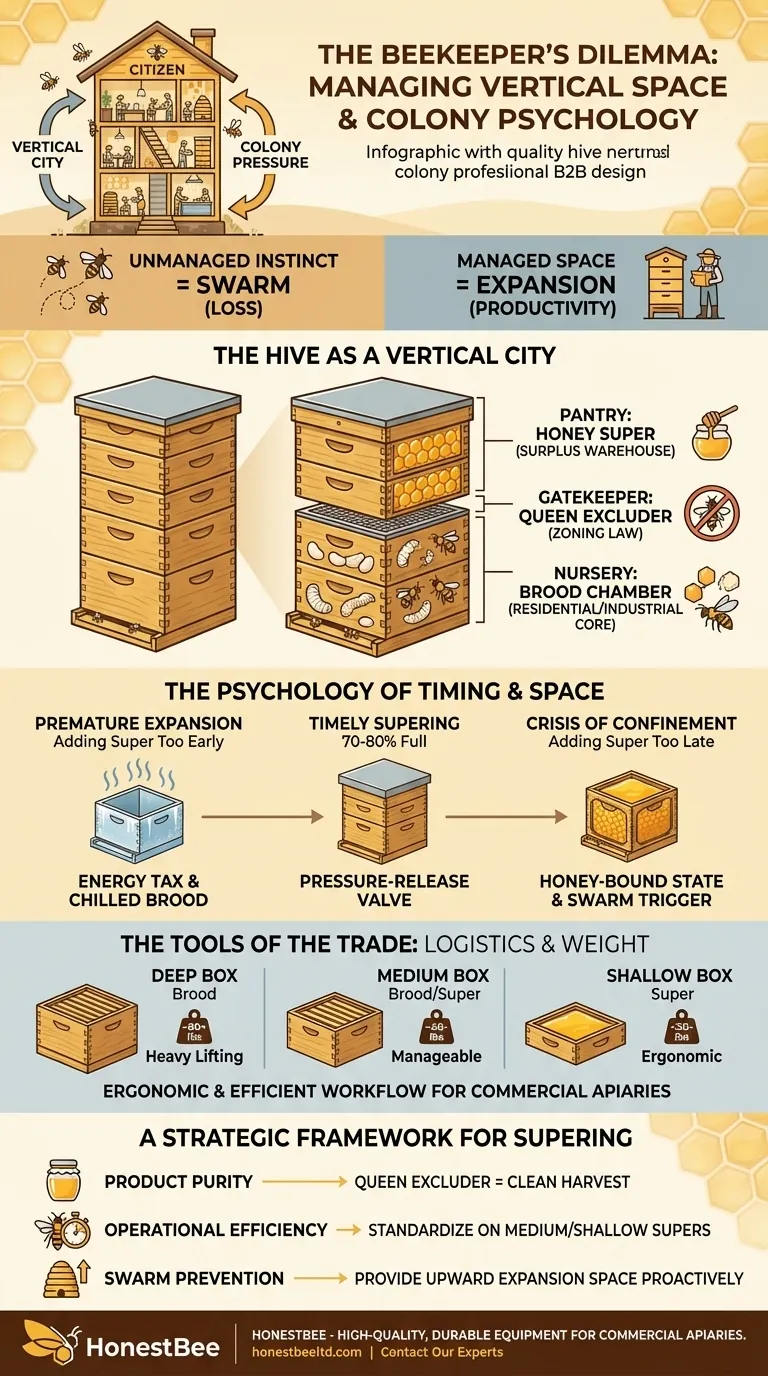
The modern Langstroth hive is a marvel of modular design. It’s a stack of boxes, each serving a distinct purpose in the colony's society. To manage it effectively, you must think like a city planner.
H3: The Nursery: The Brood Chamber
The bottom boxes form the brood chamber. This is the heart of the city, the residential and industrial core. Here, the queen lays her eggs, and worker bees raise the next generation. It's where the colony's future is secured and where they store just enough food for their immediate needs.
H3: The Pantry: The Honey Super
Any box placed above the brood chamber is a honey super. This is the hive’s surplus warehouse. Bees have a powerful instinct to store resources above the brood nest. The super leverages this behavior, providing a dedicated space for the honey the beekeeper intends to harvest. It is, quite literally, the beekeeper's pantry.
H3: The Gatekeeper: The Queen Excluder
Between the brood chamber and the honey super sits a critical piece of infrastructure: the queen excluder. This simple screen is a gate with openings just large enough for worker bees but too small for the queen. It enforces zoning laws, separating the "nursery" from the "pantry" and ensuring the honey harvest is pristine and free of eggs or larvae.
The Psychology of Timing and Space
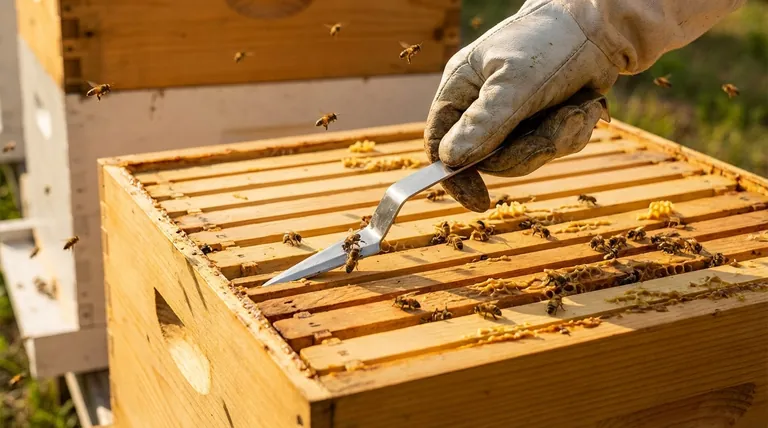
A beekeeper’s most important job is managing space. Adding a honey super isn't just a physical task; it's a psychological intervention in the life of the colony. The timing is everything.
H3: The Cost of Premature Expansion
Adding a super too early, before the colony is strong enough to occupy it, is like opening a vast, unheated wing of a building. The bees must expend enormous energy to patrol and regulate the temperature of this "dead air." This energy is diverted from raising brood and foraging, slowing the colony's growth and potentially chilling the brood on a cold night. It's a tax on their energy budget they can't afford.
H3: The Crisis of Confinement
Adding a super too late is even more dangerous. When the bees run out of storage space, they fill every available cell in the brood chamber with nectar. This creates a "honey-bound" state, leaving the queen with no room to lay eggs.
From the colony's perspective, this is a housing crisis. The collective intelligence of the hive reaches a single conclusion: the only option is to divide. This triggers the swarm impulse. The honey super, when added at the right moment (when the top brood box is 70-80% full), acts as a critical pressure-release valve.
The Tools of the Trade: A Question of Logistics
The choice of equipment is a practical decision that directly impacts the beekeeper's workflow, especially in a commercial operation.
The primary factor is weight. Honey is incredibly dense. A "deep" box, often used for brood chambers, can weigh over 80 pounds (36 kg) when full of honey. Lifting stacks of these is not just difficult; it's a recipe for injury and inefficiency.
This is why honey supers are almost always shallower.
| Box Type | Primary Use | Weight Consideration (Full) |
|---|---|---|
| Deep | Brood Chamber | Impractical for honey (80+ lbs) |
| Medium | Brood or Honey Super | Manageable harvest (40-50 lbs) |
| Shallow | Honey Super only | Easiest to handle (30-40 lbs) |
For commercial apiaries, standardizing on medium or shallow supers isn't a preference; it's a cornerstone of an ergonomic and efficient workflow.
A Strategic Framework for Supering
Mastering the honey super means moving beyond simple beekeeping and becoming a hive architect. Your strategy should be guided by your primary goals.
- For Product Purity: A queen excluder is non-negotiable. It is the single best tool for guaranteeing a brood-free, clean honey harvest.
- For Operational Efficiency: Standardize your operation on medium or shallow supers. The reduced weight protects your body and speeds up your work during the precious hours of a honey flow.
- For Swarm Prevention: Be vigilant. Add the first honey super before the colony feels crowded, providing the "upward expansion" space their psychology demands.
At a commercial scale, these decisions compound. The durability and design of your equipment determine your operation's profitability. A well-made super withstands years of use; a perfectly sized queen excluder maximizes worker bee traffic while keeping your honey clean. This is the engineering that underpins the art.
As a leading supplier to commercial apiaries and distributors, HONESTBEE provides the high-quality, durable supers, frames, and excluders designed for the demands of large-scale beekeeping. Our wholesale focus ensures you have the reliable equipment needed to manage your colonies effectively and maximize your harvest.
Visual Guide
Related Products
- Heavy Duty Castellated Iron Frame Spacer for Honey Supers
- Durable 16 Way Circular Bee Escape for Efficient Honey Harvesting
- High-Efficiency Diamond Maze Bee Escape for Clearing Supers
- Honey Concentrating Vacuum Heating Thickening Machine Dehumidifier for Honey
- Economy Small Scale Honey Dryer Dehumidifier Thickening Machine
Related Articles
- How Stored Honey Frames Accelerate Colony Recovery: A Beekeeper’s Guide
- The Art of Apiary Architecture: How a Simple Box Prevents a Beehive from Self-Destructing
- Hive Architecture: How One Empty Box Prevents a Colony's Collapse
- How Honey Frames Naturally Manage Queen Bees Without Compromising Colony Health
- Bee Space: The Architectural Principle Governing a Honeybee Society