The Moment of Ruin
Imagine a commercial beekeeper inspecting a batch of honeycomb destined for a high-end retailer. The frames were perfect at harvest—gleaming cells filled with liquid gold. But upon opening the storage container, the honey is no longer a smooth, viscous liquid. It’s a grainy, opaque sludge. The delicate, chewy wax is now embedded in a solid mass of sugar crystals.
The entire batch, a product of immense labor from both bee and beekeeper, is now devalued. It can no longer be sold as premium honeycomb. This isn't a freak accident; it's a failure of physics and chemistry. It's a failure to understand the delicate nature of the product.
The Psychology of a Common Mistake
Our instinct for food preservation is deeply ingrained: when in doubt, refrigerate it. We associate cold with freshness. This intuition serves us well for milk, meat, and vegetables.
For honeycomb, it is precisely the wrong instinct.
Honey is not like other foods. It is a supersaturated solution of sugars, an environment so low in moisture and high in acidity that it is one of nature’s most perfect preservatives. The bees have already done the hard work of making it shelf-stable. Our job is not to "keep it fresh" but simply to protect it from the external forces that would undo that work. The biggest threat is our own misunderstanding.
Honeycomb's Two Natural Enemies
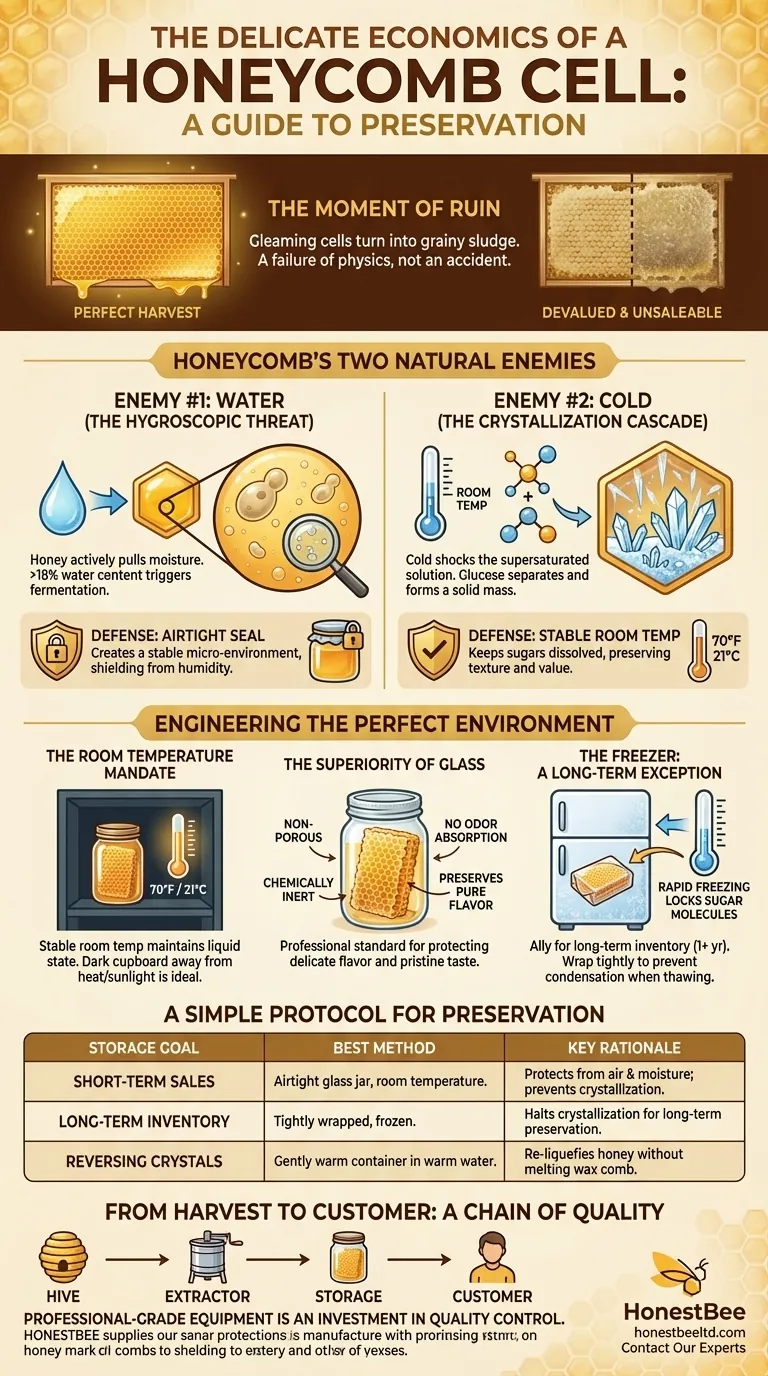
To preserve the value of honeycomb, you only need to defeat two invisible enemies: water and cold. Every storage failure can be traced back to one of these two culprits.
Enemy #1: Water (The Hygroscopic Threat)
Honey is hygroscopic. It’s a beautifully simple term for a powerful effect: honey actively pulls moisture from the air around it.
If left exposed, even in a seemingly dry pantry, the honey at the surface will absorb water. This dilution raises its water content above the critical 18% threshold, creating an environment where dormant, naturally occurring yeasts can awaken and begin fermentation. The result is a soured, unsellable product.
The defense is absolute and non-negotiable: an airtight seal. A perfect seal doesn't just keep contaminants out; it creates a stable micro-environment, shielding the honey from the humidity of the outside world.
Enemy #2: Cold (The Crystallization Cascade)
Honey is a supersaturated sugar solution. Think of it as water holding far more sugar than it should be able to at a given temperature. This delicate balance is maintained by the unique chemistry of honey and stable, room-temperature conditions.
Introducing cold is like a shock to this system. The lower temperature forces the glucose to separate from the water, starting a chain reaction of crystallization. A few tiny crystals form, then more build on them, until the entire cell is a solid, grainy mass.
This process ruins the very thing customers pay a premium for: the unique textural contrast between the liquid honey and the chewy beeswax comb.
Engineering the Perfect Environment
Proper storage isn't about complex technology. It’s about creating a simple, stable environment that respects the product's natural state. It’s an act of precision.
The Room Temperature Mandate
Storing honeycomb at a stable room temperature (around 70°F or 21°C) keeps the glucose and fructose sugars happily dissolved. It maintains the honey in its intended liquid state, preserving the texture and value of the comb. A dark cupboard or pantry, away from sunlight and heat sources, is the ideal location.
The Superiority of Glass
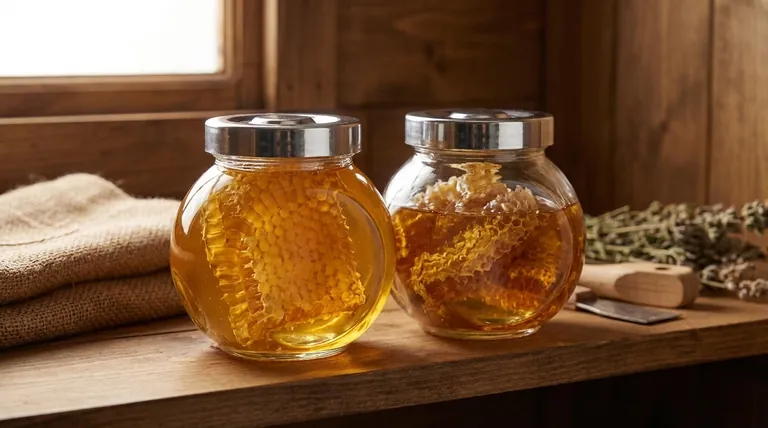
While any airtight container is a start, glass is the professional standard. It is non-porous and chemically inert. Glass will not absorb ambient odors from your storage facility, nor will it leach plasticizers or other chemicals that could taint the pure, delicate flavor of the honeycomb. For a premium product, preserving its pristine taste is paramount.
The Freezer: A Long-Term Exception
While the refrigerator is honeycomb's enemy, the freezer can be an ally for long-term inventory management (a year or more). The extreme cold freezes the honey so rapidly that the sugar molecules are locked in place, unable to organize into crystals.
To freeze correctly, wrap the honeycomb tightly in multiple layers of plastic wrap before placing it in an airtight container. To thaw, move it to room temperature and let it thaw completely before unwrapping. This prevents condensation from forming on the surface and introducing the very moisture you sought to avoid.
From Harvest to Customer: A Chain of Quality
For a commercial apiary or distributor, the integrity of your honeycomb is a direct reflection of your operational quality. The entire process—from the hive to the final customer—is a chain that is only as strong as its weakest link.
A rusty hive tool can contaminate a frame. A poor-quality extractor can damage the comb. And a cheap, ill-fitting storage container can undo months of hard work in a matter of weeks.
This is why professional-grade equipment is not a cost, but an investment in quality control. High-quality, durable supplies from HONESTBEE ensure that you can protect the value of your product at every single stage. It's the infrastructure that supports the quality of your harvest.
A Simple Protocol for Preservation
Your storage strategy should be a deliberate choice based on your business needs.
| Storage Goal | Best Method | Key Rationale |
|---|---|---|
| Short-Term Sales | Airtight glass jar, room temperature. | Protects from air & moisture; prevents crystallization. |
| Long-Term Inventory | Tightly wrapped, frozen. | Halts crystallization for long-term preservation. |
| Reversing Crystals | Gently warm container in warm water. | Re-liquefies honey without melting the wax comb. |
By understanding the simple science behind honeycomb, you transform storage from a hopeful guess into a predictable system. You protect the bees' work, your labor, and your bottom line.
Ensuring your honeycomb reaches the customer in perfect condition requires diligence and the right tools for the job. Contact Our Experts
Visual Guide
Related Products
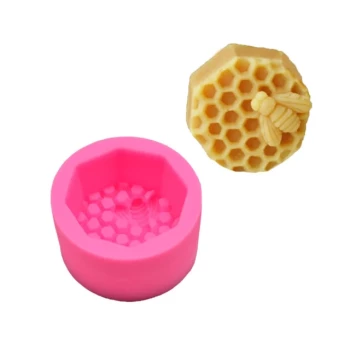
- Hexagonal Bee Honeycomb Silicone Soap Mold by HONESTBEE
- Professional Wide Blade Honey Scraper for Beekeeping and Honey Processing
- Honey Bee Lifecycle Model: A Detailed Honeycomb Display of Bee Development
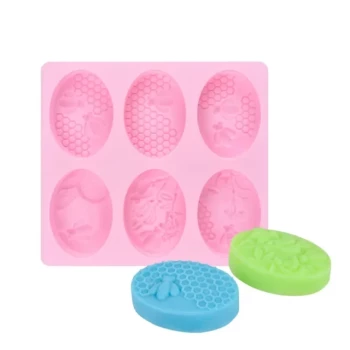
- Premium 6-Cavity Bee and Floral Themed Silicone Soap Mold
- Heavy Duty Castellated Iron Frame Spacer for Honey Supers