The Hidden Ledger of a Honey Harvest
Every beekeeper understands the tangible reward of a honey harvest: heavy frames, glistening with liquid gold. But beneath this simple success lies a complex ledger of energy, biology, and engineering.
The true cost—and profit—of a harvest isn't measured in the weight of the honey alone. It's measured in the energy the colony must expend to recover and the efficiency of the beekeeper's system. The method of extraction is the single most important entry in this ledger.
Preparing the System: A Gentle Negotiation
Before any machinery starts, a negotiation takes place with the hive. The goal is to separate the bees from their surplus honey with minimal stress. This isn't just about kindness; it's about productivity. A stressed colony is a less productive one.
The Psychology of the Honey Super
The honey super is a simple box, but it represents a crucial pact. It's the space offered by the beekeeper for the bees to store excess resources. Keeping this space clean and well-maintained is the first step.
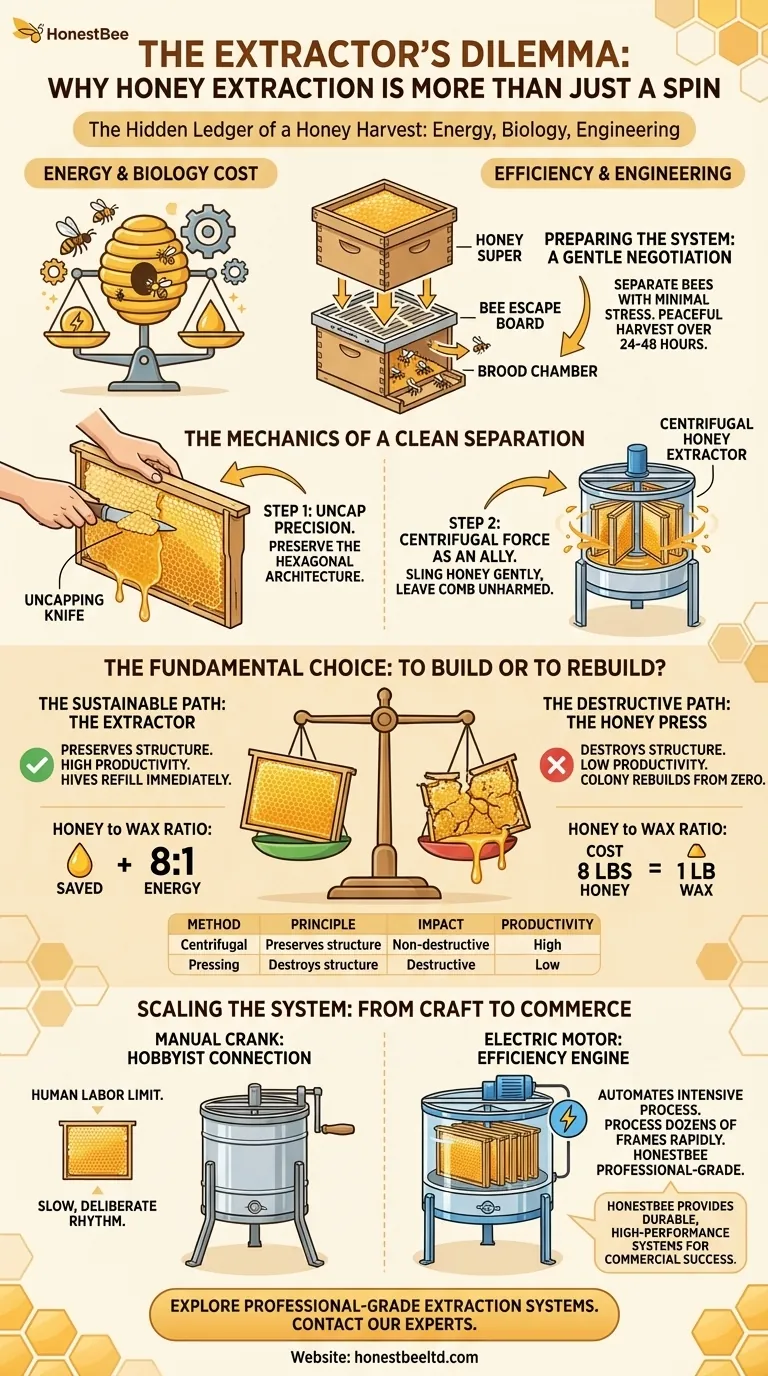
The most elegant way to clear it for harvest is with a bee escape board. This simple one-way door is an act of psychological manipulation, not force. It allows bees to move down into the brood chamber but prevents their return. Over 24-48 hours, the super empties peacefully, without smoke or agitation, setting the stage for a calm and efficient harvest.
The Mechanics of a Clean Separation
With the frames cleared, the engineering begins. The process is a delicate dance of revealing the honey without destroying the intricate structure that holds it.
Step 1: The Precision of Uncapping
Bees seal their finished honey with a pristine wax cap. Removing this seal requires a surgeon's touch. An uncapping knife or fork is used to slice off only the top layer, exposing the liquid honey while preserving the hexagonal architecture of the comb beneath. Every cell left intact is a victory for future efficiency.
Step 2: Centrifugal Force as an Ally
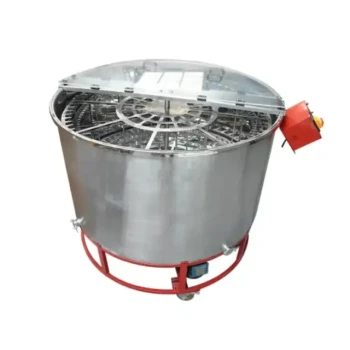
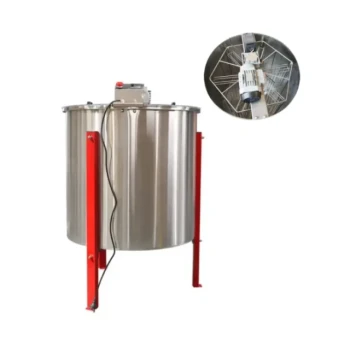
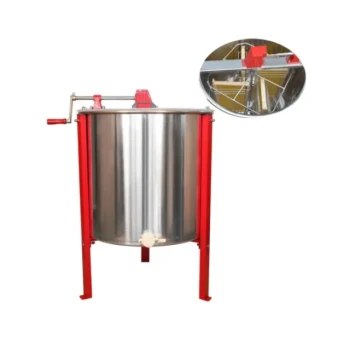
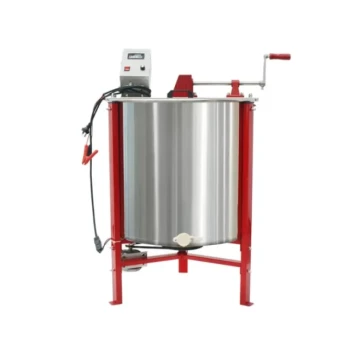
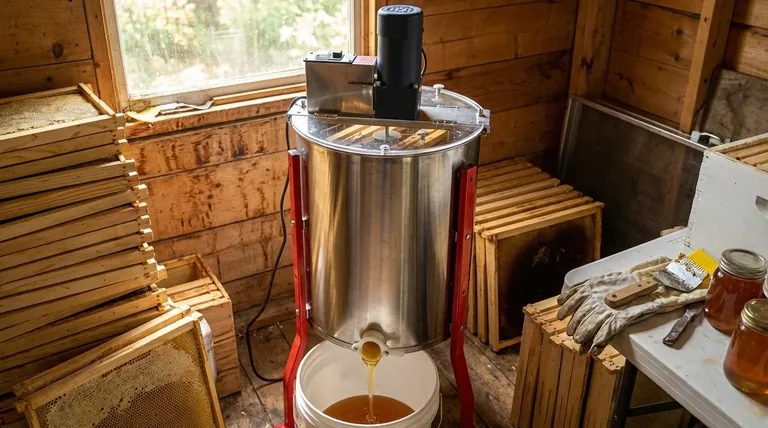
The uncapped frames are then placed in a honey extractor. This device is a testament to an engineer's romance with physics. It doesn't crush or scrape; it uses centrifugal force to gently sling the honey out of the cells.
The honey flows to the walls of the extractor and pools at the bottom, leaving the bees' masterpiece—the drawn comb—almost entirely unharmed.
The Fundamental Choice: To Build or to Rebuild?
Here, the beekeeper faces a critical decision that defines their operational philosophy. It's the choice between preserving the bees' labor or destroying it.
The Destructive Path: The Honey Press
An alternative to the extractor is the honey press. This method involves cutting the entire comb out of the frame and crushing it to squeeze the honey out.
While it seems brutally simple, it ignores a fundamental biological cost. Bees expend enormous energy to produce wax; it's estimated they consume 8 pounds of honey to create just 1 pound of wax. Destroying the comb is like demolishing a factory after every production run. It forces the colony to spend its next energy cycle rebuilding from zero.
The Sustainable Path: The Extractor
Using a centrifugal extractor is an investment in the hive’s capital. By preserving the comb, the beekeeper gives the colony a massive head start. The bees can immediately begin refilling the existing structure, dramatically shortening the time to the next harvest.
This decision separates a short-term harvest from a long-term production system.
| Method | Core Principle | Impact on Comb | Hive Productivity |
|---|---|---|---|
| Centrifugal | Preserves structure | Non-destructive | High |
| Pressing | Destroys structure | Destructive | Low |
Scaling the System: From Craft to Commerce
The choice to use an extractor leads to another decision point: the scale of the operation.
The Manual Crank: A Connection to the Process
For hobbyists with a few hives, a manual extractor is perfect. Turning the crank connects the beekeeper physically to the forces at play. The rhythm is slow, deliberate, and deeply satisfying. But it has a hard limit: human labor.
The Electric Motor: The Imperative of Efficiency
As an apiary grows, time and labor become the primary constraints. This is where the electric extractor becomes a non-negotiable tool. It automates the most labor-intensive part of the process, allowing a beekeeper to process dozens or hundreds of frames in the time it would take to do a handful manually.
For commercial apiaries and distributors, this isn't a luxury; it's the engine of viability. The transition to a powerful, reliable electric extractor is what turns a passion into a sustainable business. HONESTBEE specializes in providing this professional-grade equipment, supplying durable and high-performance extractors that form the backbone of wholesale honey operations. Our systems are designed for the throughput and reliability that commercial success demands.
Choosing the right extraction equipment is a statement about your goals. It reflects an understanding that true efficiency comes from respecting the biological system you work with.
For operations committed to maximizing yield while honoring the immense work of the hive, the right equipment is the foundation of that philosophy. To explore professional-grade extraction systems designed for durability and scale, Contact Our Experts.
Visual Guide
Related Products
- HONESTBEE 72 Frame Industrial Electric Honey Extractor for Beekeeping
- Commercial Electric 12 Frame Honey Extractor Spinner Motorized Honey Extractor
- HONESTBEE 3-Frame Manual Acrylic Honey Extractor
- electric honey extractor honey centrifuge 3 frame honey extractor stainless steel honey frame extractor
- HONESTBEE 6 Frame Self Reversing Electric Honey Extractor for Beekeeping
Related Articles
- How to Clean Your Honey Extractor Safely Without Compromising Honey Quality
- Beyond the Harvest: The Critical Discipline of Cleaning Your Honey Extractor
- How to Prevent Honey Extractor Failures: Balancing Loads and Choosing Durable Frames
- How to Harvest Honey Efficiently While Protecting Bee Health
- The Bottleneck in the Bee Yard: How Extractor Physics Dictates Apiary Scale