You open the hive, anticipating signs of a revitalized colony. Instead, you find a tight, buzzing ball of angry worker bees. At the center is the expensive new queen you introduced days ago—dead. It’s a frustrating, costly, and all-too-common scenario for commercial apiaries. You've lost not only the investment in the queen but also precious time, setting back the productivity of an entire colony.
The Vicious Cycle of Trial and Error
When a new queen is rejected, the blame game begins. Was the queen weak? Was the shipping process too stressful? Is the colony just too aggressive? Beekeepers might try different suppliers or rush the next introduction, hoping for a different outcome.
But this guesswork is expensive. Each failed introduction has a direct commercial impact:
- Direct Financial Loss: The cost of the queen is gone, and for a commercial operation requeening dozens or hundreds of hives, these losses multiply quickly.
- Lost Productivity: A queenless hive produces no new brood. Its population dwindles, honey production ceases, and its value for pollination contracts plummets. A weak hive is also more susceptible to disease and collapse.
- Operational Delays: Your entire schedule for hive splits, honey flow management, and fulfilling contracts is thrown into disarray.
These repeated struggles often stem from a fundamental misunderstanding. The problem isn't usually the queen or a "mean" hive; it's a failure to manage the most powerful force in the colony: social chemistry.
The Root of the Problem: A War of Pheromones
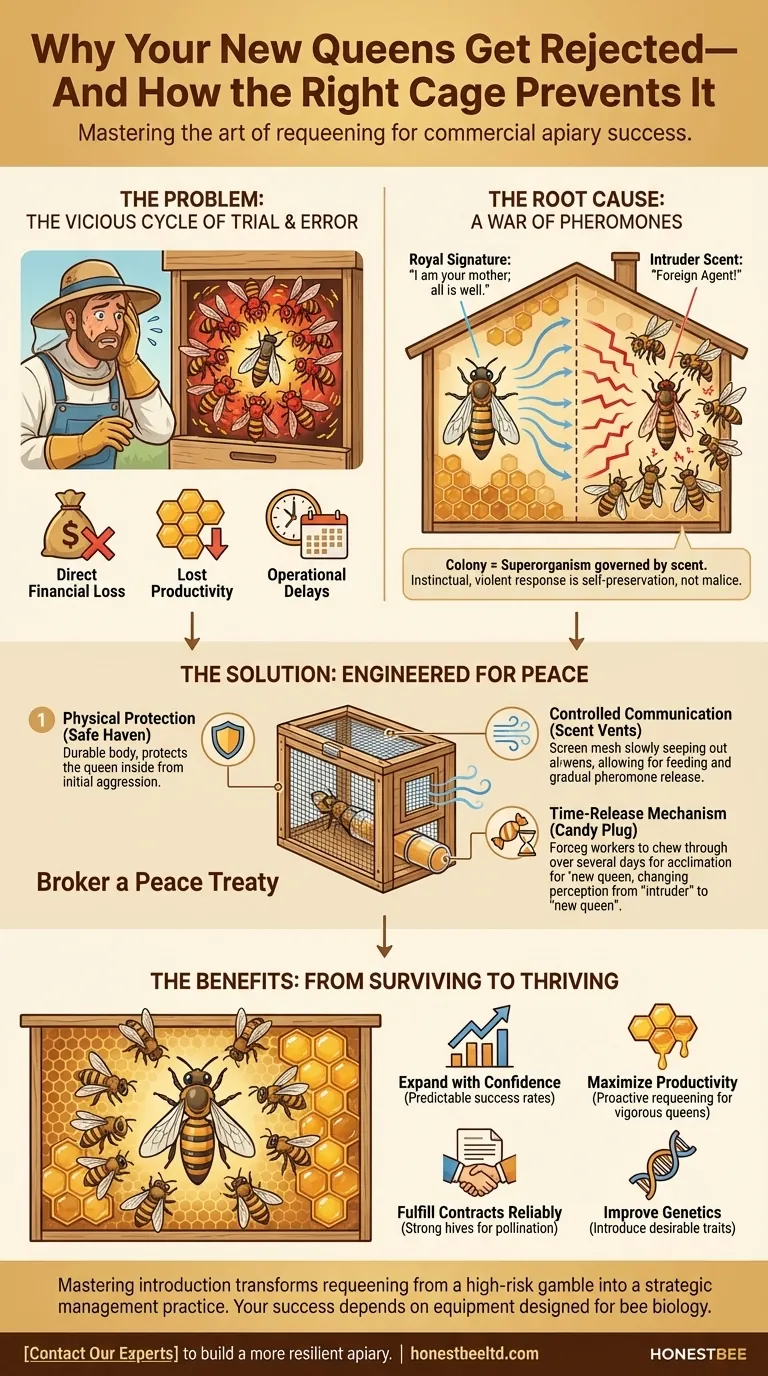
At its core, a honeybee colony is a superorganism governed by scent. The reigning queen produces a unique pheromone blend that acts as her royal signature. It constantly flows through the hive, telling every bee, "I am your mother; we are one family; all is well."
When you introduce a new queen, you are dropping a foreign agent with an alien scent signature into a tightly-knit, defensive society. To the worker bees, her scent screams "Intruder!" Their instinctual, violent response—called "balling"—is not malice; it is a desperate act of self-preservation to protect their colony from a perceived threat.
This is why the common "solutions" fail. Rushing the process or just hoping for the best ignores this biological reality. You cannot force social acceptance; you must facilitate it.
Engineered for Peace: The Cage as a Diplomatic Tool
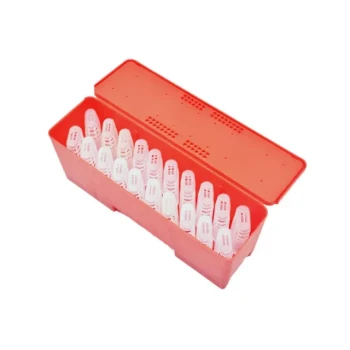
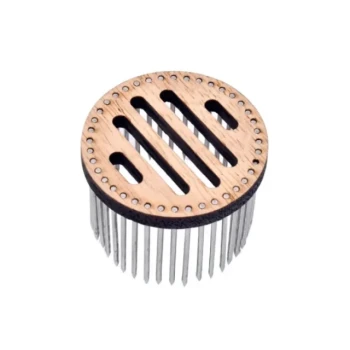
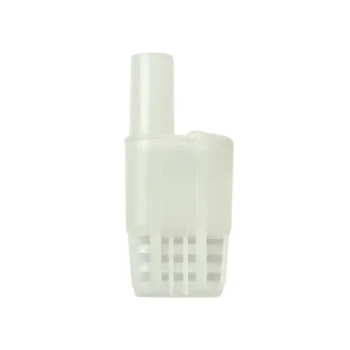
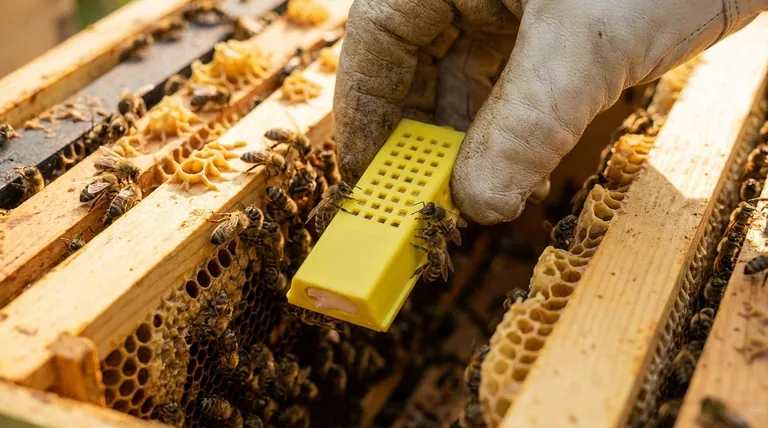
To overcome this powerful biological defense, you need more than just a container. You need a tool designed for diplomacy—a way to broker a peace treaty between the new queen and her would-be subjects. This is the true purpose of a well-designed queen mailing cage.
It’s not just a box. It's a sophisticated introduction device engineered to manage the war of pheromones.
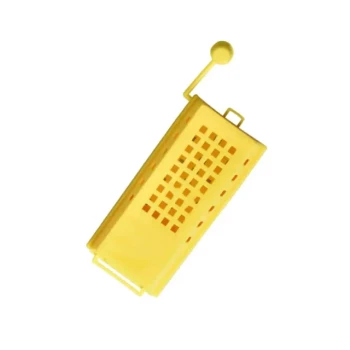
- Physical Protection: First, the durable body provides a safe haven, protecting the queen from the workers' initial aggression.
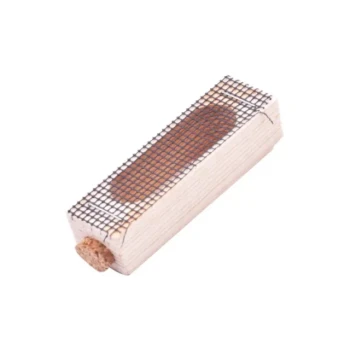
- Controlled Communication: The screen or vents are crucial. They are small enough to keep her safe but large enough for two things to happen: workers can feed her, and more importantly, her unique pheromones can slowly and steadily seep out into the colony.
- The Time-Release Mechanism: The candy plug is the most ingenious feature. It's not just food. By forcing the worker bees to spend several days chewing through the candy to release her, the cage buys critical time. During these days, her scent becomes the new normal. The colony gradually acclimates, and their perception shifts from "intruder" to "new queen."
A high-quality queen cage isn't an incidental piece of equipment; it's the mechanism that makes a safe, predictable, and successful introduction possible. It’s designed from a deep understanding of bee biology to turn a potentially violent encounter into a peaceful transition of power.
From Surviving to Thriving: The Power of Predictable Requeening
When you stop seeing the queen cage as a simple shipping container and start using it as the strategic tool it is, the entire equation changes. Failed introductions become a rare exception, not a recurring cost.
This newfound reliability unlocks significant commercial advantages. You can:
- Expand with Confidence: Systematically grow your number of apiaries with predictable success rates.
- Maximize Productivity: Requeen proactively to ensure every colony is headed by a young, vigorous, and highly productive queen.
- Fulfill Contracts Reliably: Guarantee strong, healthy hives ready for demanding pollination seasons.
- Improve Genetics: Confidently introduce new genetic stock into your operation to breed for desirable traits like gentleness or honey production.
Ultimately, mastering the introduction process transforms requeening from a high-risk gamble into a strategic management practice that underpins the profitability and stability of your entire operation.
Your success depends on having equipment designed to work with bee biology, not against it. HONESTBEE provides robust, reliable queen cages and other professional-grade beekeeping supplies that protect your most valuable assets and ensure your operations run smoothly. Let us help you move beyond guesswork and achieve predictable success.
Contact Our Experts to discuss your wholesale needs and build a more resilient, productive apiary.
Visual Guide
Related Products
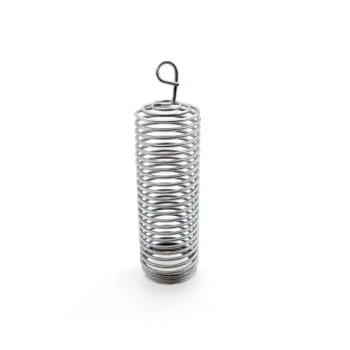
- Durable Galvanized Steel Spring Queen Bee Cage
- Professional Multi-Compartment Queen Cage with Sliding Lid
- Professional Queen Bee Introduction and Transport Cage
- Professional Queen Cage with Sliding Gate and Feeder Plug
- Plastic Queen Marking Tube Cage with Plunger for Beekeeping
Related Articles
- An Engineered Truce: The Psychology of the Queen Cage
- Maximizing Queen Cage Value: A Beekeeper's Guide to Safe Reuse & Long-Term Savings
- A Timed Release of Power: The Social Engineering of the Queen Cage
- The Queen Cage's Ledger: A Systems Approach to Apiary Biosecurity
- The Diplomatic Interface: Why Queen Cage Maintenance is a Study in Risk Management