The Search in the System
Imagine standing over an open beehive. Fifty thousand individual organisms move in a complex, humming dance. Your mission is simple but not easy: find the single most important bee in this sprawling metropolis, the queen.
Without a guide, this is a search-and-rescue operation. You scan frame after frame, your eyes straining to pick out one slightly larger insect from the moving curtain of her daughters. The sun beats down. The colony grows agitated. Every minute the hive is open is a minute of disruption and stress.
This single moment reveals a fundamental truth about managing any complex system: you are only as good as your data.
Reducing Cognitive Load
The human brain is a marvel, but its working memory is finite. When you are searching for an unmarked queen, your entire focus is consumed by that one task. You are prone to "inattentional blindness"—missing other crucial signals like an irregular brood pattern, the presence of pests, or the first signs of disease.
A marked queen changes everything.
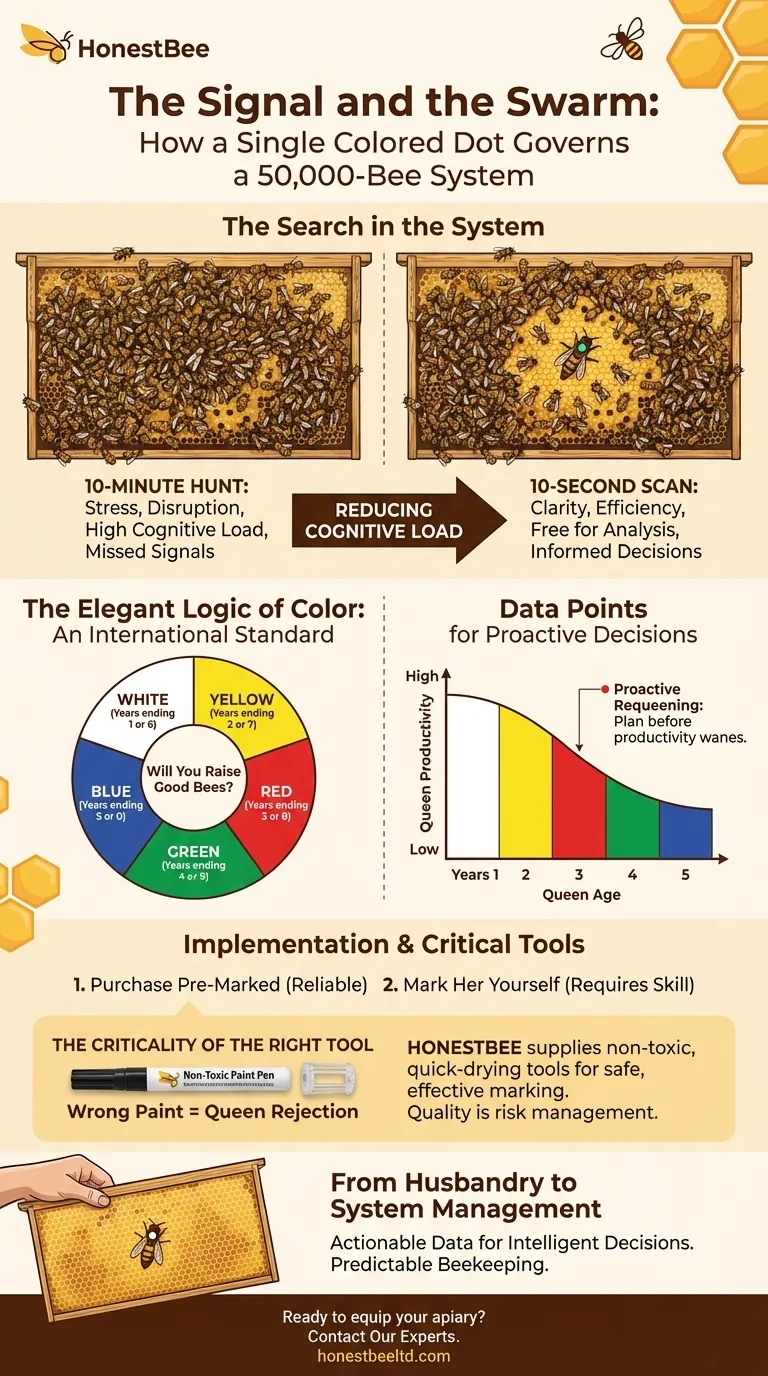
A small dot of color on her thorax—white, yellow, red, green, or blue—acts as a powerful signal. It cuts through the noise. The task of "finding the queen" is reduced from a 10-minute hunt to a 10-second scan.
This isn't just about saving time. It’s about freeing up your cognitive resources to perform the real work of a beekeeper: analysis and decision-making. You stop being a searcher and become an inspector.
The Elegant Logic of Color
The system is beautiful in its simplicity. It’s an international standard, a shared language among beekeepers worldwide that encodes a queen's age into one of five colors.
The code rotates over five years, corresponding to the last digit of the year she was hatched or introduced.
- White: Years ending in 1 or 6
- Yellow: Years ending in 2 or 7
- Red: Years ending in 3 or 8
- Green: Years ending in 4 or 9
- Blue: Years ending in 5 or 0
A common mnemonic helps recall the sequence: Will You Raise Good Bees? This simple phrase is the key to unlocking instant, vital information.
Data Points for Proactive Decisions
Knowing a queen's age is not trivia; it is predictive power.
A queen's productivity typically wanes after her second year. By seeing a red dot (year 3 or 8), you know you must plan for her replacement—a process called requeening—before her declining egg-laying rate shrinks the colony's population and, consequently, its honey production.
The colored dot transforms your management from reactive to proactive. It allows you to anticipate the needs of the hive instead of merely responding to problems after they arise.
How to Implement the System
There are two primary ways to ensure your queen is marked.
- Purchase Pre-Marked: Most commercial queen breeders offer this service. For new beekeepers or large-scale operations focused on efficiency, this is the most reliable and risk-free option.
- Mark Her Yourself: Experienced beekeepers raising their own queens will mark them. This requires a gentle hand, the right tools, and a steady nerve.
The Criticality of the Right Tool
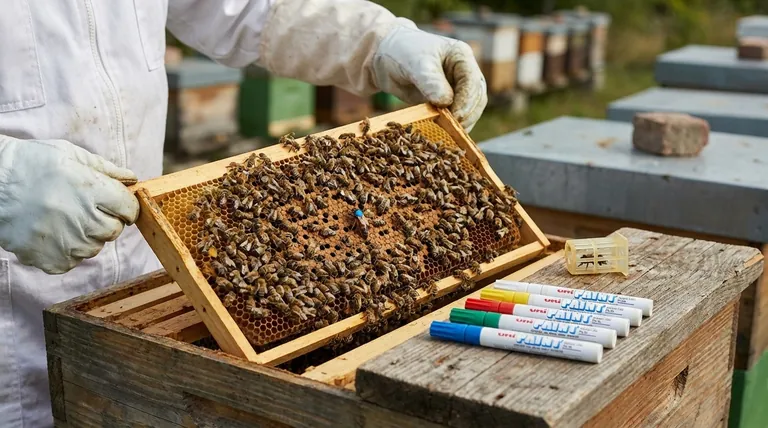
If you choose to mark queens yourself, the tool is not just an accessory; it is part of the system. Using the wrong type of paint can be catastrophic.
Harsh chemicals can harm the queen directly. If the paint alters her scent too much, the colony may no longer recognize her. The worker bees, perceiving a foreign intruder, will kill her in a process called supersedure. The system rejects the queen because of a component failure.
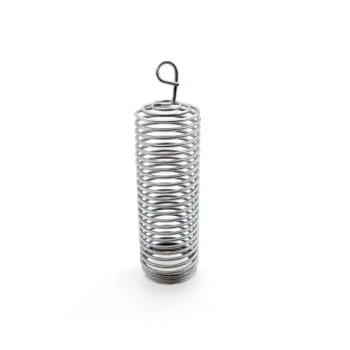
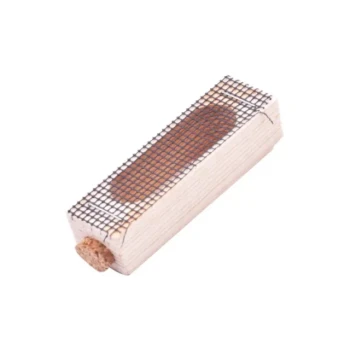
This is why commercial apiaries and equipment distributors rely on tools designed for the task. At HONESTBEE, we supply wholesale operations with the non-toxic, quick-drying paint pens and marking cages that ensure this crucial procedure is safe and effective. For professionals, quality isn't a preference; it's a risk management strategy.
From Husbandry to System Management
The simple act of marking a queen bee elevates beekeeping. It changes your relationship with the hive from one of simple care to one of informed management.
That single dot of color is the most elegant user interface imaginable for a biological system. It provides the clear, immediate, and actionable data needed to make intelligent decisions. It allows you to manage hundreds of colonies with the same precision and insight you might give to one.
This is the path to more productive, healthier, and more predictable beekeeping. If you are ready to equip your apiary or distribution business with the tools necessary for this level of professional management, we can help. Contact Our Experts
Visual Guide
Related Products
- Durable Galvanized Steel Spring Queen Bee Cage
- Portable Queen Bee Incubator with 12V Car Adapter for Safe Transport
- Professional Queen Bee Introduction and Transport Cage
- Heavy Duty Stainless Steel Queen Bee Catcher Clip
- Classic Wooden and Mesh California Queen Cage
Related Articles
- An Engineered Truce: The Psychology of the Queen Cage
- Maximizing Queen Cage Value: A Beekeeper's Guide to Safe Reuse & Long-Term Savings
- A Timed Release of Power: The Social Engineering of the Queen Cage
- The Queen Cage's Ledger: A Systems Approach to Apiary Biosecurity
- The Diplomatic Interface: Why Queen Cage Maintenance is a Study in Risk Management