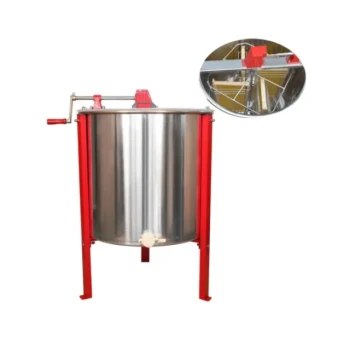
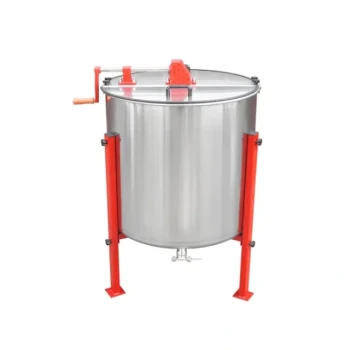
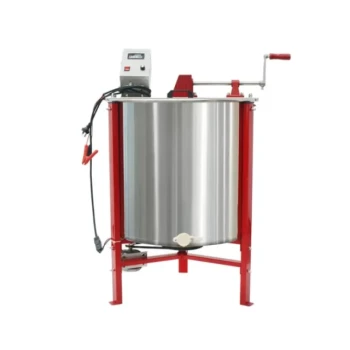
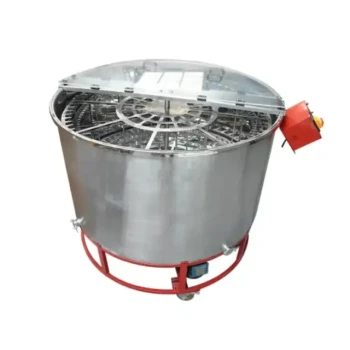
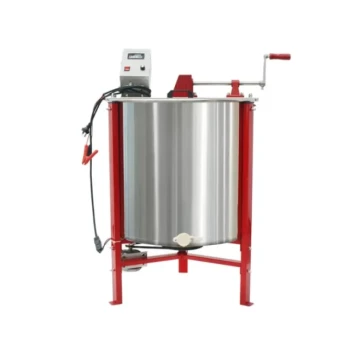
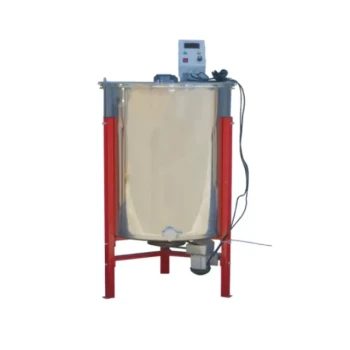
Yes, manual honey extractors are highly effective at removing honey from the honeycomb cells. While they rely on physical labor rather than a motor, the fundamental mechanism of using centrifugal force to spin the honey out of the frame remains exactly the same as in expensive electric models.
The Core Takeaway Manual extractors provide excellent extraction results and offer superior control over comb preservation, making them the ideal choice for hobbyists with fewer than 10 hives. The trade-off is not in the quality of the honey extracted, but in the time and physical effort required by the operator.
How Manual Extraction Works
The Principle of Centrifugal Force
Both manual and electric extractors operate on the same physical principle: centrifugal force. You place the frames inside a drum and spin them, forcing the liquid honey out of the cells and onto the drum walls.
Operational Mechanism
Manual units utilize a hand crank or handle to generate this spin. Because the mechanism is simple, there are fewer parts to malfunction compared to motor-driven units.
Suitability for Scale
These devices are specifically designed for small-scale beekeeping. They typically accommodate 2, 4, or 8 frames, making them perfectly sized for hobbyists managing a small number of colonies.
The Strategic Advantage: Control
Tactile Feedback
The most significant technical advantage of a manual extractor is the control it affords the operator. Because you are physically cranking the device, you receive immediate tactile feedback regarding the weight and balance of the frames.
Prevention of Comb Damage
This manual control allows for immediate adjustments to rotation speed. If you spin too fast, delicate wax combs can blow out or collapse. With a manual extractor, you can intuitively moderate the speed to ensure the honey is extracted without destroying the honeycomb cells.
Independence from Power
Manual extractors function anywhere, regardless of access to electricity. This makes them highly versatile for field work or processing in off-grid locations like barns or sheds.
Understanding the Trade-offs
Physical Exertion
The primary drawback is labor intensity. Generating sufficient centrifugal force requires continuous physical effort from the user. For a few frames, this is negligible; for fifty frames, it becomes exhausting.
Time Efficiency
Manual extraction is inherently slower than electric extraction. If your goal is to process a high volume of honey in a short window, a manual unit will become a bottleneck in your workflow.
Consistency Variances
While manual control prevents damage, it lacks the automated consistency of an electric motor. An operator may get tired, leading to inconsistent spin speeds towards the end of a harvesting session.
Making the Right Choice for Your Goal
To choose the correct tool, you must assess your current apiary size and your future growth plans.
- If your primary focus is cost-efficiency and control: A manual extractor is the superior choice, saving you money while teaching you how to handle delicate combs without damage.
- If your primary focus is volume and speed: An electric extractor is necessary to reduce labor intensity and streamline the harvest for operations larger than 10 hives.
Manual extraction is a robust, effective method that sacrifices nothing in quality, only demanding a bit more sweat equity.
Summary Table:
| Feature | Manual Honey Extractor | Electric Honey Extractor |
|---|---|---|
| Mechanism | Hand-cranked centrifugal force | Motor-driven centrifugal force |
| Best For | 1-10 Hives (Hobbyists) | 10+ Hives (Commercial) |
| Comb Safety | High (Tactile feedback) | Moderate (Requires settings) |
| Power Source | None (Fully portable) | Electricity required |
| Initial Cost | Lower / Budget-friendly | Higher investment |
| Effort Level | High physical labor | Low (Automated) |
Scale Your Apiary with HONESTBEE’s Professional Grade Equipment
Whether you are a growing commercial apiary or a specialized distributor, HONESTBEE delivers the high-performance tools you need to maximize your honey yield. From precision manual extractors for delicate boutique harvests to industrial honey-filling machines and specialized hive-making hardware, our comprehensive wholesale portfolio is designed to support every stage of your business.
Our value to you:
- Full Spectrum Supply: A complete range of beekeeping tools, machinery, and essential consumables.
- Industry Expertise: Specialized equipment tailored for commercial efficiency and durability.
- Cultural Merchandise: Unique honey-themed products to diversify your retail offerings.
Ready to elevate your beekeeping operations? Contact HONESTBEE today to explore our wholesale solutions and find the perfect equipment for your target market!
Related Products
- Stainless Steel 3 Frame Manual Honey Extractor Spinner for Bee Honey Extraction
- HONESTBEE 3-Frame Manual Acrylic Honey Extractor
- HONESTBEE 4 Frame Manual Self Reversing Honey Extractor for Beekeeping
- Stainless Steel Manual 8 Frame Radial Honey Extractor Machine for Beehives
- 2 Frame Stainless Steel Manual Honey Spinner Extractor for Beekeeping
People Also Ask
- Which type of honey extractor is generally more durable? Focus on Material & Build Quality for Longevity
- What are the disadvantages of a manual honey extractor? Overcome Efficiency Bottlenecks in Your Apiary
- What is a manual honey extractor? The Essential Guide to Cost-Effective Beekeeping for Beginners
- Why are manual extractors popular among beginner beekeepers? A Guide to Starting Simple & Saving Money
- What are the primary advantages of utilizing a manual honey extractor? Cost-Effective & Gentle Harvesting