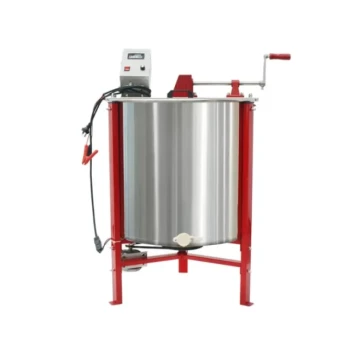
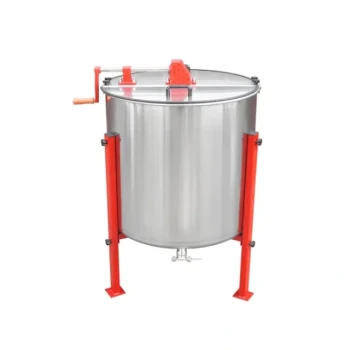
No, a honey extractor cannot be used with cut comb or chunk honey. Honey extractors are specifically engineered to hold full frames of capped honey, utilizing the structural integrity of the frame and foundation to withstand spinning. If you attempt to place loose cut comb or chunk honey into an extractor basket, it will not extract effectively and will likely result in a ruined comb and a significant mess.
Core Insight: Honey extractors rely on centrifugal force applied to rigid, framed combs to fling honey out while keeping the wax structure intact. Loose chunk honey lacks the necessary structural support for this process and requires gravity-based or compression methods instead.
The Mechanics of Extraction
The Role of Centrifugal Force
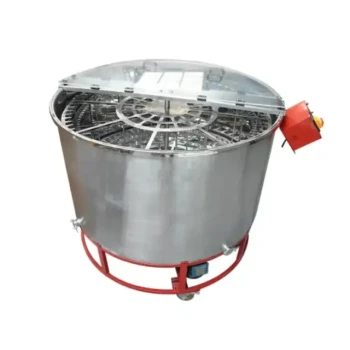
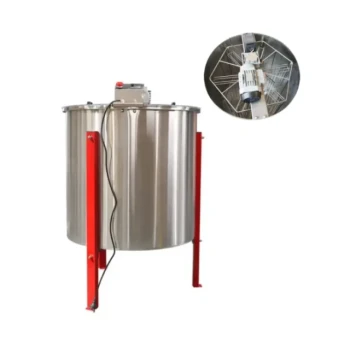
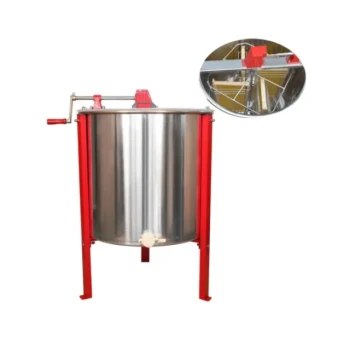
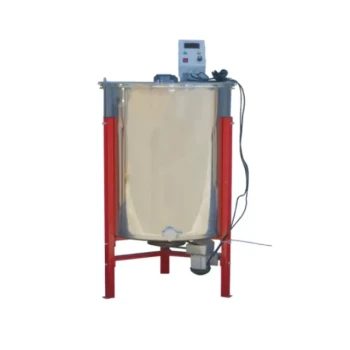
Honey extractors, whether manual or motorized, operate on the principle of centrifugal force.
Frames are uncapped and placed into baskets, then spun at high speeds to force the honey out of the cells and onto the inner walls of the drum.
Structural Integrity is Mandatory
For this process to work, the honeycomb must be firmly anchored within a frame, often requiring wire or plastic foundation for support.
Without this rigid framework, the centrifugal force would tear the wax apart rather than simply emptying the cells.
Why Loose Comb Fails
Cut comb and chunk honey have been removed from the structural frame.
If placed loosely into an extractor, there is nothing to hold the wax in place against the G-force, rendering the machine useless for this type of harvest.
Correct Processing Methods for Chunk Honey
The Crush and Strain Method
If your goal is to separate liquid honey from loose comb, the standard approach is the crush and strain method.
This involves physically crushing the comb to rupture the cells and allowing the honey to drain through a mesh strainer or cheesecloth, separating it from the wax.
Using a Honey Press
For a more specialized approach, a honey press is an ideal tool for processing chunk honey.
This device compresses the wax to squeeze out the honey, a method favored by consumers who prefer a "natural" taste over the clearer yield of extracted honey.
Consuming As-Is
It is worth noting that cut comb is often harvested specifically to be consumed in its solid state.
Many beekeepers sell or consume chunk honey as a premium product, avoiding the need for separation entirely.
Common Pitfalls to Avoid
Misunderstanding Equipment Limits
A common mistake is attempting to spin frames that lack internal support, such as wire or plastic foundation.
Even if the comb is still in the frame, if it is "foundationless," the force of the extractor can cause the comb to blow out and break apart.
Ignoring Balance
When using an extractor for proper frames, failing to balance the load can damage the equipment.
Because chunk honey cannot be evenly distributed or secured in the baskets, attempting to spin it would create severe imbalance and vibration.
Making the Right Choice for Your Harvest
If you have already harvested cut comb or chunk honey, put the extractor away and choose one of the following paths:
- If your primary focus is liquid honey: Use the crush and strain method to separate the honey from the wax manually.
- If your primary focus is specific market demand: Use a honey press to create a harvest that appeals to consumers looking for a distinct, less refined flavor profile.
- If your primary focus is simplicity: Package the cut comb immediately for sale or consumption, as this requires zero processing.
Select the tool that matches the physical state of your honeycomb to ensure a clean, high-quality harvest.
Summary Table:
| Processing Method | Suitable for Cut Comb? | Mechanism | Best Use Case |
|---|---|---|---|
| Honey Extractor | No | Centrifugal Force | Framed, capped honey |
| Crush and Strain | Yes | Gravity & Filtration | Small-scale liquid honey extraction |
| Honey Press | Yes | Compression | High-yield wax/honey separation |
| Manual Packaging | Yes | None (As-is) | Premium specialty retail products |
Maximize Your Apiary’s Potential with HONESTBEE
Whether you are processing liquid honey or specialty cut comb, HONESTBEE provides commercial apiaries and distributors with the professional-grade tools needed to scale production. From high-capacity honey-filling machines to specialized processing equipment, we supply everything required to turn your harvest into a high-value product.
Ready to upgrade your beekeeping operation? Contact us today to explore our wholesale machinery and premium consumables tailored for the modern beekeeping industry.
Related Products
- HONESTBEE 72 Frame Industrial Electric Honey Extractor for Beekeeping
- Commercial Electric 12 Frame Honey Extractor Spinner Motorized Honey Extractor
- HONESTBEE 6 Frame Self Reversing Electric Honey Extractor for Beekeeping
- HONESTBEE 3-Frame Manual Acrylic Honey Extractor
- Stainless Steel Manual 8 Frame Radial Honey Extractor Machine for Beehives
People Also Ask
- What is the importance of balancing honeycomb frames within a honey extractor? Ensure Stability and Protect Machinery
- How is honey separated from the frames after they are uncapped? Efficient Extraction Methods for High Yields
- What are the main benefits of using a honey extractor? Maximize Yields and Protect Your Honeycomb
- What are the recommended methods for removing honey from the honeycomb? Top Extraction Techniques for Maximum Efficiency
- How do manual honey extractors compare to electric honey extractors? Choosing the Right Tool for Your Apiary Growth