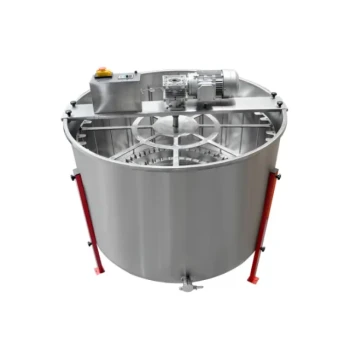
No, you cannot use a centrifugal honey extractor with a top bar hive. The physical design of the hive makes this impossible. Unlike standard hive frames, top bar combs do not have a full, four-sided wooden frame or wire reinforcement surrounding them. Without this structural support, the intense centrifugal force of an extractor would tear the delicate wax comb apart, destroying your harvest.
The Core Insight: Top bar beekeeping relies on "crush and strain" harvesting rather than spinning. Because the combs hang freely from a single bar without perimeter support, they lack the structural integrity to withstand the G-forces generated by extraction machinery.
Why The Extractor Method Fails
The Structural Deficit
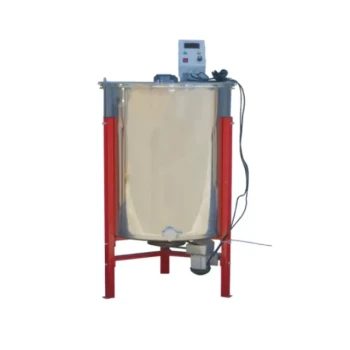
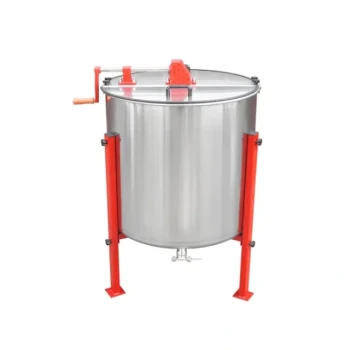
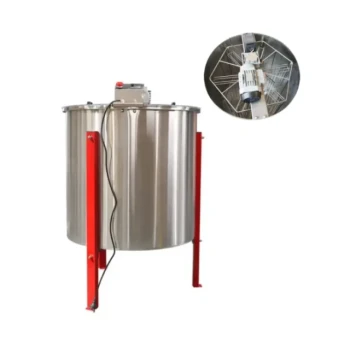
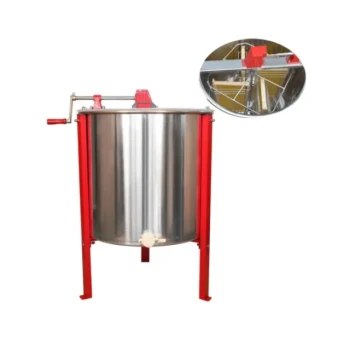
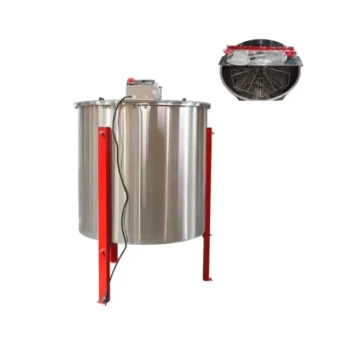
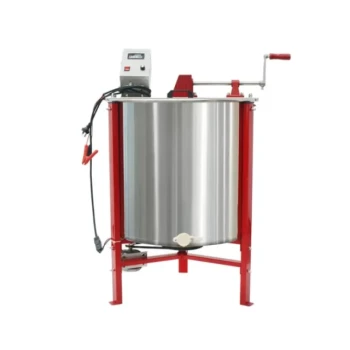
Standard extractors are designed for Langstroth frames, which have wood on all four sides and often contain wire reinforcement. This structure holds the heavy honeycomb in place while the machine spins.
The Consequence of Spinning
In a top bar hive, the comb is attached only at the top. If you placed this fragile wax sheet into a centrifugal extractor, the outward force would instantly detach the comb from the bar.
The result would be a slurry of broken wax and honey flung against the extractor walls, rather than a clean separation of liquid honey.
The Correct Method: Crush and Strain
Because you cannot spin the frames, harvesting from a top bar hive requires a different, simpler approach. This method relies on gravity and manual processing rather than mechanics.
Essential Tools
You do not need expensive specialized equipment. The process requires basic items found in most kitchens: a sharp knife, a bowl, a mashing implement (like a potato masher), and a strainer or cheesecloth.
Step 1: Cutting the Comb
Remove the top bar from the hive. Using a standard kitchen knife, cut the honeycomb away from the starter strip on the wooden bar.
Step 2: Breaking the Cells
Place the harvested comb into a bowl or food-grade bucket. Use a tool like a potato masher to thoroughly crush the comb. The goal is to break open the individual wax cells to release the honey.
Step 3: Separation
Pour the mashed mixture through a strainer system. You can use a dedicated bucket strainer or simple cheesecloth. Gravity will pull the liquid honey through the mesh, leaving the beeswax behind.
Understanding the Trade-offs
While the lack of an extractor simplifies your tool requirements, it introduces specific trade-offs regarding hive management and production.
Comb Destruction vs. Preservation
In a conventional hive with an extractor, the wax comb is preserved and returned to the bees to be refilled. in a top bar hive, harvesting destroys the comb.
Energy Cost to the Colony
Because you are removing the wax along with the honey, the bees must consume resources to rebuild the comb before they can store honey again. This can result in lower overall honey yields compared to systems where frames are reused.
Volume Limitations
The crush and strain method is labor-intensive. While excellent for hobbyists, it does not scale well for high-volume commercial operations that rely on industrial machinery to process peak nectar flows rapidly.
First Season Caution
It is generally recommended that you avoid harvesting honey during the first season. A new top bar colony needs to establish its wax infrastructure and store enough food to survive its first winter.
Making the Right Choice for Your Goal
Harvesting from a top bar hive is a low-tech, intuitive process, but it requires aligning your expectations with the equipment's limitations.
- If your primary focus is low-cost entry: The top bar hive is ideal because you do not need to buy an extractor, unbuttoning knife, or settling tank; kitchen tools suffice.
- If your primary focus is maximum honey yield: You may find the top bar system limiting, as the bees must constantly rebuild wax rather than focusing solely on honey production.
- If your primary focus is "cut comb" honey: This hive style is superior, as you can simply cut chunks of comb from the bar and package them immediately without crushing or straining.
Successful top bar beekeeping embraces the natural fragility of the comb rather than fighting against it with incompatible machinery.
Summary Table:
| Feature | Top Bar Hive Harvesting | Langstroth Hive Harvesting |
|---|---|---|
| Primary Method | Crush and Strain | Centrifugal Extraction |
| Equipment Needed | Knife, Masher, Strainer | Centrifugal Extractor, Uncapping Knife |
| Comb Outcome | Destroyed (Harvested as wax) | Preserved (Returned to hive) |
| Honey Yield | Lower (Bees must rebuild wax) | Higher (Focus on storage) |
| Scalability | Best for hobbyists/cut-comb | Best for commercial operations |
| Cost of Entry | Very Low | Moderate to High |
Scale Your Apiary with HONESTBEE
Whether you are managing a specialized top bar apiary or a large-scale commercial operation, HONESTBEE provides the professional-grade tools you need to succeed. From honey-filling machines to industrial-strength extractors and essential consumables, we cater to commercial apiaries and distributors with high-quality wholesale solutions.
Our value to you:
- Comprehensive Range: Full spectrum of beekeeping machinery and hardware.
- Industry Consumables: A wide array of essential supplies for high-volume production.
- Global Distribution: Reliable wholesale offerings for international partners.
Ready to upgrade your beekeeping equipment or expand your distribution? Contact us today to see how HONESTBEE can support your growth!
Related Products
- electric honey extractor honey centrifuge 3 frame honey extractor stainless steel honey frame extractor
- Manual Hand Crank 4 Frame Honey Extractor Centrifuge for Beekeeping
- Professional 4 Frame Self Reversing Electric Honey Extractor for Beekeeping
- Electric 4 Frame Tangential Honey Extractor
- 24 Frame Honey Extractor Commercial Radial Honey Frame Extraction Machine
People Also Ask
- What are the characteristics of electric honey extractors? Boost Your Apiary Efficiency with Automated Technology
- What are the disadvantages of using an electric honey extractor? Weighing Cost, Power, and Comb Safety
- What are the advantages of an electric honey extractor? Boost Efficiency and Scale Your Honey Production
- What are the technical advantages of electric honey extractors? Maximize Yield and Protect Your Bee Colony
- How does an electric honey extractor affect the quality of honey? Preserve Flavor & Purity with Precision Extraction