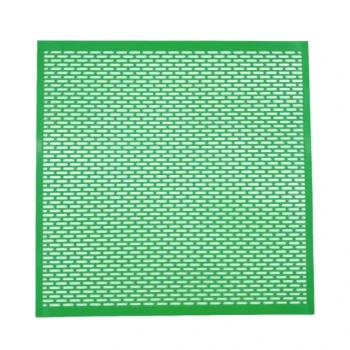
The impact of a queen excluder on honey production is not definitive and varies significantly based on the specific colony's behavior and genetics.
While some colonies may refuse to pass through the excluder to store honey—potentially lowering yields—others will work through it without issue. The outcome depends largely on whether your specific bees view the excluder as a barrier or a manageable boundary.
Core Takeaway Using a queen excluder involves a trade-off between management efficiency and potential yield volume. While it guarantees honey frames remain free of brood and simplifies extraction, it can reduce production in colonies that are reluctant to cross the barrier, though colonies with high brood-rearing tendencies may actually benefit from the restriction.
Factors Influencing Honey Yield
The "Honey Barrier" Phenomenon
For some colonies, a queen excluder acts as a psychological or physical deterrent.
If the worker bees are reluctant to squeeze through the gap to reach the upper supers, they may refuse to draw out comb or store nectar there.
This refusal effectively caps the hive's storage capacity, leading to less honey production compared to a hive where workers have free rein.
The Role of Bee Genetics
The genetic background of your bees plays a major role in how they respond to an excluder.
Wild-caught bees or strains that naturally overproduce brood often benefit from an excluder. By restricting the queen's laying area, you force the colony to prioritize honey storage over raising excess larvae, potentially increasing harvestable honey.
Conversely, bee strains selectively bred to maintain smaller, more compact brood nests may not require an excluder and might produce more honey without the restriction.
Resource Redirection
Using an excluder can theoretically boost efficiency by managing the colony's energy.
When the queen is confined to the lower chambers, particularly during major nectar flows, the colony expends less energy on feeding and maintaining a sprawling brood nest.
This allows the colony to redirect resources entirely toward collecting and processing nectar, potentially enhancing the production efficiency of the hive.
Understanding the Trade-offs
Ease of Extraction vs. Colony Population
The primary utility of a queen excluder is operational: it keeps the honey clean (free of larvae and eggs) and simplifies the harvest.
However, colonies without excluders often grow larger populations because the queen can lay eggs wherever she chooses.
A larger population generally means a larger workforce, which has the potential to forage for more nectar, provided the colony does not swarm.
Swarming Risks
Restricting the queen can have unintended consequences regarding colony stability.
Some observations suggest that colonies without excluders may swarm less frequently than those that feel congested due to the barrier.
However, in tropical beekeeping, excluders are sometimes used specifically to suppress natural swarming or desertion instincts, keeping the colony stable enough to produce honey.
Commercial Viability
For commercial beekeepers, the calculation often favors the use of excluders regardless of slight yield variations.
The time saved during extraction—because there is no need to sort through frames looking for brood—often outweighs the risk of a colony producing slightly less honey.
Making the Right Choice for Your Goal
Deciding whether to use a queen excluder depends on what you value most in your apiary.
- If your primary focus is pristine honey quality: Use an excluder to ensure your harvest is 100% free of larvae, eggs, and impurities.
- If your primary focus is maximum population growth: Consider skipping the excluder to allow the queen unrestricted laying room, but be prepared to sort through mixed frames during harvest.
- If your primary focus is managing aggressive brood rearers: Use an excluder to curb the queen's laying instinct and force the colony to store honey rather than raising unnecessary brood.
Ultimately, the "best" choice is to test your specific colony's temperament; if they refuse to cross the excluder, remove it to salvage the season's yield.
Summary Table:
| Factor | With Queen Excluder | Without Queen Excluder |
|---|---|---|
| Honey Purity | High (No brood in honey supers) | Variable (Potential brood in honey) |
| Harvest Speed | Fast & Efficient | Slower (Requires frame sorting) |
| Colony Growth | Controlled / Restricted | Unlimited Potential |
| Management | Prevents queen from laying in supers | Higher risk of queen placement issues |
| Nectar Flow | Can redirect energy to storage | Focus may shift to brood rearing |
Boost Your Apiary's Productivity with HONESTBEE
At HONESTBEE, we understand that commercial success in beekeeping requires the perfect balance of efficiency and yield. Whether you are a large-scale commercial apiary or a global distributor, we provide the professional-grade tools you need to optimize your harvest.
From high-quality queen excluders and hive-making machinery to advanced honey-filling systems and essential consumables, our comprehensive wholesale portfolio is designed to streamline your operations. Let us help you scale your business with specialized hardware and honey-themed cultural merchandise.
Ready to upgrade your equipment?
Contact HONESTBEE Today to explore our full spectrum of beekeeping solutions!
Related Products
- High Performance Plastic Queen Excluder for Beekeeping and Apiary Management
- Professional Plastic Queen Excluder for Modern Beekeeping
- Lightweight Durable Plastic Queen Excluder Scraper for Beekeeping
- Metal Queen Bee Excluder for Beekeeping
- Premium Wood Framed Metal Wire Queen Bee Excluder
People Also Ask
- What are the characteristics of a plastic queen excluder? Key Benefits for Cost-Effective Beekeeping
- What are the operational and cost advantages of using plastic queen excluders over metal or wire excluders in commercial hive management? Discover how they reduce labor, prevent wing damage, and lower total costs.
- What types of queen excluders are available for beekeepers? Choose the Right Tool for Your Hive
- Why are standardized hive frames and queen excluders essential for maintaining honey purity and quality? Scale Your Purity
- Do plastic queen excluders work? A Cost-Effective Solution for Modern Apiaries