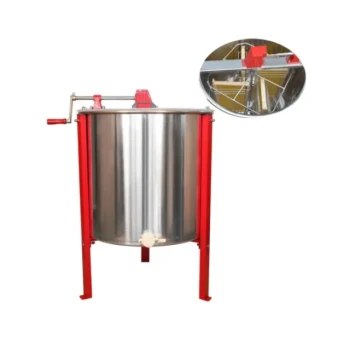
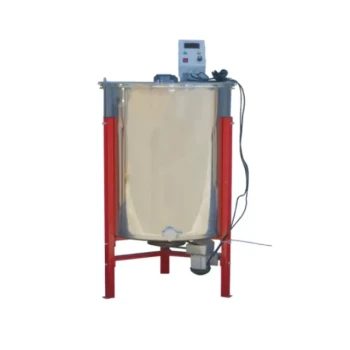
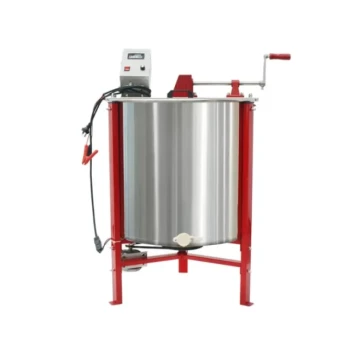
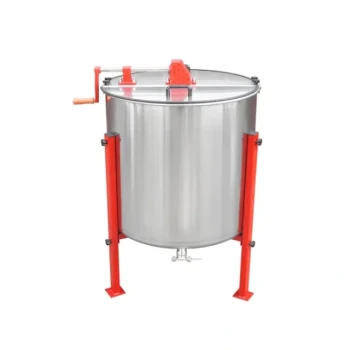
The primary metric for selecting a honey extractor size is the number of hives you manage, as this dictates the volume of frames you must process. As a general industry standard, a 2-frame extractor is suitable for up to 4 hives, a 4-frame model handles up to 8 hives, an 8-frame unit supports up to 16 hives, and a 16-frame extractor is necessary for operations up to 32 hives.
Core Takeaway While your current hive count provides the baseline calculation, the optimal choice also depends on your available storage space and willingness to trade manual labor for speed. It is often strategic to size up slightly to accommodate future apiary growth, preventing the need for rapid equipment replacement.
Matching Capacity to Colony Count
The Standard Ratios
To avoid bottlenecks during harvest, match the extractor's frame capacity to your apiary size. The accepted guidelines are:
- 1–4 Hives: 2-frame extractor.
- 5–8 Hives: 4-frame extractor.
- 9–16 Hives: 8-frame extractor.
- 17–32 Hives: 16-frame extractor.
Scaling for Efficiency
Moving up in size allows you to process more frames simultaneously. This significantly reduces the total hours spent extracting, which becomes critical as your honey yields increase.
Operational Factors Beyond Size
Power Source Considerations
For hobbyists or those with strict budget constraints, manual extractors offer a lower cost of entry and a hands-on experience. However, for larger operations or beekeepers prioritizing efficiency, automatic extractors are superior; they reduce physical labor and increase overall output.
Material Durability
Regardless of size, always prioritize models constructed from stainless steel. This material provides essential durability and rust resistance. Furthermore, it is easier to clean, ensuring the purity and hygiene of your harvest.
Understanding the Trade-offs
The Cost vs. Time Equation
There is a direct inverse relationship between financial cost and time spent. Larger, automatic extractors are significantly more expensive but drastically reduce the time required to harvest. Conversely, smaller manual units save money upfront but "charge" you in time and physical effort during extraction.
Space Requirements
Do not overlook the physical footprint of the machine. Larger models require substantial floor space for operation and a dedicated area for storage during the off-season. Ensure you have adequate room to maneuver around the machine and stabilize the base before purchasing a large-capacity unit.
Making the Right Choice for Your Goal
To select the best equipment for your specific situation, consider your immediate priorities:
- If your primary focus is budget and small-scale learning: Stick to a manual, 2-frame or 4-frame extractor to keep costs low while you learn the craft.
- If your primary focus is efficiency and time management: Invest in an automatic extractor with a capacity one step larger than your current hive count dictates.
- If your primary focus is long-term hygiene and durability: Disregard cheaper materials and ensure your budget allows for a stainless steel model, regardless of size.
Select the extractor that fits your apiary today but leaves room for the growth you expect tomorrow.
Summary Table:
| Hive Count | Recommended Extractor Size | Power Type Recommendation | Key Benefit |
|---|---|---|---|
| 1–4 Hives | 2-Frame Extractor | Manual | Budget-friendly & Compact |
| 5–8 Hives | 4-Frame Extractor | Manual / Electric | Balanced Cost & Speed |
| 9–16 Hives | 8-Frame Extractor | Electric / Automatic | High Efficiency for Growth |
| 17–32+ Hives | 16-Frame+ Extractor | Automatic | Maximum Throughput |
| Material | Stainless Steel | All Sizes | Durability & Hygiene |
Maximize Your Harvest Efficiency with HONESTBEE
Choosing the right equipment is critical for commercial success. At HONESTBEE, we specialize in supporting commercial apiaries and distributors with a comprehensive range of professional-grade beekeeping tools. From durable stainless steel honey extractors to advanced honey-filling machines and specialized hive-making equipment, we provide the industrial-strength hardware you need to scale your operations.
Whether you are expanding your apiary or stocking high-quality consumables for distribution, our wholesale solutions are designed for long-term durability and maximum yield.
Ready to upgrade your production capacity?
Contact HONESTBEE today for specialized wholesale pricing and expert equipment advice.
Related Products
- HONESTBEE 72 Frame Industrial Electric Honey Extractor for Beekeeping
- Commercial Electric 12 Frame Honey Extractor Spinner Motorized Honey Extractor
- HONESTBEE 6 Frame Self Reversing Electric Honey Extractor for Beekeeping
- HONESTBEE 3-Frame Manual Acrylic Honey Extractor
- Stainless Steel Manual 8 Frame Radial Honey Extractor Machine for Beehives
People Also Ask
- What is the importance of balancing honeycomb frames within a honey extractor? Ensure Stability and Protect Machinery
- How is honey separated from the frames after they are uncapped? Efficient Extraction Methods for High Yields
- What are the main benefits of using a honey extractor? Maximize Yields and Protect Your Honeycomb
- What are the recommended methods for removing honey from the honeycomb? Top Extraction Techniques for Maximum Efficiency
- How do manual honey extractors compare to electric honey extractors? Choosing the Right Tool for Your Apiary Growth