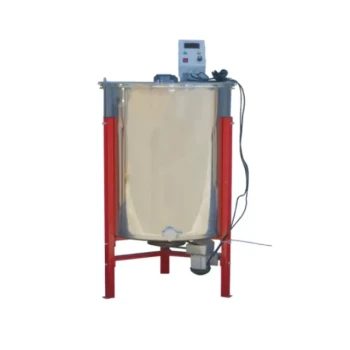
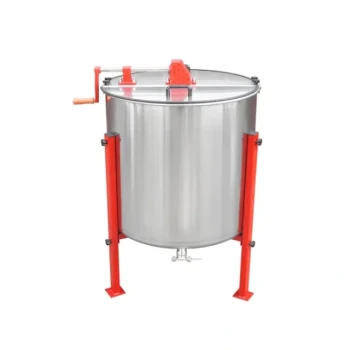
The fundamental difference lies in the power source and the resulting efficiency. Manual extractors rely on a hand crank and are best suited for small-scale hobbyists or off-grid setups where portability is key. Electric extractors utilize a motor to automate the spinning process, offering significantly higher speed and reduced physical labor for growing or commercial operations.
Core Takeaway While manual units offer a lower cost of entry and portability, electric models are a necessary investment for efficiency as an operation grows. Manual extractors are generally sufficient for apiaries with eight hives or fewer, whereas electric extractors are the standard for anyone scaling production or seeking to minimize physical strain.
Evaluating Operational Scale and Capacity
The Hobbyist Threshold
Manual extractors are designed for low-volume processing. They typically accommodate between 2 to 8 frames at a time.
This capacity is ideal for hobbyists managing eight or fewer hives, where the time investment of hand-cranking is manageable.
Commercial and Scaling Requirements
Electric extractors are built to handle volume. Their capacity ranges from 2 frames up to 100 frames or more in industrial models.
For medium-to-large operations, the ability to process dozens of frames simultaneously without manual intervention is critical for workflow.
Efficiency and Physical Ergonomics
The Labor Factor
Manual extraction is physically demanding. The operator must crank the mechanism by hand for the duration of the spin, which can be exhausting during large harvests.
Electric models automate this entirely. The motor does the heavy lifting, allowing the beekeeper to uncap the next batch of frames while the extractor runs.
Speed and Accessibility
Electric extractors are significantly faster and more efficient. They provide consistent rotational speed, which ensures thorough honey separation.
This automation makes electric models the superior choice for beekeepers with physical limitations or those who need to streamline their processing time.
Portability and Power Independence
Manual extractors hold a distinct advantage in mobility. They do not require a power source, making them perfect for off-grid locations or field extraction.
Electric models tether you to an electrical outlet or generator, limiting where you can set up your processing station.
Understanding the Trade-offs
Cost vs. Longevity
Manual extractors are the budget-friendly option. They are often constructed from food-grade plastic or stainless steel, keeping the initial price low.
Electric extractors represent a significant financial jump. However, they are typically built almost exclusively from durable stainless steel, designed to withstand years of heavy vibration and use.
Control and Sensitivity
Manual extractors offer excellent tactile feedback. Because you are powering the crank, you have very good control over the speed, allowing you to slow down instantly if a comb feels fragile.
Electric models offer good speed control, but they lack that immediate physical connection to the spinning basket. You rely on dial settings rather than physical resistance to judge the speed.
Making the Right Choice for Your Goal
To select the correct equipment, you must assess your current hive count and your future growth plans.
- If your primary focus is low cost or small scale: Choose a manual extractor if you manage fewer than eight hives and want to minimize upfront expenses.
- If your primary focus is scaling or efficiency: Choose an electric extractor if you plan to expand beyond eight hives or need to reduce the physical labor of harvest.
- If your primary focus is off-grid flexibility: Choose a manual extractor to ensure you can harvest anywhere without relying on generators or power outlets.
Select the tool that solves your bottleneck today while allowing room for the growth you anticipate tomorrow.
Summary Table:
| Feature | Manual Honey Extractors | Electric Honey Extractors |
|---|---|---|
| Best Suited For | 1-8 Hives (Hobbyists) | 8+ Hives (Commercial/Scaling) |
| Power Source | Manual Hand Crank | Electric Motor |
| Labor Intensity | High (Physical Effort) | Low (Automated) |
| Capacity | 2-8 Frames | 2-100+ Frames |
| Portability | High (Off-grid capable) | Low (Requires power source) |
| Cost | Low Initial Investment | Higher Investment (Durable) |
Scale Your Honey Production with HONESTBEE
Whether you are managing a growing commercial apiary or distributing professional-grade beekeeping supplies, HONESTBEE provides the robust machinery you need to succeed. From high-capacity electric honey extractors and honey-filling machines to specialized hive-making equipment and essential industry consumables, our comprehensive wholesale portfolio is designed to maximize your efficiency and output.
Ready to upgrade your operation? Contact us today to discover how our premium beekeeping tools and hardware can streamline your harvest and grow your business.
Related Products
- HONESTBEE 72 Frame Industrial Electric Honey Extractor for Beekeeping
- Commercial Electric 12 Frame Honey Extractor Spinner Motorized Honey Extractor
- HONESTBEE 6 Frame Self Reversing Electric Honey Extractor for Beekeeping
- HONESTBEE 3-Frame Manual Acrylic Honey Extractor
- Stainless Steel Manual 8 Frame Radial Honey Extractor Machine for Beehives
People Also Ask
- What is the importance of balancing honeycomb frames within a honey extractor? Ensure Stability and Protect Machinery
- How is honey separated from the frames after they are uncapped? Efficient Extraction Methods for High Yields
- What are the main benefits of using a honey extractor? Maximize Yields and Protect Your Honeycomb
- What are the recommended methods for removing honey from the honeycomb? Top Extraction Techniques for Maximum Efficiency
- What is the primary benefit of using a honey extractor compared to older methods? Boost Yield & Save Your Bees' Energy