A universal hive acts as a flexible engine for scaling colony populations to meet pollination demands. Specifically, it allows you to generate splits or colony increases throughout the spring, summer, and fall, directly boosting your overall hive count. These units offer the versatility to be deployed as either single or dual queen systems, allowing you to tailor colony strength to specific management requirements.
The core advantage of a universal hive in pollination services is operational elasticity. By enabling continuous seasonal increases and variable queen configurations, it allows beekeepers to rapidly scale their workforce and adapt to the specific intensity required by different crops.
Scaling Operations for Pollination Contracts
Seasonal Colony Increases
The primary utility of the universal hive is its capacity to facilitate growth. Instead of relying on a static number of colonies, you can use these hives to make splits or increases during the spring, summer, or fall.
This capability is critical for fulfilling large pollination contracts. It allows you to transform strong overwintered colonies into multiple viable units in time for peak bloom periods.
Configurable Queen Systems
Universal hives provide architectural flexibility. You are not locked into a single management style; units can be configured as single or dual queen systems.
This allows you to adjust based on the target crop. A dual queen system may be deployed where an intense workforce is required immediately, whereas single queen units may suffice for standard maintenance or smaller pollination targets.
Enhancing Logistics and Deployment
The Necessity of Standardization
While the universal hive manages the biology, industrial standardization manages the logistics. High-precision automated processing ensures that universal hive components remain compatible and interchangeable.
This standardization is essential when managing thousands of colonies. It guarantees that hives stack correctly, withstand transportation stresses, and integrate seamlessly with automated harvesting systems.
Spatial Scheduling and Mobility
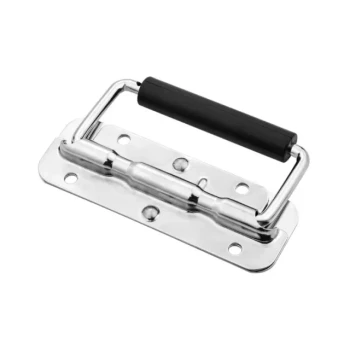
To effectively manage pollination services, hives must be mobile. Universal hives, paired with specialized carrying equipment, enable spatial scheduling.
This allows for the rapid relocation of colonies to match specific blooming periods, such as the pulsed flowering of oilseed rape or sunflowers. This mobility helps alleviate pollination deficits in simplified landscapes by placing bees exactly where and when they are needed.
Understanding the Trade-offs
Management Complexity
While dual queen systems offer higher populations, they introduce significant management complexity. Maintaining two queens requires more precise intervention and monitoring compared to standard single-queen units.
Dependence on Uniformity
The efficiency of this system relies heavily on equipment standardization. If components are not manufactured with high precision, the benefits of easy stacking and automated integration are lost, potentially causing bottlenecks during rapid transport.
Making the Right Choice for Your Goal
To maximize the effectiveness of universal hives in your pollination business, align your strategy with your immediate operational needs:
- If your primary focus is rapid scaling: Prioritize aggressive splitting in the spring and early summer to maximize the number of deployable units for late-season contracts.
- If your primary focus is crop-specific efficiency: Utilize the dual queen configuration for crops requiring high-density foraging forces to ensure maximum pollination rates.
- If your primary focus is logistical speed: Ensure all hive components are industrially standardized to facilitate rapid stacking and transport during short bloom windows.
Success in pollination services comes from balancing biological health with logistical precision; the universal hive provides the framework to achieve both.
Summary Table:
| Feature | Pollination Benefit | Operational Impact |
|---|---|---|
| Seasonal Splits | Rapidly increases hive counts for contracts | Allows for continuous growth from spring to fall |
| Dual Queen System | Maximizes foraging workforce density | Ideal for high-intensity pollination of specific crops |
| Standardization | Ensures component interchangeability | Facilitates rapid stacking and high-speed transport |
| Mobility Design | Supports spatial scheduling | Enables precise relocation to match varied bloom cycles |
Maximize Your Pollination Capacity with HONESTBEE
At HONESTBEE, we understand that commercial success in pollination requires both biological health and industrial precision. As a premier provider for commercial apiaries and distributors, we supply the high-precision beekeeping tools and machinery needed to maintain strict standardization across your operations.
From hive-making and honey-filling machines to a full spectrum of durable hive hardware and industry consumables, we provide the infrastructure that allows you to scale your workforce and fulfill large-scale contracts with ease. Whether you are looking for a comprehensive wholesale offering or specialized equipment to streamline your logistics, our team is ready to support your growth.
Ready to elevate your apiary's efficiency? Contact us today to explore our full range of solutions!
Related Products
- Professional Large-Format Hive Number Set for Beekeeping
- Precision Stainless Steel Frame Cleaner for Hive Grooves and Corners
- Durable Plastic Interlocking Hive Connector for Beekeeping
- HONESTBEE Professional Hive Top Bee Feeder Feeding Solution
- Stainless Steel Round Beehive Air Vents for Ventilation
People Also Ask
- What are the structural advantages of bee hives with high-efficiency ventilation? Prevent Honeycomb Thermal Collapse
- How do different beekeeping hive structures influence productivity? Optimize Designs for Maximum Honey Yield
- Why Increase Hive Installation Quantity in Commercial Apiaries? Offset Climate Risks with Scalable Infrastructure
- How does the design of improved beekeeping hives contribute to maintaining honey quality and purity? Enhancing Purity
- What factors determine the necessary hive configuration for an apiary? Optimize Hive Setup for Better Colony Survival