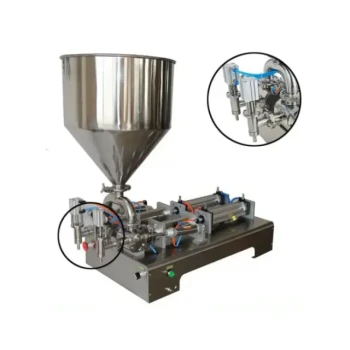
Arrhenius model parameters serve as a precise operational guide for calibrating industrial honey filling machinery. Specifically, the activation energy ($E_a$) derived from rheological testing quantifies how sensitive a honey's viscosity is to temperature changes. This data allows operators to scientifically adjust heating controls to achieve optimal flow without degrading the product.
The Arrhenius model transforms viscosity data into actionable machine settings. By understanding the activation energy, you can pinpoint the exact temperature required to achieve flowability, ensuring efficient filling while preventing heat-induced damage to the honey's quality.
Interpreting Activation Energy for Production
Quantifying Temperature Sensitivity
The primary metric derived from the Arrhenius model is activation energy ($E_a$).
This value serves as a numerical indicator of how "responsive" a specific honey variety is to heat. It removes the guesswork from understanding how the fluid will behave inside the machinery.
The Implications of High Activation Energy
Honey varieties with a high activation energy exhibit a dramatic reduction in viscosity with only slight increases in temperature.
For operators, this means that minimal thermal energy is required to significantly improve flowability. You do not need to apply aggressive heating to move these fluids efficiently.
Optimizing Machine Settings
Fine-Tuning Heating Power
The activation energy data acts as a reference for setting the heating power parameters on filling machinery.
By aligning the heating output with the specific $E_a$ of the honey batch, operators can prevent energy waste. There is no need to overheat the system if a small temperature bump yields the necessary fluidity.
Maximizing Flow Efficiency
Correctly applying these parameters ensures the honey reaches the ideal viscosity for the filling nozzles.
This reduces mechanical strain on pumps and ensures consistent fill volumes. It prevents the machinery from struggling with overly viscous product or dripping due to product that is too thin.
Understanding the Trade-offs
Balancing Flow vs. Quality
While heating honey improves flow, it introduces a critical risk: thermal degradation.
Excessive heat can increase Hydroxymethylfurfural (HMF) levels and destroy heat-sensitive enzymes, lowering the commercial value of the honey. The Arrhenius model helps you find the limit, but it does not prevent damage if you ignore the ceiling.
The Limits of Optimization
Relying solely on viscosity reduction can lead to over-processing.
Just because a high activation energy allows you to thin the honey rapidly does not mean you should apply maximum heat. The goal is to reach the minimum viscosity required for filling, not the lowest viscosity possible.
Making the Right Choice for Your Production Line
To apply Arrhenius parameters effectively, align your machine settings with your specific operational goals:
- If your primary focus is Production Speed: Utilize the activation energy data to identify the precise temperature where viscosity drops to the maximum flow rate your nozzles can handle.
- If your primary focus is Product Quality: Use the model to determine the lowest possible temperature that still permits machinery operation, minimizing thermal stress on the honey.
By treating activation energy as a control limit rather than just a theoretical value, you turn rheological data into a tool for consistent, high-quality manufacturing.
Summary Table:
| Parameter | Impact on Honey Filling | Operational Action |
|---|---|---|
| High Activation Energy (Ea) | Viscosity drops rapidly with small heat increase | Use lower heating power to achieve flow; avoids over-processing. |
| Low Activation Energy (Ea) | Viscosity is resistant to temperature changes | Requires stable, consistent heating to maintain flowability. |
| Heating Power Setting | Directly affects pump strain and nozzle flow | Calibrate based on Ea to prevent mechanical wear and dripping. |
| Quality Control (HMF) | Heat sensitive enzymes degrade with excessive temp | Set thermal limits using the Arrhenius model as a safety ceiling. |
Elevate Your Honey Production with HONESTBEE
Are you looking to scale your commercial apiary or expand your distribution with precision-engineered equipment? At HONESTBEE, we specialize in empowering large-scale operations and distributors with high-performance honey-filling machines, hive-making machinery, and a full spectrum of professional beekeeping tools.
Our equipment is designed to integrate scientific data—like Arrhenius model parameters—into your daily workflow, ensuring maximum flow efficiency without compromising the delicate quality of your honey. From specialized hardware to essential industry consumables and honey-themed cultural merchandise, we provide the comprehensive wholesale solutions your business needs to grow.
Ready to optimize your production line?
Contact HONESTBEE Today to Discuss Your Wholesale Needs
References
- Afonso Maria João, Elsa Ramalhosa. Temperature Effect on Rheological Behavior of Portuguese Honeys. DOI: 10.1515/pjfns-2017-0030
This article is also based on technical information from HonestBee Knowledge Base .
Related Products
- Precision Durable Efficient HONESTBEE Rotary Honey Filling Machine
- Economy Small Honey Filling Machine Honey Bottle Filler Packaging Machine
- Semi Automatic Small Honey Bottle Filling Machine Honey Filler
- Fully Automatic Honey Filling Packaging Machine for Processing Line
- Commercial Rotary Honey Filling Machine for Production
People Also Ask
- What quality control role does professional honey filling equipment perform? Ensure Consistency and Product Stability
- How do high-precision honey filling machines ensure quality? Optimize Your Commercial Production with HONESTBEE
- What is a key feature of the new generation of the honey filling machine? The Advanced Electronic Control Unit
- What are the common types of bottling machines used for honey? Choosing the Right Solution for Your Apiary
- How do honey filling machines work? Achieve Precision & Speed for Your Apiary