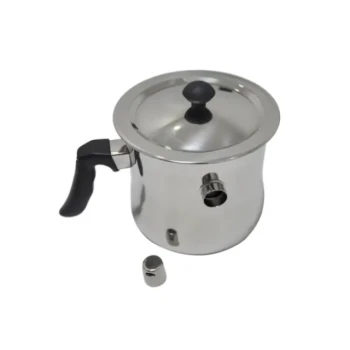
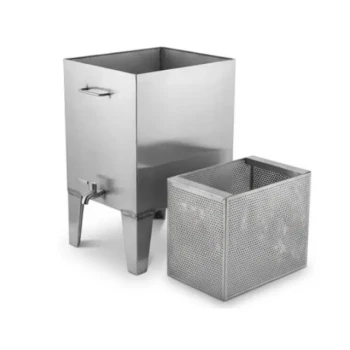
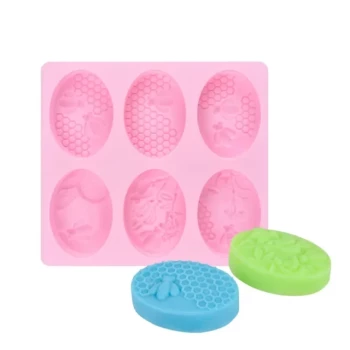
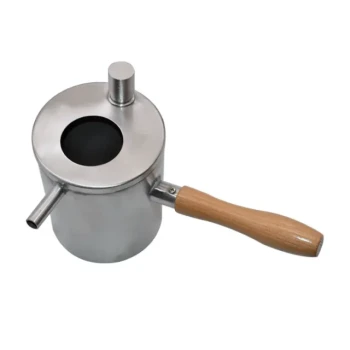
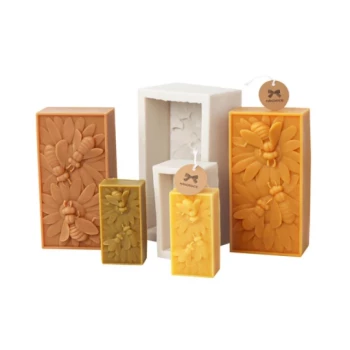
The safest method for melting beeswax on a stovetop involves using a double boiler system to apply gentle, indirect heat. Fill a large stockpot with 2 to 3 inches of water, bring it to a simmer, and nest a smaller metal bowl or saucepan containing the wax inside, ensuring the top container does not touch the bottom of the pot.
Core Takeaway Beeswax is highly flammable and behaves similarly to grease; it should never be melted over an open flame. The double boiler method uses a water barrier to cap the temperature, ensuring the wax melts slowly at its natural liquefaction point (approx. 145° F) without reaching its flash point.
Setting Up the Double Boiler System
Preparing the Water Bath
Begin by filling a large stockpot with approximately 2 to 3 inches of water, or enough to fill it about three-quarters full depending on the depth of your inner container.
Heat the water until it reaches a rolling boil, then immediately reduce the heat to maintain a steady, gentle simmer.
Positioning the Wax Container
Place your solid beeswax chunks into a smaller metal bowl or saucepan. Ideally, break the wax into chunks 1 to 2 inches wide to facilitate faster, more even melting.
Nest this smaller container inside the large stockpot. It should rest on the lip of the stockpot or float gently; it is critical that the inner pot does not touch the bottom of the large stockpot to prevent scorching.
Monitoring the Process
The indirect heat from the simmering water will gradually melt the wax, a process that can take anywhere from 10 minutes to an hour depending on the volume of wax.
Keep a close watch on the water level in the bottom pot. Ensure it does not evaporate completely, as this ruins the temperature regulation and damages your cookware.
Critical Safety Protocols
Temperature Management
Beeswax begins to liquefy between 143° F and 151° F (61-66° C). Do not attempt to rush this process by increasing the heat, as overheating can degrade the wax or cause a fire.
Fire Safety
Never leave melting wax unattended. Treat beeswax like hot oil; if it spills onto a burner, it can ignite instantly.
Water Contamination Dangers
While you need water for the bottom pot, you must never add water to the hot, melting wax in the top pot. If water hits hot wax, it can cause the wax to erupt violently from the container.
Personal Protective Equipment (PPE)
Always wear gloves and goggles when handling hot wax to prevent burns from splashes. Work in a well-ventilated area to avoid inhaling concentrated wax fumes.
Understanding the Trade-offs
Equipment Dedication
Beeswax is notoriously difficult to clean and sticks aggressively to surfaces. The pots and bowls you use for this process will likely become unsuitable for conventional cooking afterward; designate them as "wax-only" tools.
Texture Preservation
You must prevent the simmering water from splashing into the wax container. Water mixing with the melting wax can negatively alter the finished product's texture and consistency.
Making the Right Choice for Your Goal
Before you begin, determine the end-use of your wax to adjust your preparation:
- If your primary focus is simple melting: Ensure you break the wax into small, uniform 1-inch chunks to minimize the time the wax sits on the heat.
- If your primary focus is rendering (cleaning) raw wax: You may need to incorporate a straining step (using cheesecloth or nylon) immediately after the wax liquefies to remove impurities.
- If your primary focus is safety: Keep a source of cool running water nearby for burns, but ensure it is far enough away to prevent accidental splashing into the wax pot.
Treat the melting process with the same caution you would use for deep-frying; constant attention is your best safety tool.
Summary Table:
| Feature | Specification/Guideline |
|---|---|
| Melting Point | 143°F - 151°F (61°C - 66°C) |
| Heating Method | Indirect heat via Double Boiler |
| Wax Preparation | Break into 1-2 inch uniform chunks |
| Water Depth | 2-3 inches in the bottom stockpot |
| Key Safety Tool | Heat-resistant gloves and goggles |
| Critical Warning | Never add water directly to hot wax |
Elevate Your Beeswax Processing with HONESTBEE
Processing high-quality beeswax requires precision and the right tools. At HONESTBEE, we empower commercial apiaries and distributors with professional-grade solutions. Whether you are scaling up with our specialized honey-filling and hive-making machinery or stocking up on essential beekeeping tools and consumables, we provide the industrial expertise you need to grow.
Ready to optimize your apiary’s efficiency? Contact our wholesale experts today to explore our comprehensive equipment portfolio and cultural merchandise.
Related Products
- Beeswax Machine Press Embosser Wax Foundation Mold Printer Bee Hive Equipment Making Sheet
- Beeswax Foundation Sheets Beehive Foundation for Wholesale
- Colorful Silicone Beeswax Foundation Mold Mould for Beekeeping
- Economy Manual Beeswax Embossing Mill Wax Foundation Machine Roller
- Electric Beeswax Flat Sheet Machine with Operating Tray for Wax Processing
People Also Ask
- What equipment is needed to make beeswax foundation? A Guide to DIY Wax Sheet Production
- What miscellaneous equipment is needed for making foundation? A Guide to the Essential Tools
- What miscellaneous equipment is useful when making beeswax foundation? Essential Support Tools for Beekeepers
- What specific equipment is required for making beeswax foundation? Essential Tools for High-Quality Production
- What is the recommended temperature for melting beeswax to make foundation sheets? Master the 70°C-80°C Ideal Range