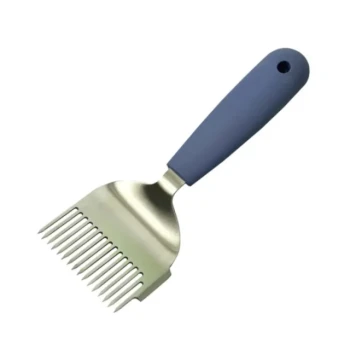
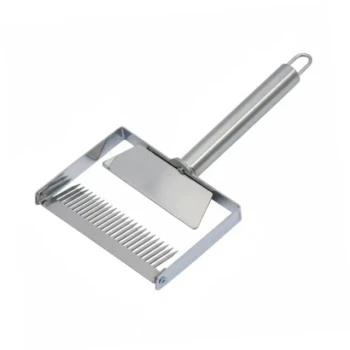
Beeswax cappings are a highly valuable byproduct of honey extraction that can be easily reclaimed rather than discarded. To process them, you must wash the cappings with water to remove residual honey, melt the wax down, strain it through a filter like cheesecloth to remove debris, and pour it into molds to harden into reusable bricks.
The Core Insight Cappings represent some of the highest quality wax in the hive. By rendering this sticky residue into clean blocks, you transform waste into a versatile raw material that can be traded for new hive equipment or used to create value-added goods like cosmetics.
The Processing Workflow
Step 1: Recovering Residual Honey
Before processing the wax itself, you should reclaim the honey clinging to the cappings.
Allow the cappings to drip dry thoroughly after they are removed from the frame.
Alternatively, you can place the cappings in a sunny spot outdoors. Bees will naturally forage through the material, cleaning off the excess honey and returning it to their hives, which significantly reduces waste.
Step 2: Washing the Wax
Once the bulk of the honey is removed, the wax must be cleaned of any final sticky residue.
Wash the cappings thoroughly in water. This step ensures that the sugars dissolve, leaving only the wax behind for melting.
Step 3: Melting and Straining
After washing, the solid wax needs to be liquefied to separate it from physical impurities.
Melt the cappings using a gentle heat source.
While the wax is liquid, strain it through cheesecloth. This filtration step captures non-wax debris (often called slumgum), ensuring your final product is pure.
Step 4: Molding
The final stage of processing turns the liquid wax into a storage-friendly form.
Pour the strained, liquid wax into molds. Common household items, such as bread pans, work excellent for this purpose.
Allow the wax to cool and harden completely into blocks or bricks.
Understanding the Trade-offs
Process Efficiency vs. Purity
Letting bees clean the cappings outdoors is efficient and saves labor. However, if not managed correctly, it can trigger robbing behaviors between hives or attract pests.
Complexity of Rendering
Rendering wax is a sticky, heat-intensive process. If you skip the straining step, your final wax blocks will contain debris, making them unsuitable for high-end applications like cosmetics or foundation exchange.
Practical Applications for Rendered Wax
Reinvesting in the Apiary
The most direct use for rendered wax bricks is hive maintenance.
Many beekeeping supply companies allow you to exchange beeswax bricks for new foundation sheets. This lowers the operational cost of maintaining your apiary.
Creating Value-Added Products
Because capping wax is generally new and light-colored, it is highly prized for crafting.
It serves as an excellent base for making candles, soaps, and lip balms.
Making the Right Choice for Your Goal
Once you have your blocks of clean beeswax, your next step depends on your immediate needs:
- If your primary focus is reducing apiary costs: Exchange your rendered wax bricks with a supply company to obtain new foundation sheets for your frames.
- If your primary focus is creating merchandise: Use the high-quality, filtered wax to produce artisanal goods like candles, cosmetics, or soaps.
- If your primary focus is minimal effort: Simply render the blocks and store them; beeswax does not spoil and holds its value indefinitely.
Treat your wax cappings not as refuse, but as a secondary harvest that rivals the value of the honey itself.
Summary Table:
| Step | Process Phase | Key Action | Benefit |
|---|---|---|---|
| 1 | Honey Recovery | Drip dry or bee foraging | Minimizes honey waste |
| 2 | Washing | Water rinse | Removes sticky sugar residue |
| 3 | Purification | Melting & straining | Filters out debris (slumgum) |
| 4 | Final Shaping | Molding | Creates easy-to-store bricks |
| 5 | Application | Exchange or Crafting | Reduces costs or creates revenue |
Maximize Your Apiary's Potential with HONESTBEE
Turning beeswax cappings into valuable assets requires the right tools and expertise. HONESTBEE is dedicated to supporting commercial apiaries and distributors with our comprehensive range of professional-grade equipment. From specialized hive-making and honey-filling machinery to a full spectrum of beekeeping tools and consumables, we provide the hardware you need to scale your production.
Whether you are looking to refine your wax processing or expand your honey-themed cultural merchandise, our wholesale solutions are designed to enhance your efficiency and profitability. Contact HONESTBEE today to discuss how our portfolio can support your business growth!
Related Products
- Electric Beeswax Flat Sheet Machine with Operating Tray for Wax Processing
- Steam Beeswax Melter Wax Warmer for Wax Processing
- Fully Automatic Beeswax Embossing Machine Foundation Mill
- Electric Flatting and Embossing Machine with Tray for Beekeeping
- Manual Beeswax Comb Foundation Machine Wax Foundation Mill Embossing Machine
People Also Ask
- What is the primary function of the double-roller extrusion system? Master Precision Beeswax Foundation Production
- How do cultural merchandise processing machines contribute to the economic value chain? Boosting Apiary Profitability
- How do specialized beeswax processing machines maximize the value of beekeeping by-products? Boost Your Apiary's ROI
- How does the machine flatten the beeswax? A Guide to Roller and Press Methods
- What are the key functions of a beeswax machine? Maximize Apiary Efficiency & Revenue with Professional Equipment