Commercial apiary managers can reduce predatory-bird losses by changing hive geometry, not simply adding deterrents. Replace dense, highly visible blocks with smaller clusters of approximately 10–20 hives, separated and positioned to interrupt birds’ lines of sight. Use modular hive stands to create controlled spacing and flexible layouts, while placing groups where vegetation, terrain, or canopy naturally obstructs swooping flight paths.
The central strategy is to make the apiary less predictable and less exposed. Dispersed hive clusters, modular spacing hardware, suitable field positioning, and carefully selected visual deterrents can reduce predation pressure while preserving efficient commercial management.
Why Hive Layout Matters to Bird Predation
Dense blocks create predictable targets
Large, tightly packed hive blocks can make an apiary highly visible from the air. They also concentrate bee activity in one area, potentially giving predatory birds a predictable feeding location.
The primary reference indicates that bird predation can reduce worker bee populations by up to 40% in affected apiaries. The actual impact will vary by bird species, habitat, season, and colony strength, so managers should verify losses through local monitoring rather than assume a uniform reduction.
Dispersion interrupts visual targeting
Breaking a large apiary into smaller clusters of 10–20 hives reduces the visual concentration of colonies. The separation between groups makes it more difficult for birds to maintain a consistent line of sight across the entire operation.
This approach does not eliminate predation, but it reduces the efficiency of a bird’s hunting pattern while maintaining manageable groups for inspection, transport, and harvesting.
Positioning can provide natural protection
Where practical, place hive groups near dense tree canopy, vegetation, or terrain features that obstruct direct flight paths. Canopy can allow worker bees to forage while making steep, unobstructed swoops more difficult for birds.
Managers must still confirm that the position provides adequate bee access, equipment access, airflow, drainage, and safe working conditions. Natural cover is a layout aid, not a substitute for operational suitability.
How Spacing Hardware Supports the Layout
Use modular stands to create repeatable spacing
Modular hive stands allow managers to establish consistent gaps between colonies and to rearrange groups as bird activity, forage conditions, or operational requirements change. This is more reliable than placing individual hives ad hoc.
A stand system should support stable hive placement, straightforward inspection, and efficient movement of equipment. Its value is not only physical support; it enables managers to implement a deliberate spatial plan across multiple sites.
Build a cluster-based site plan
A practical layout begins by dividing the apiary into separate operating units:
- Identify the total number of colonies and the areas of highest bird activity.
- Divide the apiary into clusters of roughly 10–20 hives.
- Use stands and field features to create visual breaks between clusters.
- Avoid aligning every hive in one exposed, uniform block.
- Keep inspection paths and vehicle access clear.
- Reassess the layout after observing bird activity and bee losses.
The objective is a dispersed but manageable apiary, not random placement that increases labor or complicates logistics.
Use positioning to avoid high-risk zones
In areas with high concentrations of European bee-eaters or other specialist bee predators, managers should avoid known high-frequency hunting zones when site selection allows. Ecological suitability models and local observation can help identify areas where predation pressure is likely to be greater.
Spatial planning is a non-chemical intervention: it reduces exposure without applying substances to colonies or surrounding habitat.
Add Visual Disturbance Where Needed
Reflective tape can complement physical layout
Reflective tape may be suspended on lines between poles to create visual disturbance around vulnerable sections of an apiary. The supplementary reference describes tape approximately 1 metre long and 3.5 centimetres wide, installed at 20–30 centimetre intervals on lines stretched between poles about 5 metres high.
Treat these dimensions as an implementation reference rather than a universal guarantee. The tape must be positioned so it does not obstruct workers, vehicles, inspections, or nearby power and irrigation infrastructure.
Use deterrents as a secondary layer
Reflective devices work best as a supplement to cluster dispersion and habitat-aware positioning. They should not be used to justify keeping all colonies in a dense, exposed block.
Managers should monitor whether birds change their hunting routes, ignore the material, or shift pressure to another part of the apiary. A deterrent that is effective during one period may require repositioning as bird behavior changes.
Avoid unsuitable control methods
The supplementary material identifies high-frequency sound devices and unregistered toxicants as ineffective or unsuitable approaches. Managers should avoid relying on methods that create regulatory, environmental, or colony-health risks.
Physical layout and non-chemical deterrence provide a more controllable foundation for commercial operations.
Measure Whether the Layout Is Working
Track worker bee and colony indicators
Predation should be evaluated through operational records, not visual impressions alone. Track colony strength, worker traffic, damaged or missing bees, brood development, and changes in honey production across differently positioned clusters.
Comparing dispersed clusters with previously dense areas can help determine whether the layout is reducing pressure under local conditions.
Monitor bird behavior
Record the bird species observed, times of highest activity, flight paths, preferred perches, and the locations where bee losses appear greatest. This information helps managers adjust stands, cluster positions, canopy use, and reflective lines.
A layout should be treated as an adaptive management system rather than a one-time installation.
Separate bird losses from other pest pressure
Wasps can also weaken colonies by killing bees and raiding hive resources. Their impact should not be confused with bird predation.
Where wasps are a confirmed problem, liquid wasp traps using sweet liquid or beer lures can be placed near hive stands. This is a separate control measure and should be combined with appropriate hive protection and monitoring.
Understanding the Trade-offs
Dispersion increases management distance
Smaller clusters may reduce predation exposure, but they can increase walking, vehicle travel, inspection time, and transport complexity. The layout must balance biological protection with the cost of servicing more widely distributed colonies.
Modular stands help by making spacing repeatable and allowing clusters to be reorganized without replacing the entire support system.
Canopy and vegetation can create operational constraints
Trees and dense vegetation may obstruct birds, but they can also restrict machinery, reduce visibility for workers, complicate access, or create maintenance concerns. Never choose a protected position without checking drainage, storm exposure, fire risk, and safe handling conditions.
Deterrents may lose effectiveness
Birds can habituate to stationary visual devices. Reflective tape should therefore be considered a supporting measure, and its effectiveness should be checked through ongoing observation and colony-performance records.
Standardization must not override local conditions
A cluster size of 10–20 hives is a practical reference from the primary guidance, not an absolute rule for every site. Terrain, forage distribution, predator density, access, and labor availability may justify smaller or differently arranged groups.
Sourcing the Required Hardware Efficiently
Specify products around the operating model
For distributors, wholesalers, and B2B resellers, the most useful product portfolio combines:
- Modular hive stands for stable, adjustable cluster layouts.
- Compatible support components for repeatable spacing and replacement.
- Reflective tape and line-mounting accessories for visual deterrence.
- Hive-access hardware that preserves inspection and transport efficiency.
- Packaging suited to rapid multi-site fulfillment.
The hardware should be evaluated as a system, not as isolated products. Compatibility, durability, ease of installation, and replacement availability directly affect the manager’s ability to maintain a consistent layout.
Match supply service to commercial urgency
Commercial apiaries often need rapid replenishment during seasonal expansion, relocation, or predator outbreaks. Suppliers should therefore provide clear specifications, responsive technical support, dependable stock information, and efficient order fulfillment.
A one-stop sourcing partner is most valuable when it can supply the stands, spacing components, and deterrence accessories required for an integrated site plan rather than forcing managers to coordinate multiple vendors.
How to Apply This to Your Apiary
Use the following priorities to align the layout with your operating goal:
- If your primary focus is reducing bird predation: Replace dense hive blocks with dispersed clusters of approximately 10–20 hives and use modular stands to interrupt exposed lines of sight.
- If your primary focus is maintaining labor efficiency: Standardize cluster layouts, access paths, and stand dimensions so dispersion does not create unnecessary inspection or transport delays.
- If your primary focus is protecting apiaries in high-risk habitats: Combine ecological site selection, canopy or terrain screening, and targeted reflective-tape installation.
- If your primary focus is sourcing at commercial scale: Choose a supplier offering compatible hive-layout hardware, deterrence accessories, rapid response, and reliable multi-item fulfillment.
- If your primary focus is verifying return on investment: Track bird activity, colony strength, worker losses, and production results before and after layout changes.
A commercially successful anti-predator strategy makes colonies harder to target while keeping the apiary easy to manage, measure, and resupply.
Summary Table:
| Strategy | Description |
|---|---|
| Cluster Dispersion | Break large apiaries into smaller groups of 10-20 hives to reduce visual targeting. |
| Modular Stands | Use modular hive stands to create repeatable spacing and flexible layouts. |
| Natural Cover | Position clusters near canopy or terrain to obstruct bird flight paths. |
| Reflective Tape | Install reflective tape lines to create visual disturbance as a secondary deterrent. |
| Monitoring | Track bird behavior and colony strength to adapt the layout. |
Optimize your apiary layout with HONESTBEE's modular hive stands and deterrence accessories. We offer one-stop sourcing for commercial beekeepers and distributors, ensuring rapid delivery and reliable supply. Contact us to reduce predation losses and boost efficiency — Get in touch today.
Related Products
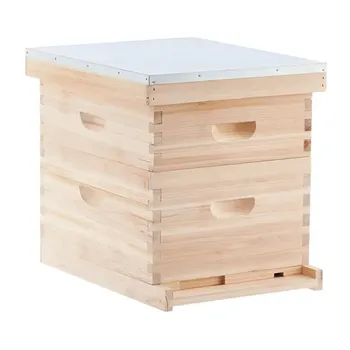
- Wholesales Dadant Size Wooden Bee Hives for Beekeeping
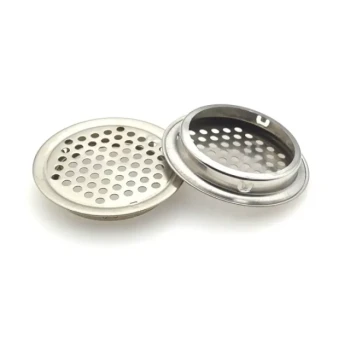
- Stainless Steel Round Beehive Air Vents for Ventilation
- High-Performance Langstroth Bee Hives for Global Professional Beekeeping
- Metal Bee Hive Stand Bee Box Stand for Beekeeping
- Durable Plastic Hive Number Set for Beekeeping
People Also Ask
- What are the strategic benefits of installing beekeeping hives at an elevation of 1 to 6 meters? Protect Your Assets
- What are the key advantages of modern improved beekeeping hives? Scale Your Honey Yield and Production Efficiency
- What is the proper way to store unused bee hives? Expert Stacking Tips for Equipment Longevity
- What are the 2 types of bee hives? Langstroth vs. Top-Bar for Your Apiary
- How does the design of improved beekeeping hives contribute to maintaining honey quality and purity? Enhancing Purity