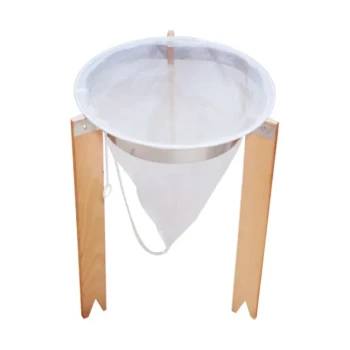
Commercial honey producers can meet national standards by combining controlled apiary sourcing, laboratory testing, hygienic processing, and validated packaging. Stainless-steel settling tanks, precision filtration, temperature-controlled systems, and automated filling equipment help remove impurities, control moisture, preserve quality, and achieve batch consistency. However, medical-grade honey or propolis requires more than food-grade processing equipment; producers must also satisfy the applicable medical-product regulations, testing requirements, and validation standards in their target market.
The core principle is process control from hive to finished package. Specialized equipment reduces contamination and variation, but compliance depends on the complete system: approved raw materials, sanitary facilities, validated processing parameters, laboratory release testing, traceability, and correctly supported product claims.
Build Compliance Into the Entire Production Process
Start with controlled apiary sourcing
Commercial producers should prioritize honey harvested from managed apiaries, including established species such as Apis mellifera and Apis cerana, rather than crude honey squeezed from unmanaged colonies.
Managed sourcing improves traceability and helps producers document floral origin, harvest conditions, hive treatments, and supplier identity.
Separate processing from living and agricultural areas
A dedicated processing room should be designed for hygienic workflow and kept separate from residential spaces. Surfaces, equipment, personnel movement, cleaning procedures, and storage conditions should all be managed to reduce contamination risks.
Commercial operations should also confirm whether their jurisdiction requires a food processor, manufacturing, retail, or other operating license.
Test raw honey before processing
Raw honey should undergo laboratory testing for purity, composition, moisture, and other parameters required for the intended product category.
Testing is especially important for unifloral honey, blended honey, flavored products, and products making therapeutic claims. Processing equipment cannot correct adulteration or replace laboratory verification.
Use Equipment That Protects Purity and Consistency
Settling tanks remove coarse impurities
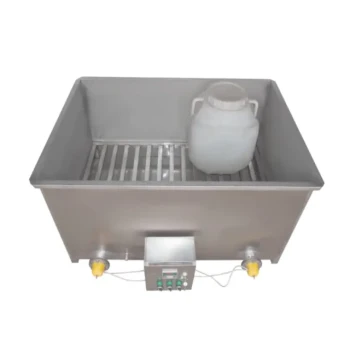
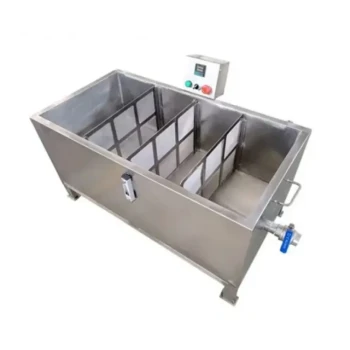
Food-grade stainless-steel settling tanks allow wax particles, debris, and heavier material to separate from honey before finer processing.
Stainless steel is preferred because it is durable, cleanable, and less likely to introduce residues into the product when properly maintained.
Micro-filtration improves physical cleanliness
Precision micro-filtration helps remove fine particles while producing a smoother, more consistent product. Filtration should be selected carefully so that it improves clarity without unnecessarily removing desirable components.
The objective is controlled impurity removal, not aggressive processing that compromises the product’s intended characteristics.
Temperature-controlled systems protect quality
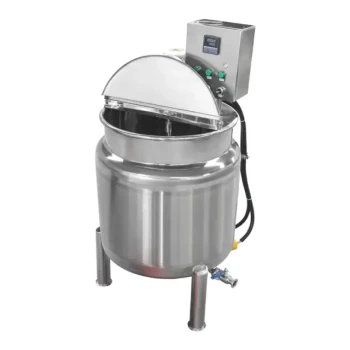
Indirect, temperature-controlled heating can reduce viscosity, improve filtration, and help manage wild yeast without directly scorching the honey.
Excessive heat can damage sensory qualities and beneficial enzymes. Processing parameters should therefore be defined, monitored, and recorded for each product.
Moisture control supports shelf stability
Moisture content is a central quality concern because excessive water can increase the risk of fermentation and reduce shelf stability.
Equipment and process controls should support consistent moisture management, while laboratory testing confirms that each batch meets the applicable national specification. For some honey standards, the reference values include moisture below 20% and fructose/glucose above 60 g per 100 g, but producers must verify the exact requirements in their jurisdiction and product category.
Select Filling and Packaging Systems for Commercial Scale
Automated filling improves batch control
Automated honey-filling machines provide more consistent fill volumes, reduce manual handling, and improve production efficiency.
This is particularly valuable for wholesalers, distributors, and private-label operations that need repeatable packaging across multiple sizes and customer specifications.
Hygienic filling reduces recontamination risk
Filling equipment should use food-contact materials, be easy to clean, and support documented sanitation procedures.
“Hygienic” filling should not automatically be described as sterile. If a product is marketed as medical-grade or sterile, the producer needs separate validation and regulatory evidence for that claim.
Packaging must protect the finished product
Containers should be clean, durable, food-grade, and suitable for honey’s viscosity and storage conditions. Labels should accurately identify ingredients, origin or floral type where required, lot information, net quantity, storage instructions, and permitted claims.
Clear labeling also helps distributors and buyers maintain traceability throughout storage and delivery.
Produce Higher-Value Hive Products
Preserve floral identity in monofloral honey
Floral source influences honey’s flavor, color, aroma, and commercial positioning. Producers can use controlled sourcing, batch segregation, laboratory analysis, and consistent filling to develop premium monofloral products.
Processing should preserve the product’s defining characteristics rather than treat all honey as an interchangeable bulk commodity.
Control creamed honey crystallization
Creamed honey requires controlled heating, cooling, seed-crystal blending, and storage. A typical process described in the reference uses 10% fine-crystal seed honey blended into 90% liquid honey, followed by filling and storage at approximately 14°C for one week.
Shallow, wide-mouth containers and controlled temperature help produce uniform crystals and a smooth texture. The process must still be verified against the applicable moisture, sugar-composition, labeling, and flavored-product requirements.
Process propolis with an appropriate quality system
Therapeutic propolis requires controlled raw-material sourcing, hygienic extraction or preparation, composition testing, and documented batch consistency.
The phrase “medical-grade” should be treated as a regulated product designation, not simply a premium marketing description. Producers must determine whether the product is regulated as food, a supplement, a cosmetic, a traditional medicine, or a medical product in each target market.
What Medical-Grade Production Adds
Food-grade equipment is necessary but not sufficient
Settling tanks, filtration systems, heating units, and filling machines establish a sanitary food-processing foundation. They do not, by themselves, prove that the finished honey is suitable for medical use.
Medical applications may require additional controls for microbiological quality, contaminants, identity, potency or activity, packaging integrity, shelf life, and batch release.
Validate the intended medical process
A producer should define the intended use and then establish validated processing parameters for that product. This may include documented cleaning, process monitoring, environmental controls, laboratory testing, and stability evaluation.
The exact requirements depend on the national authority and the product’s regulatory classification. A compliance review should occur before the product is labeled or sold as medical-grade.
Maintain complete traceability
Each batch should be traceable from apiary and harvest through processing, filtration, filling, storage, and distribution.
Batch records should identify raw-material lots, equipment used, processing temperatures and times, filtration steps, test results, packaging lots, deviations, and release decisions.
Understanding the Trade-offs
Filtration versus product character
Finer filtration can improve visual clarity and remove more physical impurities, but excessive processing may alter the characteristics that premium buyers value.
The right filtration level depends on whether the goal is raw-style presentation, standardized retail honey, monofloral preservation, or a specialized therapeutic product.
Heating versus quality preservation
Heating can improve flow and processing efficiency, especially during filling, but uncontrolled heat may reduce sensory and biological quality.
Indirect heating with accurate temperature monitoring is preferable to uncontrolled direct heating. Producers should define limits rather than rely on operator judgment alone.
Automation versus investment
Automated systems require higher initial investment, operator training, maintenance, and cleaning validation.
They can nevertheless reduce labor dependency, improve fill accuracy, increase throughput, and make consistent supply more practical for distributors and private-label customers.
“Medical-grade” positioning versus regulatory risk
Medical-grade positioning may support higher-value sales, but unsupported claims create significant compliance and reputational risks.
Producers should not use medical, sterile, therapeutic, or clinical language until the product classification, evidence, labeling, and quality system have been reviewed for the destination market.
One-stop sourcing versus system integration
Buying tanks, filters, heating units, and filling machines from one coordinated supplier can simplify procurement, spare parts, technical support, and delivery.
However, equipment should be evaluated as a complete process line. Capacity, cleanability, contact materials, temperature control, electrical requirements, documentation, and compatibility must match the actual production plan.
How to Apply This to Your Project
A commercial producer should select equipment and services according to the intended market, product claims, and production volume.
- If your primary focus is national food-standard compliance: Establish managed-apiary traceability, a dedicated sanitary processing room, laboratory testing, stainless-steel settling, controlled filtration, moisture verification, and hygienic automated filling.
- If your primary focus is premium monofloral or creamed honey: Preserve floral identity through batch segregation and testing, then use controlled heating, precise blending, temperature-managed crystallization, and packaging suited to the final texture.
- If your primary focus is medical-grade honey or propolis: Define the regulatory classification first, then build a validated quality system covering raw materials, microbiological and composition testing, processing, packaging, stability, traceability, and batch release.
- If your primary focus is distribution and private-label supply: Choose scalable, easy-to-clean equipment with consistent fill control, reliable documentation, responsive technical support, spare-parts availability, and delivery capability aligned with customer demand.
With the right combination of verified sourcing, validated controls, specialized equipment, and disciplined documentation, honey producers can move from variable raw harvests to compliant, consistent, and higher-value hive products.
Summary Table:
| Aspect | Food-Grade Production | Medical-Grade Production |
|---|---|---|
| Regulatory Basis | General food safety regulations | Specific medical product regulations |
| Raw Material Control | Managed apiary sourcing | Source verification and qualification |
| Facility Design | Dedicated hygienic processing area | Cleanroom or controlled environment |
| Processing Equipment | Essential settling, filtration, filling | Plus validated process parameters |
| Laboratory Testing | Composition and moisture | Microbiological, contaminants, potency |
| Packaging & Labeling | Food-grade, accurate labeling | Medical-grade, integrity tests |
| Traceability & Documentation | Batch records and traceability | Full batch release documentation |
| Claims | Avoid unsubstantiated health claims | Must support with regulatory evidence |
Ready to elevate your honey production to meet national standards and explore medical-grade opportunities? HONESTBEE provides comprehensive beekeeping equipment and processing solutions, from settling tanks to automated filling lines. For distributors and B2B buyers, we ensure rapid response, dedicated support, and ultra-fast delivery to keep your supply chain moving. Contact us today for a tailored consultation!
Related Products
- Electric Double Wall Honey Filtering Machine Purifier Equipment for Honey Processing Plant
- 0.5T Capacity Honey Dehumidifier Dryer with Vacuum Heating and Thickening Filtering Machine
- Heavy Duty Stainless Steel Honey Processing Machine Decrystallizing Tank
- Double Wall Honey Heating Stirring Homogenizer Mixing Machine with Various Capacity
- Economy Honey Homogenizer Mixer and Melting Machine for Beekeeping
People Also Ask
- What is the process of filtering honey? A Guide to Clean, Pure, and Market-Ready Honey
- What types of equipment are used in honey filtering? Build an Efficient System for Pure, Marketable Honey
- What is the overall importance of using the right equipment in honey filtering? Boost Quality & Marketability
- What role do professional honey harvesting and filtering equipment play in meeting honey market quality standards? Boost ROI
- What steps are involved in maintaining honey filtering equipment? A Guide to Protecting Your Honey Quality