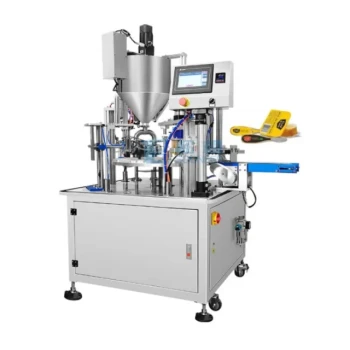
Honeybee loss models serve as a predictive blueprint for capital investment, specifically in sizing honey processing infrastructure. By simulating net forager loss and analyzing colony stability under various environmental conditions, apiary managers can forecast the effective labor force available for production. This allows for the scientific calibration of machinery capacity, ensuring equipment matches the actual biological output of the apiary rather than relying on historical averages or guesswork.
The Core Insight: By incorporating the Allee effect—where a critical population threshold determines colony survival—into numerical simulations, managers can predict colony collapse or success before it happens. This predictive power transforms capacity planning from a reactive gamble into a calculated strategy, preventing the financial drain of idle machinery and the lost revenue of processing bottlenecks.
Bridging Biology and Industrial Engineering
Predicting the Effective Labor Force
The critical metric for honey production is not the total colony population, but the effective foraging labor force. Honeybee loss models calculate net forager loss to determine how many bees are actually available to gather nectar. By accurately predicting this specific segment of the population, managers can estimate total honey flow volume with high precision.
The Role of the Allee Effect
Models utilize the Allee effect to forecast nonlinear population dynamics. This principle helps identify colonies that are dangerously close to a population threshold where growth rates plummet and collapse becomes inevitable. Understanding these thresholds allows managers to exclude failing colonies from production forecasts, preventing an overestimation of required processing capacity.
Optimizing Equipment Capacity
Avoiding Equipment Idleness
Over-investing in high-capacity machinery can be disastrous if a significant portion of colonies face unexpected collapse. By using loss models to simulate potential population crashes, managers can avoid purchasing excess capacity that will sit dormant. This ensures that capital is not tied up in industrial-grade filling machines or extractors that the current bee population cannot justify.
Preventing Processing Bottlenecks
Conversely, underestimating the resilience of the foraging force leads to lost yield during peak flows. If models predict a robust labor force and low forager loss, managers can procure sufficient capacity to handle the surge. This is vital for centrifugal and filtration processes, ensuring honey turnover is fast enough to capture the full output of a high-density population.
Data-Driven Hardware Calibration
Modern equipment requires precise configuration to maximize efficiency. Knowing the predicted yield allows for the selection of machines with the correct vacuum suction and precision pumping specifications. This alignment ensures that the physical throughput of the machinery matches the biological rhythm of the apiary.
The Role of Automated Monitoring
Refining Model Inputs
To make loss models accurate, they require precise data inputs regarding colony composition. Automated monitoring systems separate worker bee traffic from drone traffic, as drones do not contribute to honey production. Filtering out drone numbers ensures the model calculates capacity based solely on the productive workforce, preventing skewed data from inflating yield expectations.
Validating Predictions with Output Data
The relationship between the model and the machinery is circular, not linear. Automated honey-filling machines use high-precision weighing sensors to record the exact final yield. This data serves as a feedback loop, allowing managers to verify the accuracy of their loss models and refine future simulations for even better capacity planning.
Understanding the Trade-offs
Model Dependency vs. Environmental Volatility
While models provide a scientific basis, they are simulations based on specific environmental conditions. A sudden, unmodeled shift in climate or a new pathogen introduction can render predictions obsolete. Relying too heavily on a model without accounting for external anomalies can still lead to capacity mismatches.
Specialized vs. Flexible Equipment
Highly specific capacity planning can lead to a lack of operational flexibility. Industrial-grade equipment designed for a specific volume may struggle if the apiary expands rapidly or shrinks drastically. Managers must balance the efficiency of "right-sized" equipment with the need for modularity, such as interchangeable frame processing components, to adapt to model errors.
Making the Right Choice for Your Goal
To apply these principles effectively, align your equipment strategy with your specific operational focus:
- If your primary focus is Risk Mitigation: Use loss models to identify the "worst-case" survival thresholds (Allee effect) and cap your equipment investment slightly below this level to ensure zero idleness.
- If your primary focus is Yield Maximization: Use the model's "best-case" foraging force prediction to scale your filling and extraction speed, ensuring you never face a bottleneck during peak honey flow.
- If your primary focus is Standardization: Utilize the yield data from automated filling sensors to continuously calibrate your loss models, tightening the margin of error between predicted biology and actual industrial output.
Ultimately, the most profitable apiaries are those that treat biological data and mechanical capacity as two sides of the same equation.
Summary Table:
| Optimization Factor | Role of Honeybee Loss Models | Impact on Equipment Capacity |
|---|---|---|
| Effective Labor Force | Predicts net forager count vs. total population | Determines required throughput for extraction and filtration. |
| Allee Effect Analysis | Identifies critical colony survival thresholds | Prevents over-investment in machinery for failing colonies. |
| Peak Flow Forecasting | Simulates yield based on biological resilience | Ensures high-precision pumps can handle surge volumes. |
| Data Feedback Loop | Validates model accuracy via filling sensor data | Refines future hardware calibration and ROI calculations. |
Maximize Your Apiary's Efficiency with HONESTBEE
Don't let biological uncertainty dictate your industrial success. HONESTBEE specializes in bridging the gap between apiary science and industrial performance for commercial beekeepers and global distributors.
Whether you need high-precision honey-filling machines, industrial-grade extractors, or customized machinery for hive manufacturing, we provide the tools necessary to scale your operations based on scientific data. Our comprehensive wholesale offering includes everything from heavy-duty processing hardware to honey-themed cultural merchandise.
Ready to right-size your production?
Contact HONESTBEE today to discover how our advanced beekeeping equipment and machinery can turn your colony data into predictable profits.
References
- Atanas Z. Atanasov, Lubin G. Vulkov. Inverse Problem Numerical Analysis of Forager Bee Losses in Spatial Environment without Contamination. DOI: 10.3390/sym15122099
This article is also based on technical information from HonestBee Knowledge Base .
Related Products
- Fully Automatic Honey Filling Packaging Machine for Processing Line
- Small Honey Filling Machine Sachet Packing Equipment Single Nozzle
- Double Nozzle Small Honey Filling Machine Honey Sachet Packing Packaging Equipment
- Automatic Honey Filling and Filtering Machine for Beekeeping Bottle Filling
- Precision Durable Efficient HONESTBEE Rotary Honey Filling Machine
People Also Ask
- Why are fully automatic honey filling and packaging lines essential? Boost Your Honey's Market Value and Quality
- What is a fully-automatic honey filler? Streamline Your Production with High-Precision Automation
- How do automated honey filling and packaging machines affect profitability? Boost Margins with HONESTBEE Technology
- How do automated honey filling and packaging machines contribute to the market value of honey products? Maximize Your ROI
- How do industrial-grade automated honey filling and packaging machines mitigate the risk of physical contamination?