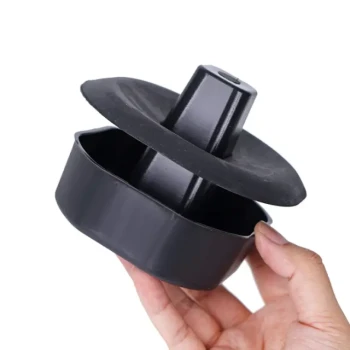
Moats act as a physical liquid barrier that effectively isolates your beehive from ground-based pests. By placing the legs of your hive stand into bowls or dishes filled with vegetable oil or soapy water, you create an impassable gap that prevents ants from climbing up the legs to infiltrate the colony.
By positioning the hive's legs inside fluid-filled containers, you force ants to cross a liquid they cannot navigate. To function correctly, the liquid must have low surface tension to sink the ants, and the reservoir must be shielded to prevent honeybees from drowning.
The Mechanics of an Effective Ant Moat
To protect your hive, you must understand how to construct the barrier and the physics that make it effective.
Creating the Physical Barrier
The fundamental design involves placing each foot of the hive stand into a dedicated container.
Common household items like bowls or sturdy dishes work well for this purpose.
Some commercial hive stands come equipped with integrated moat dishes, but a DIY approach is equally effective using standard containers.
Selecting the Liquid
You should fill these containers with either vegetable oil or a mixture of water and dish soap.
Plain water is often ineffective because small ants can walk across the surface tension.
Adding soap reduces the surface tension of the water, ensuring that any ant attempting to cross immediately sinks and drowns.
Ensuring Proper Spacing
The geometry of the setup is critical for success.
The dish must be wide enough to create a distinct gap between the hive leg and the rim of the bowl.
If the leg touches the edge of the dish, ants can bypass the liquid entirely and continue their climb.
Protecting the Colony
While the goal is to kill ants, you must ensure your defensive measures do not harm your bees.
The Risk to Honeybees
Open containers of liquid near a hive attract bees looking for a water source.
Without protection, your foraging bees may attempt to drink from the moat and accidentally drown in the oil or soapy water.
Installing a Safety Screen
To prevent this, the primary reference recommends covering the moats with wire mesh.
The weave of this mesh must be specific: large enough to allow ants to fall through into the liquid, but small enough to exclude bees.
This screen creates a safe barrier that keeps your colony out of the fluid while leaving the trap open for pests.
Common Pitfalls to Avoid
Even a well-constructed moat can fail if environmental factors are ignored.
Environmental Bridging
Debris such as falling leaves, tall grass, or windblown twigs can fall into the dish.
This creates a "bridge" over the liquid that ants will quickly exploit to cross safely.
You must regularly inspect the moats to ensure the liquid surface is clear of floating debris.
Evaporation and Maintenance
Water-based moats are susceptible to evaporation, especially in hot weather.
If the liquid dries up, the barrier disappears instantly.
Vegetable oil resists evaporation longer than water, but it can become rancid or messy over time, requiring periodic cleaning.
Making the Right Choice for Your Goal
How you implement this system depends on your specific maintenance preferences and resources.
- If your primary focus is low maintenance: Use vegetable oil instead of water, as it does not evaporate quickly and maintains the barrier for longer periods.
- If your primary focus is cost efficiency: Use a mixture of water and dish soap, provided you are willing to refill the containers frequently to combat evaporation.
An effective moat is not just a container of water, but a carefully maintained system that balances pest exclusion with colony safety.
Summary Table:
| Feature | Vegetable Oil Moat | Soapy Water Moat |
|---|---|---|
| Mechanism | High viscosity, physical trap | Low surface tension, drowning |
| Maintenance | Low (slow evaporation) | High (requires frequent refills) |
| Cost | Moderate | Low |
| Safety Requirement | Wire mesh cover needed | Wire mesh cover needed |
| Key Benefit | Long-lasting barrier | Easy to clean and refresh |
Secure Your Apiary with Professional-Grade Equipment
Protecting your colony from pests is just the beginning of a successful harvest. HONESTBEE provides commercial apiaries and distributors with the high-quality tools needed to scale operations efficiently.
From durable hive-making machinery to precision honey-filling equipment and a full spectrum of beekeeping consumables, we offer wholesale solutions tailored to the needs of the modern industry. Whether you are expanding your commercial hive count or sourcing reliable hardware for distribution, our team is here to support your growth.
Ready to elevate your beekeeping business? Contact us today to discuss your wholesale needs!
Related Products
- Professional Ant-Proof Beehive Stand with Integrated Moat for Beekeeping
- Metal Hive Feet Bee Hive Stand for Ant Protection
- Solid Bottom Board Australian Pine Wood Langstroth Bottom Board for Wholesale
- Wholesales Dadant Size Wooden Bee Hives for Beekeeping
- Metal Bee Hive Stand Bee Box Stand for Beekeeping
People Also Ask
- What physical protection advantages do individual hive stands provide against Small Hive Beetles? Secure Your Apiary
- Why are specialized ant-proof stands necessary for Africanized honeybee apiaries? Prevent Absconding in Semi-Arid Regions
- Why are specialized beehive stands or protective barriers necessary for pest management in apiaries? Secure Your Colony
- What are the benefits of elevating a bee hive with a stand or base? Protect Your Colony and Your Back
- What to stand a beehive on? The Best Foundation for a Healthy, Manageable Apiary