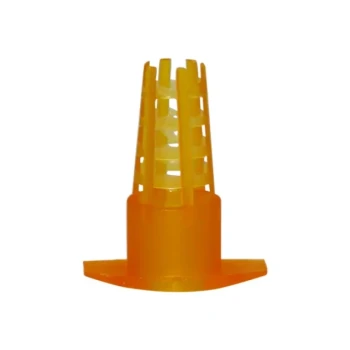
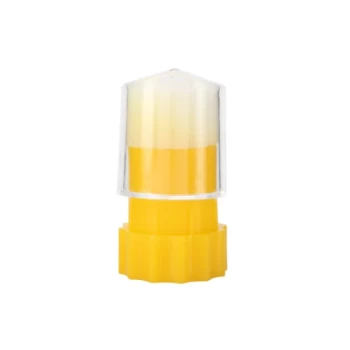
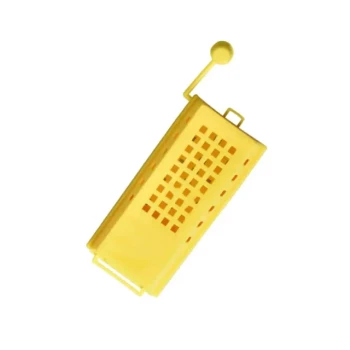
Artificial plastic queen cell cups function as a standardized, reusable substrate designed to mimic the physical environment of natural queen cells. They act as precise receptacles for transferred larvae, allowing beekeepers to anchor multiple potential queens onto a single grafting frame for mass rearing, efficient royal jelly collection, and unified colony management.
By simulating the geometry of natural cells, these plastic cups trigger worker bees to feed the grafted larvae strictly with royal jelly, diverting their development from worker bees into queen bees while enabling industrial-scale workflow efficiency.
The Role of the Standardized Substrate
Mimicking Natural Geometry
The primary function of the plastic cup is to replicate the physical dimensions of a natural queen cell. This specific geometry acts as a signal to the colony.
When a larva is placed inside this cup and introduced to a queen-rearing colony, worker bees perceive it as a developing queen. Consequently, they provide the specialized feeding regimen—specifically large quantities of royal jelly—required to trigger the metamorphosis from larva to queen.
Providing a Stable Foundation
Unlike natural wax cells which can be fragile, plastic cups provide a rigid, consistent base. This stability is critical during the grafting process, where larvae less than 24 hours old are manually transferred into the cups.
The cup protects the delicate larva and its bed of royal jelly from physical disturbance. This ensures the biological material remains intact during transfer between the breeding device and the nurse colony.
Facilitating Large-Scale Production
Enabling Batch Operations
Plastic cups are designed for system integration. They typically snap onto the bars of queen rearing frames, allowing for the simultaneous management of dozens of queen cells.
This "batch processing" capability transforms queen rearing from a bespoke biological event into a streamlined production line. It facilitates unified observation, allowing technicians to check the progress of all cells at once.
Reusability and Hygiene
A distinct functional advantage of plastic over wax is durability. Plastic cups can be cleaned, sterilized, and reused across multiple rearing cycles.
This reusability significantly lowers long-term material costs and reduces the labor required to constantly mold new wax cups. It ensures a high level of consistency, as every cup offers the exact same internal volume for the developing pupa.
Understanding the Trade-offs
Efficiency vs. Biological Acceptance
While plastic cups excel in operational efficiency, they lack the chemical familiarity of natural beeswax. Beeswax cups contain chemical properties consistent with the hive, which leads to a higher acceptance rate by worker bees.
Quality Implications
Research indicates that natural beeswax cups may yield virgin queens with superior morphological characteristics. The plastic cup is a tool of scale and convenience, whereas the wax cup is a tool of biological optimization. Beekeepers must weigh the ease of cleaning and handling plastic against the potentially higher quality output of natural wax.
Making the Right Choice for Your Goal
To select the correct cell cup material, evaluate your production priorities:
- If your primary focus is operational efficiency and scale: Use plastic cups to leverage their durability, ease of cleaning, and seamless integration into batch workflows.
- If your primary focus is maximum biological quality: Use natural beeswax cups to maximize larval acceptance rates and optimize the morphological development of the virgin queens.
The function of the cup is ultimately to serve as a bridge between human management and bee biology; plastic favors the former, while wax favors the latter.
Summary Table:
| Feature | Artificial Plastic Queen Cell Cups | Natural Beeswax Cups |
|---|---|---|
| Primary Function | Standardized substrate for mass rearing | Biological optimization for high acceptance |
| Durability | High; rigid and reusable | Low; fragile and single-use |
| Hygiene | Easy to sterilize and clean | Difficult to sanitize for reuse |
| Workflow | Ideal for industrial batch operations | Best for small-scale, premium queen production |
| Bee Acceptance | Moderate; lacks hive-native scents | High; contains natural chemical properties |
Scale Your Apiary Operations with HONESTBEE
Are you looking to enhance your queen rearing efficiency? HONESTBEE specializes in providing commercial apiaries and distributors with the high-performance tools needed to succeed. From durable artificial cell cups to advanced hive-making and honey-filling machinery, our comprehensive wholesale offering is designed to optimize every stage of your production.
Whether you need specialized hardware or essential beekeeping consumables, our expert team is ready to support your growth and streamline your workflow. Contact us today to explore our full spectrum of beekeeping solutions and see how we can add value to your business.
References
- Rasha Sakla, Samah El-shafeiy. Evaluation of royal jelly quality and queens production by using natural food supplements in honeybee colonies. DOI: 10.21608/ejar.2022.141398.1237
This article is also based on technical information from HonestBee Knowledge Base .
Related Products
- JZBZ Type Wide Base Plastic Queen Cell Cups for Base Mounting and Queen Rearing
- Clear Black Plain Polystyrene Queen Bee Grafting Cell Cups No Lug for Bee Queen Cup
- 10-Cell Silicone Beeswax Bee Queen Cups Forming Mold
- High-Efficiency 20-Cell Silicone Mold for Beeswax Bee Queen Cup Production
- Brown Nicot Queen Cell Cups for Breeding Queen Bees Beekeeping
People Also Ask
- What is the primary function of commercial plastic queen cell cups? Driving Efficiency in Mass Queen Rearing
- What are the primary advantages of using plastic queen cell cups? The Industrial Choice for High-Efficiency Apiaries
- What technical advantages do commercial plastic queen cell cups offer? Scale Your Queen Rearing for Maximum Efficiency
- What is the function of standardized plastic Queen Cell Cups? Boost Efficiency in Commercial Larval Grafting
- Why are standardized plastic queen cell cups preferred? Boost Commercial Queen Rearing Efficiency