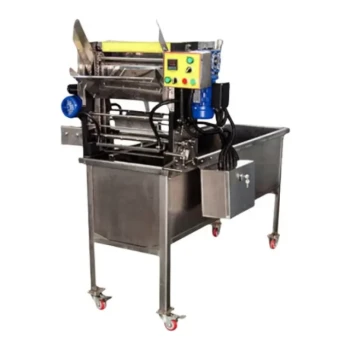
Automated filling and labeling systems act as the primary enforcement mechanism for strict adherence to EU Directive 2001/110/EC regarding natural honey. By integrating high-precision volumetric sensors with advanced variable data printing, these systems ensure that every unit meets legal metrology standards while simultaneously applying mandatory data—specifically country of origin, ingredient descriptions, and batch numbers. This automation eliminates manual inconsistencies, creating a verifiable link between the physical product and its declared specifications.
Compliance in the European market relies on synchronizing the physical product with its digital footprint. Automated systems achieve this by locking precise filling volumes to standardized, traceable labeling, preventing consumer misinformation and ensuring regulatory alignment from the apiary to the shelf.
Guaranteeing Information Accuracy and Traceability
To meet the stringent requirements of EU regulations, automation moves beyond simple sticker application. It serves as a data management tool that validates the product's history.
Adhering to EU Directive 2001/110/EC
The core function of these systems is to standardize information printing to meet specific directive mandates. This includes the precise application of ingredient descriptions and, most critically, the country of origin. Automated printers eliminate the risk of human error in marking these legal necessities, ensuring that the honey is accurately represented to the consumer.
Implementing Full-Process Traceability
Compliance requires the ability to trace a product back to its source. Automated labeling units print unique production batch numbers on every bottle. This creates a data chain that enables full-process traceability from the specific apiary where the honey was harvested to the final end market.
Managing Geographical Indications
For premium honey products, applying official quality logos—such as PDO (Protected Designation of Origin) or PGI (Protected Geographical Indication)—is a legal and economic necessity. Automatic labeling equipment ensures these marks are applied securely and precisely. This verifies the product's geographical uniqueness and traditional craftsmanship, which is essential for establishing trust in European markets.
Ensuring Metrological and Hygiene Standards
EU regulations also govern the physical characteristics of the package, specifically regarding net weight accuracy and food safety during the packaging process.
Precise Volumetric Control
High-precision filling equipment utilizes weighing sensors or piston systems to dispense honey. These sensors continually monitor the flow to ensure the net content deviation of each bottle remains within a minimal, legally acceptable range. This guarantees compliance with legal metrology requirements, ensuring consumers receive exactly what is stated on the label.
Maintaining a Contaminant-Free Environment
Automated systems often operate within an enclosed environment to isolate the product from external contaminants. This design meets strict hygiene standards required for food safety. Furthermore, features like anti-drip and sealing mechanisms prevent secondary contamination and reduce material waste, preserving the biological integrity of the honey.
Understanding the Trade-offs
While automation provides the surest path to compliance, it introduces specific operational challenges that producers must manage.
Calibration Complexity
High-precision equipment requires rigorous calibration to maintain accuracy. If weighing sensors or print heads drift from their settings, an entire batch could fail metrology checks or lack legible traceability data, leading to regulatory rejection.
Flexibility vs. Efficiency
Automated lines are optimized for consistency, which can make switching between different bottle sizes or label types (e.g., changing from a generic label to a PDO-certified label) time-consuming. Producers must balance the speed of automation with the downtime required to reconfigure the line for different SKUs.
Making the Right Choice for Your Compliance Strategy
Selecting the right automation depends on which aspect of EU regulation poses the biggest risk to your current operation.
- If your primary focus is Traceability and Origin: Prioritize systems with integrated variable data printing that can dynamically update batch numbers and origin data without stopping the line.
- If your primary focus is Net Weight and Waste Reduction: Invest in filling machines equipped with high-precision weighing sensors and anti-drip nozzles to ensure metrological compliance and minimize product loss.
True compliance is achieved when your packaging technology acts not just as a tool, but as a guardian of your product's integrity.
Summary Table:
| Compliance Feature | Mechanism | EU Regulatory Goal |
|---|---|---|
| Origin & Ingredients | Variable Data Printing | Adherence to Directive 2001/110/EC |
| Full Traceability | Batch Number Coding | Source-to-shelf data chain tracking |
| Metrology Standards | High-Precision Weighing Sensors | Accurate net weight & minimal deviation |
| Geographical Marks | Automated PDO/PGI Application | Protection of regional authenticity |
| Hygiene & Safety | Enclosed Filling & Anti-drip | Prevention of secondary contamination |
Elevate Your Honey Production with HONESTBEE
Navigating strict European Union regulations requires more than just machinery—it requires a partner who understands the complexities of commercial beekeeping. At HONESTBEE, we empower commercial apiaries and distributors with high-performance honey-filling machines, hive-making equipment, and a full spectrum of professional beekeeping tools.
Whether you need to automate your labeling for full traceability or scale your operation with advanced machinery, we provide the industrial-grade solutions and consumables necessary to succeed in global markets.
Ready to modernize your honey production line?
Contact HONESTBEE today to discuss your customized equipment solutions
References
- LUTSIV Nataliya, SENYK Lesya. NATURAL HONEY MARKET. DOI: 10.31617/tr.knute.2020(36)04
This article is also based on technical information from HonestBee Knowledge Base .
Related Products
- Fully Automatic Honey Filling Packaging Machine for Processing Line
- Automatic Honey Filling and Filtering Machine for Beekeeping Bottle Filling
- Precision Automated Packaging Turntable Honey Spoon Filling Sealing Packing Machine
- Semi Automatic Small Honey Bottle Filling Machine Honey Filler
- Precision Durable Efficient HONESTBEE Rotary Honey Filling Machine
People Also Ask
- Why are fully automatic honey filling and packaging lines essential? Boost Your Honey's Market Value and Quality
- What is a fully-automatic honey filler? Streamline Your Production with High-Precision Automation
- How do automated honey filling and packaging machines affect profitability? Boost Margins with HONESTBEE Technology
- How do automated honey filling and packaging machines contribute to the market value of honey products? Maximize Your ROI
- How do industrial-grade automated honey filling and packaging machines mitigate the risk of physical contamination?