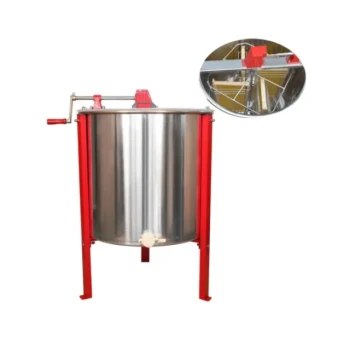
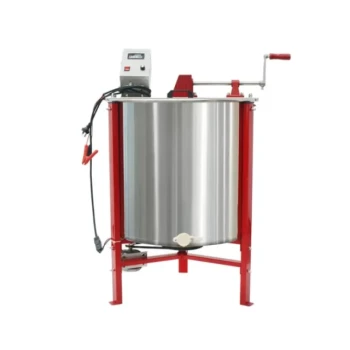
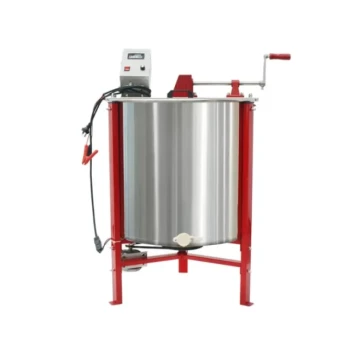
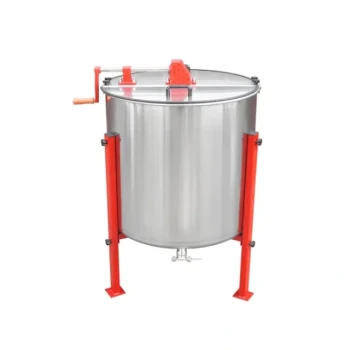
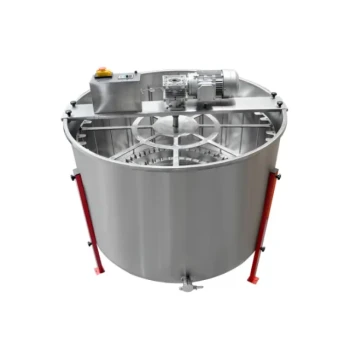
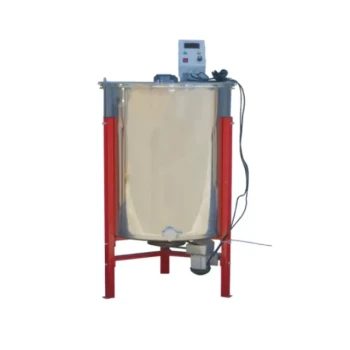
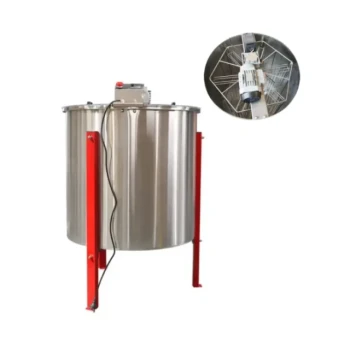
Automated honey extractors revolutionize workflow by utilizing electric motors to spin and extract honey from multiple frames simultaneously. This fundamental shift eliminates the physical bottleneck of manual cranking, allowing beekeepers to process significantly larger batches with consistent speed and minimal physical exertion.
By leveraging motorized centrifugal force, these devices not only accelerate the physical harvesting process but also preserve the honeycomb structure. This dual advantage increases immediate processing speed and boosts long-term hive productivity by allowing bees to focus on honey production rather than rebuilding wax.
Operational Speed and Workflow Optimization
Simultaneous Batch Processing
The primary driver of time efficiency is the ability to handle multiple frames at once. Unlike manual methods that often require handling frames individually or in small pairs, automated extractors operate on large batches.
This capability is essential for commercial or large-scale operations. In these environments, the ability to process high volumes rapidly can improve overall extraction efficiency by up to 50%.
The Multitasking Advantage
Motorized extractors decouple the beekeeper from the extraction mechanism. Once the electric motor is engaged, the machine operates autonomously.
This frees the beekeeper to perform other critical tasks, such as uncapping the next set of frames, while the current batch is spinning. This parallel processing eliminates downtime and creates a continuous workflow.
Preventing Loss During Peak Seasons
Timing is critical during peak nectar flow. If harvesting is too slow, beekeepers risk missing flowering periods, leading to yield losses.
High-efficiency automated equipment ensures rapid turnover. This speed allows apiarists to harvest at the exact right moment, preventing the hive from becoming honey-bound and maximizing the season's potential.
Biological Efficiency and Yield
Preserving Structural Integrity
Automated extractors utilize controlled centrifugal force to separate honey from the comb. This physical process is designed to remove the liquid without damaging the fragile wax structure.
Modern radial extractors often feature adjustable force settings. This ensures thorough extraction while maintaining the integrity of the honeycomb for future use.
Reducing Hive Recovery Time
The reusability of the honeycomb is a massive "hidden" time saver. Bees consume significant amounts of energy and time to produce beeswax for rebuilding nests.
By returning intact combs to the hive immediately after extraction, the colony does not need to rebuild. Consequently, bees can redirect their energy toward honey production, significantly increasing the annual yield per hive.
Understanding the Trade-offs
Capital Investment vs. Scale
While automated extractors offer up to 50% better efficiency, they represent a significant investment in "industrial-grade" hardware.
For small-scale hobbyists with few hives, the time saved may not immediately justify the cost of the machinery compared to simple manual methods. The value of automation becomes most apparent as the number of hives increases.
Dependency on Power and Maintenance
Unlike manual cranks, motorized extractors introduce complexity. They require a reliable power source and the maintenance of electric motors and moving parts.
However, for large operations, this complexity is a necessary trade-off for the standardization and hygienic quality required for commercial production.
Making the Right Choice for Your Goal
To determine if an automated extractor is the right step for your apiary, consider your primary objectives:
- If your primary focus is Commercial Scale: Prioritize automation to enable multitasking and batch processing, which can reduce labor costs and improve efficiency by up to 50%.
- If your primary focus is Maximizing Yield: Utilize the precise centrifugal control to preserve honeycombs, allowing your bees to skip the rebuilding phase and produce more honey immediately.
True efficiency in beekeeping comes not just from working faster, but from smarter resource management that benefits both the beekeeper and the colony.
Summary Table:
| Feature | Manual Extraction | Automated Extraction | Efficiency Impact |
|---|---|---|---|
| Processing Speed | Slow, manual cranking | High-speed electric motor | Up to 50% faster |
| Labor Intensity | High physical exertion | Autonomous operation | Allows multitasking |
| Batch Capacity | Small (1-2 frames) | Large (Multiple frames) | High-volume throughput |
| Comb Preservation | Risk of damage | Controlled centrifugal force | Rapid hive recovery |
| Peak Season Use | Often creates bottlenecks | Continuous workflow | Maximizes nectar flow |
Scale Your Beekeeping Success with HONESTBEE
Maximize your apiary's potential and streamline your honey harvest with high-performance automated solutions. At HONESTBEE, we specialize in serving commercial apiaries and distributors with a full spectrum of wholesale beekeeping tools and industrial-grade machinery.
From high-capacity automated honey extractors and honey-filling machines to specialized hive-making hardware, we provide the equipment you need to reduce labor costs and increase annual yields. Our comprehensive portfolio also includes essential consumables and honey-themed cultural merchandise to support every facet of your business.
Ready to upgrade your operation? Contact us today to discover how our wholesale offerings can enhance your efficiency and drive your commercial success.
Related Products
- HONESTBEE 72 Frame Industrial Electric Honey Extractor for Beekeeping
- 32 Frame Commercial Electric Honey Extractor for Beekeeping and Honey Production
- Commercial Electric 12 Frame Honey Extractor Spinner Motorized Honey Extractor
- HONESTBEE 4 Frame Manual Self Reversing Honey Extractor for Beekeeping
- Stainless Steel Manual 8 Frame Radial Honey Extractor Machine for Beehives
People Also Ask
- What is the importance of balancing honeycomb frames within a honey extractor? Ensure Stability and Protect Machinery
- How is honey separated from the frames after they are uncapped? Efficient Extraction Methods for High Yields
- What are the main benefits of using a honey extractor? Maximize Yields and Protect Your Honeycomb
- What are the recommended methods for removing honey from the honeycomb? Top Extraction Techniques for Maximum Efficiency
- How do manual honey extractors compare to electric honey extractors? Choosing the Right Tool for Your Apiary Growth