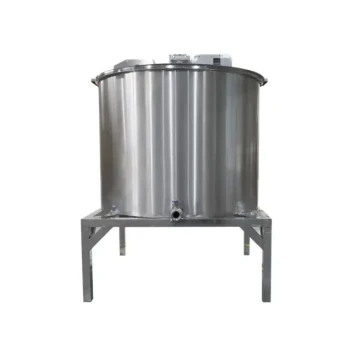
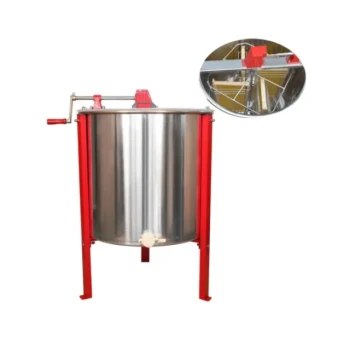
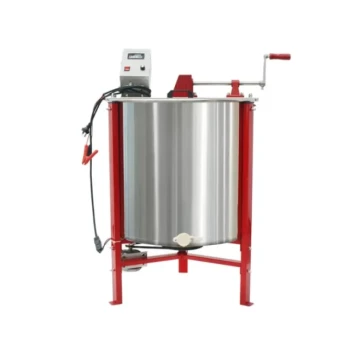
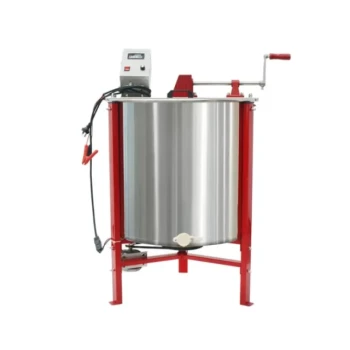
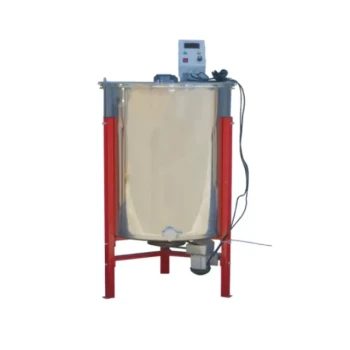
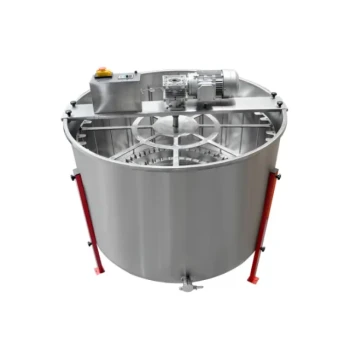
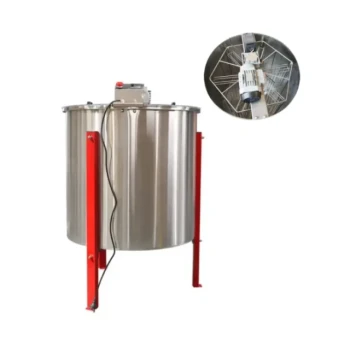
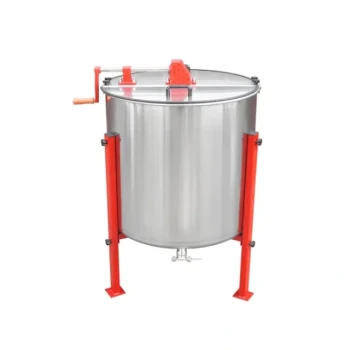
Automated honey extractors significantly alleviate physical exertion by replacing the manual labor required to spin honey out of the comb with motor-driven mechanics. This technology eliminates the repetitive, strenuous cranking associated with manual extractors, allowing beekeepers to process large volumes of honey during peak harvest seasons without suffering from physical burnout or fatigue.
Core Takeaway Automated extraction transforms harvesting from a physically grueling endurance test into a sustainable management task. By removing the physical barrier of manual cranking, these tools make beekeeping operations more accessible, enjoyable, and scalable for the long term.
Reducing the Physical Toll of Harvesting
Alleviating Peak Season Demands
Harvesting is often the most physically demanding aspect of beekeeping. During peak seasons, the volume of honey requiring processing can be overwhelming. Automated extractors take over the heavy lifting, performing the spinning process continuously without requiring physical input from the beekeeper.
Improving Accessibility and Comfort
Manual extraction requires sustained physical strength and endurance. Automation removes this barrier, making the extraction process accessible to a wider range of individuals, regardless of physical capability. This shift not only prevents injury but makes the practice significantly more enjoyable.
Enhancing Operational Efficiency
Reallocating Labor Resources
For commercial beekeepers managing numerous hives, reliance on manual labor is a bottleneck. Automated units reduce the need for human intervention during the spin cycle. This allows beekeepers to allocate time and energy to other critical tasks, such as hive management or bottling, rather than standing at a crank.
Boosting Productivity
By streamlining the workflow, automated extractors contribute to increased overall productivity. They enable operations to handle larger harvests within the same timeframe. This efficiency is vital for maintaining the economic sustainability of medium to large-scale beekeeping enterprises.
Understanding the Trade-offs
The Scale Factor
While automation offers physical relief, it is not essential for every beekeeper. For small-scale hobbyists with only a few hives, the investment in an automated system may outweigh the benefits. In these cases, simpler methods may be sufficient, provided the physical effort is manageable.
Comb Preservation vs. Simplicity
Alternatives like the "crush and strain" method are physically easier than manual cranking but come with a hidden cost: they destroy the honeycomb. Beekeepers must weigh the ease of automation against these low-tech methods. Unlike crush and strain, extractors (both manual and automated) preserve the comb, saving bees the immense energy required to rebuild wax, which ultimately leads to higher future yields.
Making the Right Choice for Your Goal
To determine if an automated extractor is necessary for your operation, consider your volume and long-term objectives:
- If your primary focus is small-scale hobbyist beekeeping: You may not need automation; simple methods or a manual extractor are cost-effective, though you must accept the physical effort or comb destruction involved.
- If your primary focus is commercial efficiency or scaling up: Automated extractors are a crucial investment to reduce labor costs, preserve honeycombs for future use, and prevent physical burnout.
Automation is ultimately a tool for sustainability, allowing you to focus on the health of your bees rather than the limits of your endurance.
Summary Table:
| Feature | Manual Extraction | Automated Extraction | Benefits of Automation |
|---|---|---|---|
| Physical Effort | High (Repetitive cranking) | Low (Motor-driven) | Prevents burnout & physical strain |
| Labor Allocation | Constant supervision needed | Operates independently | Allows focus on hive management |
| Processing Speed | Limited by human stamina | Consistent & high-speed | Maximizes harvest volume |
| Accessibility | Requires physical strength | Accessible to everyone | Sustainable for long-term operations |
| Comb Integrity | Preserved | Preserved | Reduces bee energy expenditure |
Scale Your Apiary with HONESTBEE Professional Solutions
Are you looking to eliminate the physical bottlenecks of honey harvesting? HONESTBEE specializes in empowering commercial apiaries and distributors with high-performance automated beekeeping machinery.
Our comprehensive wholesale range includes:
- Advanced Honey Extractors & Filling Machines to minimize labor and maximize output.
- Industrial Hive-Making Equipment for self-sufficient infrastructure scaling.
- Premium Tools & Consumables to maintain hive health and efficiency.
- Honey-Themed Merchandise to enhance your brand's cultural appeal.
Whether you are upgrading your facility or supplying the next generation of beekeepers, we provide the hardware and expertise to make your operation sustainable and profitable.
Contact HONESTBEE Today to discuss our wholesale offerings and find the perfect equipment for your business needs!
Related Products
- HONESTBEE 72 Frame Industrial Electric Honey Extractor for Beekeeping
- 32 Frame Commercial Electric Honey Extractor for Beekeeping and Honey Production
- Commercial Electric 12 Frame Honey Extractor Spinner Motorized Honey Extractor
- HONESTBEE 4 Frame Manual Self Reversing Honey Extractor for Beekeeping
- Stainless Steel Manual 8 Frame Radial Honey Extractor Machine for Beehives
People Also Ask
- What is the importance of balancing honeycomb frames within a honey extractor? Ensure Stability and Protect Machinery
- How is honey separated from the frames after they are uncapped? Efficient Extraction Methods for High Yields
- What are the main benefits of using a honey extractor? Maximize Yields and Protect Your Honeycomb
- What are the recommended methods for removing honey from the honeycomb? Top Extraction Techniques for Maximum Efficiency
- How do manual honey extractors compare to electric honey extractors? Choosing the Right Tool for Your Apiary Growth