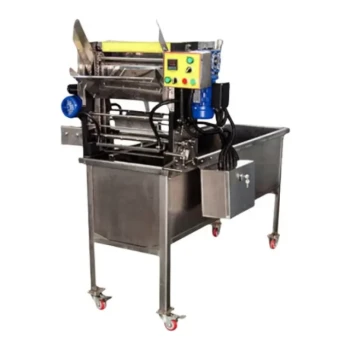
Automated honey filling and processing machines enhance economic resilience by stabilizing product quality and decoupling operational costs from yield fluctuations. These systems industrialize post-harvest workflows to ensure high purity and hygiene standards, regardless of harvest volume. By minimizing labor dependency and standardizing the final product, commercial apiaries can maintain market competitiveness and protect margins against the unpredictability of climate variability.
The integration of automation transforms honey production from a variable manual process into a consistent industrial operation, securing revenue streams through quality standardization while freeing up critical labor for colony health management.
Stabilizing Revenue Through Product Consistency
To build economic resilience, an apiary must guarantee a product that meets strict market standards every time, regardless of external conditions.
Eliminating Variability in Quality
Manual processing introduces the risk of human error and contamination. Automated systems utilize high-precision weighing sensors and vacuum suction technology to achieve sterile, accurate packaging.
This precision ensures that critical chemical indicators, such as Hydroxymethylfurfural (HMF) levels, remain stable. By maintaining these physical and chemical standards, apiaries avoid product rejection and secure higher-tier market positions.
Protecting Against Secondary Contamination
Economic loss often occurs due to spoilage or contamination during the transition from storage to bottle. Automation creates a closed-loop system using precision pumping and flow control.
This significantly reduces the risk of secondary contamination inherent in manual handling. A sterile, consistent product builds brand trust, which is essential for long-term economic stability.
Optimizing Labor and Resource Allocation
Resilience is not just about making money; it is about where you spend your limited resources. Automation shifts the focus from repetitive tasks to high-value management.
Reducing Operational Overhead
Labor is often the largest variable cost in commercial beekeeping. Automated filling lines drastically reduce the labor hours required per batch.
This shortens the cycle from harvest to market, optimizing supply chain efficiency. By lowering the cost per unit of production, apiaries can better absorb market price fluctuations.
Reinvesting Time in Colony Health
The most critical asset of an apiary is the bees themselves. The time saved by automating the bottling line can be redirected toward core colony management tasks.
Beekeepers can focus on critical activities such as the timely treatment of Varroa destructor mites and population genetic improvement. This reallocation of labor directly contributes to reducing winter mortality rates, preventing the catastrophic economic loss of the biological stock.
Managing Volatility and Scale
Commercial beekeeping is subject to "boom and bust" cycles driven by climate. Automation provides the elasticity needed to handle these extremes.
Capturing Value During Peak Years
In years with exceptional nectar flows, manual operations often face bottlenecks, leading to secondary loss or spoilage because the honey cannot be processed fast enough.
Industrial-grade machines allow for the rapid processing of large volumes during these peak harvest windows. This capability ensures that the apiary can fully capitalize on good years to build financial reserves for lean years.
Understanding the Trade-offs
While automation offers significant resilience, it introduces new dependencies that must be managed.
Capital Expenditure vs. Liquidity
Implementing industrial-grade automation requires significant upfront capital. For smaller operations, this expenditure can impact short-term liquidity. The investment is only economically resilient if the volume of production justifies the amortization of the machinery.
Technical Maintenance Requirements
Automation shifts the skill requirement from manual labor to technical maintenance. Reliance on complex machinery means that downtime due to mechanical failure becomes a new risk factor. Apiaries must ensure they have access to technical support or spare parts to prevent supply chain paralysis.
Making the Right Choice for Your Goal
To maximize economic resilience, align your automation strategy with your specific operational vulnerabilities.
- If your primary focus is Market Positioning: Prioritize machines with vacuum suction and precision flow control to guarantee stable HMF levels and sterile packaging for premium buyers.
- If your primary focus is Colony Survival: Implement high-speed automation to minimize bottling time, redirecting your workforce to Varroa management and winter preparations.
- If your primary focus is Volume Scalability: Invest in high-throughput industrial lines that can handle rapid surges in yield during peak climate years without bottlenecks.
True economic resilience in beekeeping comes from using technology to stabilize the variable factors of production, allowing the business to withstand the inevitable shifts in nature and the market.
Summary Table:
| Resilience Driver | Impact of Automation | Economic Benefit |
|---|---|---|
| Product Consistency | Precision sensors and closed-loop sterile systems | Higher market tier & avoidance of product rejection |
| Labor Allocation | Dramatically reduced man-hours for packaging | Redirects labor to colony health & mite management |
| Yield Scalability | High-throughput processing during peak harvests | Maximize revenue in boom years to offset lean years |
| Quality Control | Controlled HMF levels & vacuum suction technology | Stronger brand trust and meeting strict export standards |
Scale Your Apiary’s Success with HONESTBEE
Transition from variable manual labor to a consistent industrial operation with HONESTBEE. As a premier supplier for commercial apiaries and distributors, we provide the full spectrum of beekeeping tools, honey-filling machines, and hive-making equipment designed to maximize your margins.
Our comprehensive wholesale offering ensures your business remains resilient against climate and market fluctuations. Contact us today to discover how our specialized hardware and industry consumables can optimize your production from hive to bottle.
References
- С.В. Митрофанов, L.N. Savushkina. Analysis of the impact of global climate change on the sustainability of beekeeping. DOI: 10.31677/2072-6724-2024-70-1-219-229
This article is also based on technical information from HonestBee Knowledge Base .
Related Products
- Fully Automatic Honey Filling Packaging Machine for Processing Line
- Automatic Honey Filling and Filtering Machine for Beekeeping Bottle Filling
- Precision Automated Packaging Turntable Honey Spoon Filling Sealing Packing Machine
- Precision Durable Efficient HONESTBEE Rotary Honey Filling Machine
- Automatic Single-Dose Snap & Squeeze Honey Sachets Packing Machine
People Also Ask
- Why are fully automatic honey filling and packaging lines essential? Boost Your Honey's Market Value and Quality
- What is a fully-automatic honey filler? Streamline Your Production with High-Precision Automation
- How do automated honey filling and packaging machines affect profitability? Boost Margins with HONESTBEE Technology
- How do automated honey filling and packaging machines contribute to the market value of honey products? Maximize Your ROI
- How do industrial-grade automated honey filling and packaging machines mitigate the risk of physical contamination?