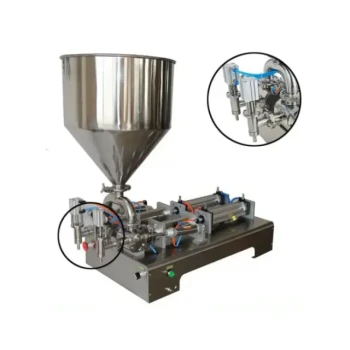
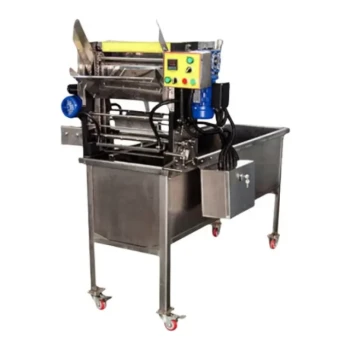
Automated honey-filling and processing equipment mitigates climate risk by enabling a strategic pivot from high-volume wholesale to high-margin retail. By refining raw honey into standardized, consumer-ready products, apiaries can command premium prices that compensate for the reduced production volumes caused by adverse weather patterns.
Core Strategic Insight Climate change threatens the volume of honey produced, but automation protects the revenue generated from it. By transitioning from selling bulk raw honey to producing finished retail goods, apiaries decouple their financial survival from sheer tonnage, relying instead on product differentiation and higher unit economics to stabilize income.
Transforming the Business Model
The primary risk of climate change for apiaries is yield fluctuation. When weather conditions reduce the nectar flow, the traditional model of selling bulk honey by the barrel becomes financially unsustainable.
Shifting from Volume to Value
Automated processing allows apiaries to move away from the commoditized bulk market. Instead of selling raw ingredients at low margins, operations can produce small-package retail products.
This shift captures the value added during processing and packaging. By controlling the final product, beekeepers retain the profit margins that usually go to third-party bottlers.
Stabilizing Revenue Streams
When honey yields drop due to climate factors, the scarcity can be leveraged if the product is retail-ready. Automated equipment facilitates the entry into e-commerce and direct-to-consumer channels.
These channels offer significantly higher returns per kilogram. This increased revenue per unit acts as a buffer, ensuring the enterprise remains profitable even when the total quantity of honey harvested decreases.
Maximizing Resource Efficiency
When climate conditions limit supply, every drop of honey becomes more valuable. Automated equipment is essential for maximizing the utilization of a scarce resource.
Eliminating Overfill and Waste
Manual bottling is prone to inconsistency, often resulting in overfilling or spillage. Automated filling machines utilize precise metering controls and quantitative dosing systems.
This ensures that every bottle contains the exact net content required—no more, no less. Over the course of a production run, eliminating minor overfills can result in a significant number of additional saleable units.
Reducing Operational Overheads
Automated lines reduce the dependency on manual labor for filling and sealing. This lowers the variable costs of production.
By minimizing labor costs and material losses, apiaries can maintain healthier margins. This cost efficiency is critical when top-line revenue is threatened by lower harvest volumes.
Unlocking High-Value Markets
To command the price premiums necessary to offset low yields, the final product must meet strict quality and safety standards. Automation provides the technical foundation for this compliance.
Ensuring Hygiene and Safety
Climate-resilient business models often rely on "premium" branding (e.g., organic, raw, or single-source honey). Automated machines operate in closed environments with specialized sealing processes.
This isolation minimizes human contact and prevents secondary contamination. It guarantees the hygiene and safety standards required by high-end retailers and discerning consumers.
Meeting Standardization Requirements
Modern retail markets demand absolute consistency in packaging and branding. Automated equipment integrates filtration, filling, and labeling into a standardized production line.
This capability allows apiaries to meet the strict aesthetic and regulatory requirements of global marketplaces. It creates a professional, shelf-ready commodity that justifies a higher price point than artisanal, manually packaged alternatives.
Understanding the Trade-offs
While automation offers a shield against economic volatility, it introduces new operational realities that must be managed.
- Capital Intensity: High-quality automation requires a significant upfront investment. If climate events cause a total crop failure, this capital depreciation continues without revenue to support it.
- Technical Dependency: Shifting to automation changes the required skill set from purely agricultural to technical. Maintenance and calibration of metering pumps become critical tasks.
- The Root Cause Remains: Automation solves the economic symptom of low yields, not the biological cause. It does not increase honey production; it only maximizes the revenue extracted from what is available.
Making the Right Choice for Your Goal
To effectively mitigate climate risks, align your equipment choice with your specific business objective.
- If your primary focus is Revenue Stability: Prioritize bottling lines that support small-format retail packaging (250g-500g) to maximize the price-per-ounce margin.
- If your primary focus is Market Expansion: Invest in equipment with advanced filtration and sterile enclosure features to meet organic or export certification standards.
- If your primary focus is Efficiency: Look for machines with high-precision metering pumps to eliminate product giveaway and minimize material waste during low-yield seasons.
Automation is not just a production upgrade; it is an insurance policy that allows your business to survive lower yields by maximizing the value of every ounce you harvest.
Summary Table:
| Climate Risk Factor | Automation Solution | Financial & Operational Impact |
|---|---|---|
| Yield Fluctuations | Retail-ready packaging lines | Enables high-margin retail sales to offset lower bulk volumes |
| Product Waste | High-precision metering pumps | Eliminates overfill and spillage, maximizing every drop of honey |
| High Labor Costs | Automated filling & sealing | Reduces overhead, maintaining profitability during low-harvest years |
| Market Barriers | Closed-system sterile processing | Meets strict hygiene standards for premium and export markets |
| Brand Consistency | Integrated labeling & filtration | Ensures professional, standardized products to command higher prices |
Secure Your Apiary’s Future with HONESTBEE
Don't let climate volatility dictate your profitability. HONESTBEE empowers commercial apiaries and distributors to transform raw harvests into high-value retail assets. From precision honey-filling machines and industrial filtration systems to hive-making machinery and honey-themed merchandise, we provide the complete toolkit to maximize your unit economics.
Our value to you:
- Wholesale Excellence: Full spectrum of beekeeping tools and machinery at scale.
- Risk Mitigation: Equipment designed to reduce waste and capture higher retail margins.
- Global Standards: Solutions that ensure your honey meets international hygiene and branding requirements.
Ready to stabilize your revenue and scale your operations?
Contact Our Equipment Experts Today
References
- Monica Vercelli, Chiara Ferracini. A Qualitative Analysis of Beekeepers’ Perceptions and Farm Management Adaptations to the Impact of Climate Change on Honey Bees. DOI: 10.3390/insects12030228
This article is also based on technical information from HonestBee Knowledge Base .
Related Products
- Fully Automatic Honey Filling Packaging Machine for Processing Line
- Automatic Honey Filling and Filtering Machine for Beekeeping Bottle Filling
- Precision Durable Efficient HONESTBEE Rotary Honey Filling Machine
- Precision Automated Packaging Turntable Honey Spoon Filling Sealing Packing Machine
- Semi Automatic Small Honey Bottle Filling Machine Honey Filler
People Also Ask
- Why are fully automatic honey filling and packaging lines essential? Boost Your Honey's Market Value and Quality
- What is a fully-automatic honey filler? Streamline Your Production with High-Precision Automation
- How do automated honey filling and packaging machines affect profitability? Boost Margins with HONESTBEE Technology
- How do automated honey filling and packaging machines contribute to the market value of honey products? Maximize Your ROI
- How do industrial-grade automated honey filling and packaging machines mitigate the risk of physical contamination?