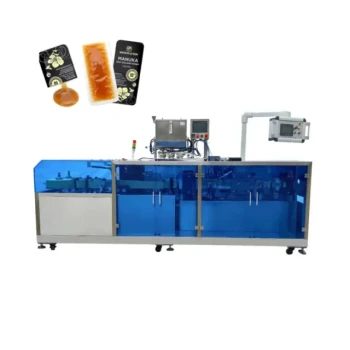
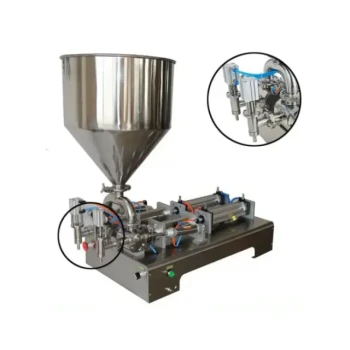
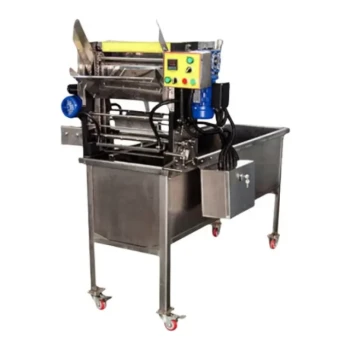
Automated honey-filling machines optimize the post-processing stage by employing high-precision flow control and sterile filling systems to rapidly transfer honey from bulk storage to retail containers. These industrial-grade units guarantee consistent fill volumes while drastically minimizing external contact, thereby securing the hygiene, safety, and extended shelf life required for commercial success.
The transition from extraction to packaging is the most critical point for quality loss; automation bridges this gap by ensuring standardization. By replacing manual variability with precision engineering, apiaries can scale production while maintaining the strict physical and chemical stability of their honey.
Elevating Product Integrity and Hygiene
Ensuring Sterile Containment
Industrial filling machines utilize sterile filling systems and fully enclosed stainless steel piping. This design creates a barrier between the honey and the external environment during the transfer process. By preventing exposure to air, the system significantly reduces the risk of oxidation, preserving the honey's organic integrity.
Mitigating Contamination Risks
Manual handling is the primary source of secondary contamination in food processing. Automated systems utilize precision pumping and vacuum suction technologies to move honey without direct human contact. This safeguards the product against pathogens and foreign particles, ensuring compliance with rigorous safety standards.
Preserving Chemical Stability
Beyond basic hygiene, advanced automation protects the chemical profile of the honey. Precision handling ensures that key indicators, such as Hydroxymethylfurfural (HMF) levels, remain stable throughout the packaging process. This stability is essential for maintaining the product's classification as high-quality or raw honey.
Maximizing Operational Efficiency
Precision Flow Control
Automated machines employ high-precision metering pumps and servo-driven control systems. These components dictate the flow rate with exactitude, ensuring a rapid and efficient transition from tank to bottle. This eliminates the bottlenecks common in manual bottling lines.
Eliminating Material Waste
Inconsistent filling results in either product giveaway (overfilling) or regulatory fines (underfilling). By utilizing high-precision weighing sensors, automated fillers ensure consistent fill volumes for every unit. This reduction in raw material waste directly improves the apiary's bottom line.
Reallocating Labor Resources
The high speed of automated filling liberates the workforce from repetitive packaging tasks. Staff can be redeployed to core technical activities, such as population genetic improvement and honeybee health monitoring. This shift allows the business to focus on upstream value creation rather than downstream labor.
Understanding the Operational Trade-offs
Maintenance and Calibration Requirements
While automation reduces daily manual labor, it introduces a need for technical maintenance. Sensors, servo motors, and metering pumps require regular calibration to maintain their high precision. An apiary must ensure it has the technical capability or service contracts to keep the machinery running within tolerance.
Flexibility Limitations
Industrial-grade machines are optimized for specific throughputs and container types. Switching between vastly different bottle shapes or honey viscosities may require downtime for retooling. Operations with a highly diverse product catalog must verify the machine's changeover versatility before investment.
Making the Right Choice for Your Apiary
To select the correct level of automation, you must align the machine's capabilities with your specific business objectives.
- If your primary focus is Market Competitiveness: Prioritize machines with high-speed metering pumps to maximize throughput and reduce unit costs via labor savings.
- If your primary focus is Product Quality/Organic Certification: Prioritize systems with fully enclosed piping and vacuum suction to ensure minimal oxidation and stable HMF levels.
Invest in automation not just to move product faster, but to secure the consistency and safety that builds long-term brand trust.
Summary Table:
| Feature | Manual Bottling | Automated Filling Machines | Business Benefit |
|---|---|---|---|
| Precision | Variable/Low | High-Precision Servo Control | Eliminates product giveaway and waste |
| Hygiene | High Human Contact | Sterile Enclosed Systems | Prevents oxidation and contamination |
| Throughput | Slow/Labor Intensive | Rapid Industrial Speed | Maximizes output and lowers unit costs |
| Consistency | Inconsistent Fill Levels | Stable Weighing Sensors | Ensures regulatory compliance & brand trust |
| Labor Focus | Manual Packaging | Technical Apiary Management | Reallocates staff to high-value bee health |
Scale Your Honey Production with HONESTBEE Precision Engineering
Are you ready to transform your commercial apiary's efficiency? HONESTBEE specializes in empowering commercial apiaries and distributors with professional-grade honey-filling machines and comprehensive beekeeping equipment. From specialized hive-making hardware to advanced honey-processing machinery and essential consumables, we provide the tools you need to maintain product integrity and maximize profitability.
Partner with HONESTBEE to:
- Reduce material waste with high-precision metering pumps.
- Secure organic integrity using sterile, vacuum-suction technology.
- Optimize your workforce for core technical growth.
Contact our specialists today to discover the perfect automation solution for your business!
References
- EFSA (European Food Safety Authority) and European Farmers and European Agri‐Cooperatives, European Professional Beekeepers Association, BeeLife the European Beekeeping Coordination and the European Crop Protection Association. Collecting and sharing data on bee health: towards a European Bee Partnership. DOI: 10.2903/sp.efsa.2017.en-1299
This article is also based on technical information from HonestBee Knowledge Base .
Related Products
- Fully Automatic Honey Filling Packaging Machine for Processing Line
- Automatic Honey Filling and Filtering Machine for Beekeeping Bottle Filling
- Precision Durable Efficient HONESTBEE Rotary Honey Filling Machine
- Precision Automated Packaging Turntable Honey Spoon Filling Sealing Packing Machine
- Semi Automatic Small Honey Bottle Filling Machine Honey Filler
People Also Ask
- Why are fully automatic honey filling and packaging lines essential? Boost Your Honey's Market Value and Quality
- What is a fully-automatic honey filler? Streamline Your Production with High-Precision Automation
- How do automated honey filling and packaging machines affect profitability? Boost Margins with HONESTBEE Technology
- How do automated honey filling and packaging machines contribute to the market value of honey products? Maximize Your ROI
- How do industrial-grade automated honey filling and packaging machines mitigate the risk of physical contamination?