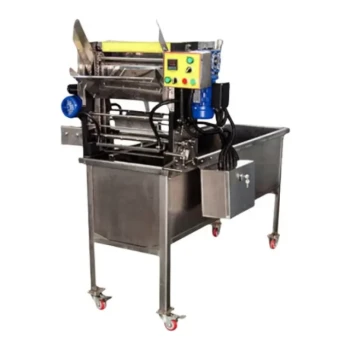
Automated honey filling machines ensure product quality through a combination of closed-loop isolation and high-precision metering. By mechanically regulating the fill process, these systems eliminate variable human contact and strictly control the environment to prevent moisture ingress and microbial contamination.
Core Takeaway Automated filling systems protect honey integrity by isolating the product from air and moisture, preserving vital enzymes like amylase and catalase. Simultaneously, they enforce strict measurement standards to minimize waste and ensure every unit meets commercial hygiene and weight regulations.
Eliminating Environmental Contamination
The Closed-Loop Advantage
The primary mechanism for safety is the closed-system design. By keeping the honey within a sealed circuit from tank to bottle, the machinery prevents "secondary contamination" that often occurs during open-air transfers.
Controlling Moisture Absorption
Honey is highly hygroscopic, meaning it rapidly absorbs moisture from the air. Automated machines minimize the time honey is exposed to the atmosphere. This prevents the water content from rising, which is the leading cause of fermentation and spoilage.
Removing Human Error
Manual handling introduces biological risks, including bacteria and foreign debris. Automated lines replace manual scooping or pouring with sterile mechanical pumps. This significantly lowers the bio-load and ensures the product meets strict food safety compliance standards.
Preserving Chemical and Sensory Integrity
Retention of Bio-Activity
High-quality honey contains heat-sensitive enzymes such as amylase and catalase. Advanced filling machines reduce the need for excessive heating to improve flow. This preservation of natural enzyme activity is critical for maintaining the honey's raw status and nutritional value.
Flavor and Aroma Protection
Aromatic compounds in honey are volatile and can evaporate if left exposed. The rapid, enclosed filling process locks in these delicate scent profiles. This ensures the consumer experiences the full flavor spectrum intended by the producer.
Temperature and Viscosity Management
Honey viscosity changes drastically with temperature. Machines utilize integrated temperature control systems to maintain flow without overheating the product. This prevents thermal degradation while ensuring the honey remains fluid enough for efficient packaging.
Ensuring Standardization and Aesthetics
Precision Dosing
Regulatory compliance requires strict adherence to net weight guidelines. Automated machines use volumetric metering or weight sensors to ensure consistent fill levels. This prevents legal issues regarding underfilling and reduces financial losses from overfilling.
Visual Clarity and Texture
Air bubbles introduced during filling can ruin the visual appeal of honey and create "crystallization nuclei," speeding up solidification. Vacuum anti-drip designs and bottom-up filling techniques prevent air entrapment. This results in a clear, visually premium product that remains stable on the shelf longer.
Understanding the Trade-offs
The Maintenance Imperative
While these machines reduce contamination risks during operation, they create a new requirement for rigorous Cleaning-in-Place (CIP) protocols. Complex internal pumps and nozzles can harbor bacteria if not sanitized perfectly between shifts. The safety of the system is entirely dependent on the maintenance of the sterilization cycle.
Thermal Balancing Act
Temperature control systems are essential but present a risk if mismanaged. Setting the temperature even slightly too high to speed up production can degrade enzyme activity. Operators must balance the need for speed against the upper thermal limits of the specific floral variety being packaged.
Making the Right Choice for Your Goal
To maximize the benefits of automation, align your equipment settings with your specific product strategy:
- If your primary focus is Raw/Organic Certification: Prioritize machines with advanced temperature controls and low-shear pumps to protect enzyme activity and volatile aromatics.
- If your primary focus is Shelf-Life Stability: Ensure the machine features a vacuum anti-drip system and enclosed filling environment to strictly limit moisture absorption and prevent fermentation.
- If your primary focus is Commercial Efficiency: Focus on high-precision volumetric metering to minimize material waste and ensure rapid, compliant weight standardization across large batches.
Ultimately, the machine acts as a sanitary firewall, locking in the honey's natural state while locking out environmental threats.
Summary Table:
| Feature | Quality & Safety Impact | Benefit to Producers |
|---|---|---|
| Closed-Loop System | Prevents secondary contamination and moisture ingress | Ensures longer shelf-life and prevents fermentation |
| Precision Metering | Guarantees consistent net weight per unit | Eliminates overfilling losses and meets legal standards |
| Temperature Control | Protects heat-sensitive enzymes (Amylase/Catalase) | Maintains 'Raw' status and nutritional value |
| Vacuum Anti-Drip | Minimizes air entrapment and crystallization | Enhances visual clarity and product texture |
| Mechanical Pumping | Reduces human contact and bio-load risks | Ensures compliance with strict food hygiene regulations |
Scale Your Apiary with HONESTBEE Precision Equipment
Transitioning to automated systems is the key to maintaining the delicate chemical integrity of your honey while maximizing commercial output. At HONESTBEE, we specialize in empowering commercial apiaries and distributors with professional-grade solutions.
Our extensive portfolio includes:
- Advanced Honey-Filling & Hive-Making Machines: Precision engineering for high-volume production.
- Complete Beekeeping Toolkits: From specialized hardware to essential industry consumables.
- Commercial-Grade Machinery: Designed to preserve the bio-activity and aroma of your honey.
Ready to elevate your production quality and eliminate manual errors? Contact us today to discuss your wholesale requirements and let our experts help you select the perfect equipment to grow your honey business.
References
- M. Esakkimuthu, V. L. V. Kameswari. Entrepreneurial potential of small scale beekeeping in rural India: a case in Kanniyakumari district, Tamil Nadu. DOI: 10.4038/tar.v28i4.8242
This article is also based on technical information from HonestBee Knowledge Base .
Related Products
- Fully Automatic Honey Filling Packaging Machine for Processing Line
- Automatic Honey Filling and Filtering Machine for Beekeeping Bottle Filling
- Precision Durable Efficient HONESTBEE Rotary Honey Filling Machine
- Precision Automated Packaging Turntable Honey Spoon Filling Sealing Packing Machine
- Semi Automatic Small Honey Bottle Filling Machine Honey Filler
People Also Ask
- Why are fully automatic honey filling and packaging lines essential? Boost Your Honey's Market Value and Quality
- What is a fully-automatic honey filler? Streamline Your Production with High-Precision Automation
- How do automated honey filling and packaging machines affect profitability? Boost Margins with HONESTBEE Technology
- How do automated honey filling and packaging machines contribute to the market value of honey products? Maximize Your ROI
- How do industrial-grade automated honey filling and packaging machines mitigate the risk of physical contamination?