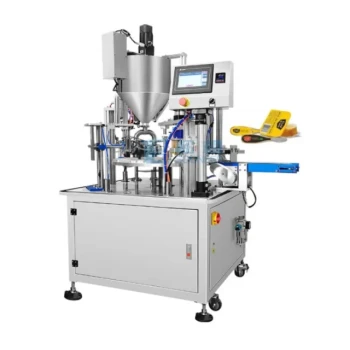
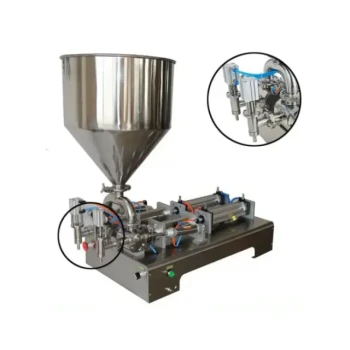
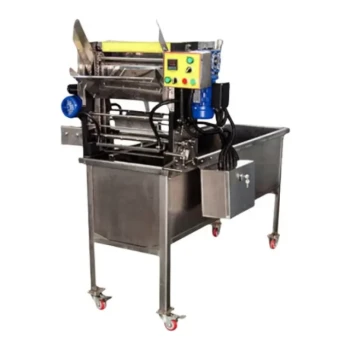
Automated honey packaging and filling machines fundamentally transform production by enabling the standardized, quantitative dispensing of honey into retail containers. This technology ensures precise net weights and a consistent product appearance while significantly streamlining final processing stages. By reducing labor costs and eliminating manual inconsistencies, these systems directly enhance the market competitiveness of honey products.
By shifting from manual bottling to automated precision, producers can guarantee regulatory compliance and operational scalability. This transition is the critical lever for converting a beekeeping operation into an economically self-sufficient, commercial-grade enterprise.
The Role of Standardization in Commercial Value
Achieving Precision Dispensing
Manual filling often results in volume variance, which impacts both profitability and regulatory compliance.
Automated machines utilize quantitative dispensing technology. This ensures that every container meets accurate net weight requirements, eliminating product giveaway (overfilling) and customer complaints (underfilling).
Ensuring Visual Consistency
In a retail environment, shelf appeal is dictated by uniformity.
Automation guarantees a consistent product appearance across every unit. This uniformity signals professionalism to consumers and retailers, distinguishing the product from amateur or hobbyist offerings.
Operational Efficiency and Economic Impact
Reducing Labor Dependencies
Manual bottling is one of the most time-consuming aspects of honey production.
By streamlining final processing, automation drastically reduces labor costs. This allows staff to focus on apiary management or sales rather than repetitive filling tasks.
Facilitating Economic Self-Sufficiency
For a project to survive commercially, it must generate reliable revenue that exceeds operational costs.
The efficiency gained through automation supports economic self-sufficiency. It lowers the cost per unit, allowing for healthier margins and reinvestment into the growth of the operation.
Market Access and Professionalization
Transitioning to a Professional Model
Automation is often the bridge between a hobbyist operation and a scalable business.
Industrial-grade filling machines support the transition of urban beekeeping from a small-scale pastime into a professional commercial model. This capability allows producers to handle larger volumes required by retail partners.
Meeting Hygiene and Safety Standards
Commercial markets demand rigorous adherence to food safety protocols.
Automated sealing and filling capabilities reduce human contact with the product. This significantly lowers the risk of contamination from manual handling, ensuring the product meets the strict hygiene standards required for large-scale market supply.
Understanding the Trade-offs
Initial Capital vs. Long-Term Gain
While automation drives commercial value, it requires an upfront financial commitment.
Producers must weigh the initial cost of industrial-grade equipment against the long-term savings in labor. For very small or micro-batch operations, the ROI may take longer to realize compared to high-volume producers.
Maintenance and Complexity
Moving to automation introduces a technical layer to the business.
Operators must ensure they have the protocols in place to clean and maintain high-precision machinery. Neglecting maintenance can lead to downtime that negates the efficiency gains of the equipment.
Making the Right Choice for Your Goal
To maximize the commercial value of your honey project, align your equipment choice with your specific strategic objectives:
- If your primary focus is Scalability: Prioritize machines with high-speed dispensing and automated sealing to meet the demands of large-scale market supply.
- If your primary focus is Profit Margin: Focus on equipment that offers the highest precision in quantitative dispensing to eliminate product waste and reduce labor hours.
- If your primary focus is Brand Reputation: Select machinery that guarantees hygiene and consistent fill levels to establish a professional, shelf-ready image.
Automation is not just a convenience; it is the infrastructure required to turn raw harvest into a viable, competitive commodity.
Summary Table:
| Key Benefit | Impact on Commercial Value | Technical Feature |
|---|---|---|
| Standardization | Ensures regulatory compliance & consistent shelf appeal | Quantitative dispensing technology |
| Labor Efficiency | Drastically reduces overhead costs per unit | Streamlined final processing |
| Precision | Eliminates product waste (overfilling) | High-accuracy net weight control |
| Professionalism | Transitions hobbyist projects to commercial scale | Industrial-grade automated sealing |
| Food Safety | Minimizes contamination risks | Reduced manual product handling |
Elevate Your Commercial Apiary with HONESTBEE Professional Solutions
Transitioning from a hobbyist operation to a thriving commercial enterprise requires the right infrastructure. At HONESTBEE, we specialize in empowering commercial apiaries and distributors by providing the industry's most reliable honey-filling and hive-making machinery.
Why partner with HONESTBEE?
- Comprehensive Wholesale Range: Access everything from specialized beekeeping tools to industrial-grade automation.
- Operational Excellence: Our machinery is designed to reduce labor costs, ensure food safety, and maximize your profit margins.
- Scalable Growth: Whether you need high-speed filling lines or essential consumables, we provide the tools to scale your market presence.
Contact HONESTBEE today to optimize your honey production and turn your raw harvest into a globally competitive brand!
References
- J. Christopher Brown. Responding to Deforestation: Productive Conservation, the World Bank, and Beekeeping in Rondonia, Brazil. DOI: 10.1080/00330124.2001.9628442
This article is also based on technical information from HonestBee Knowledge Base .
Related Products
- Precision Automated Packaging Turntable Honey Spoon Filling Sealing Packing Machine
- Fully Automatic Honey Filling Packaging Machine for Processing Line
- Automatic Single-Dose Snap & Squeeze Honey Sachets Packing Machine
- Automatic Honey Filling and Filtering Machine for Beekeeping Bottle Filling
- Precision Durable Efficient HONESTBEE Rotary Honey Filling Machine
People Also Ask
- Why is the use of professional filling and sealing packaging machinery necessary for the production of high-value honey?
- What role do automated filling and packaging machines play in the honey supply chain? Scale Your Retail Distribution
- What are the benefits of automated honey filling and packaging? Scale Your Apiary with Industrial Precision
- What role do professional automated filling and packaging machines play in honey processing? Boost Efficiency & Value
- How do automated honey filling and packaging machines contribute to the market value of honey products? Maximize Your ROI