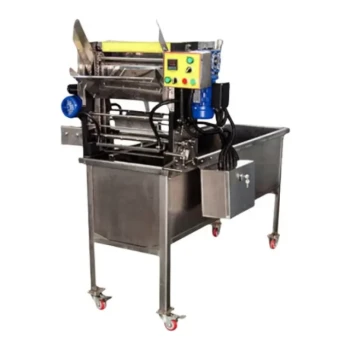
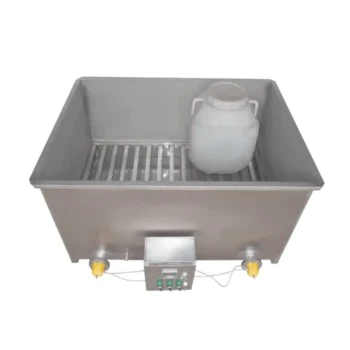
Automated honey processing machines drive productivity by integrating critical stages—such as filtration, heating, and sedimentation—into a single, streamlined operation. This integration significantly shortens the production cycle from the hive to the finished product while eliminating the inconsistencies and cross-contamination risks inherent in manual handling.
The Core Transformation
True productivity in beekeeping is not just about speed; it is about the reliability of the output. Automated systems transform beekeeping from a labor-intensive agricultural activity into a standardized manufacturing process, allowing producers to increase volume without sacrificing the sensory or physicochemical quality of the honey.
Streamlining the Production Workflow
Integration of Functional Processes
In traditional setups, honey processing often involves disjointed steps that create bottlenecks. Automated machines consolidate these steps, performing filtration, heating, and sedimentation within a unified system.
This consolidation removes the latency between stages. By ensuring continuous flow, farms can process larger volumes of raw honey in significantly less time than manual methods allow.
Eliminating Manual Variance
Manual intervention is the primary source of variability in honey production. Automated systems maintain strict consistency in the honey’s sensory quality and physical properties.
By removing human handling from critical phases, these machines also drastically lower the risk of cross-contamination. This ensures that the final product remains pure and meets rigorous safety standards every time.
Enhancing Biological Productivity
Preserving Honeycomb Integrity
Modern extraction equipment utilizes centrifugal force to separate honey from the frame. This physical principle is crucial because it extracts the honey without destroying the delicate structure of the wax comb.
Because the comb remains intact, it can be returned to the hive for immediate reuse. This is a critical factor in farm-level productivity.
Redirecting Bee Energy
Bees consume significant energy and resources to produce wax. When machines preserve existing combs, bees are relieved of the need to rebuild their infrastructure.
This allows the colony to redirect its energy toward foraging and nectar collection. The result is a substantial increase in the annual honey yield per hive, boosting the overall efficiency of the biological "workforce."
Capturing Market Value Through Standardization
Precision in Filling and Packaging
Productivity extends beyond the hive to the bottling line. Automated filling machines utilize high-precision quantitative technology to ensure every unit contains the exact intended net weight.
This eliminates the errors and product giveaway associated with manual filling. It allows operations to scale their packaging processes efficiently while minimizing waste.
Ensuring Hygiene and Compliance
Professional processing equipment integrates sterilization functions that manual operations struggle to replicate. This resolves common issues such as unsterilized containers or poor sealing.
By meeting national and international hygiene standards, farms can transition from selling low-margin bulk honey to high-value retail products. This capability is essential for entering high-end markets or export trade.
Understanding the Trade-offs
The Shift to Industrial Complexity
Moving to automated processing changes the nature of the operation. It requires a shift from simple agricultural management to brand-oriented, diversified operations.
While this unlocks higher economic efficiency and "added value," it necessitates strict adherence to maintenance and hygiene protocols. The machinery is only as productive as the standards used to operate it; neglecting sterilization or calibration can lead to standardized errors rather than standardized quality.
Making the Right Choice for Your Goal
To maximize the impact of automation on your farm, align the technology with your specific business objective:
- If your primary focus is maximizing raw volume: Prioritize extraction equipment that utilizes centrifugal force to preserve honeycombs and redirect bee energy toward nectar collection.
- If your primary focus is retail expansion: Invest in automated filling and processing machines that guarantee precise metering, sterilization, and compliance with high-end market hygiene standards.
- If your primary focus is product diversification: Look for equipment capable of processing derivative products, such as medicinal or skincare applications, to capture value beyond standard edible honey.
Automated processing is the bridge that turns a fluctuating raw material into a consistent, scalable commercial asset.
Summary Table:
| Feature | Productivity Impact | Key Benefit |
|---|---|---|
| Integrated Workflow | Consolidates filtration, heating & sedimentation | Shortens production cycles and reduces bottlenecks |
| Centrifugal Extraction | Preserves wax comb integrity | Redirects bee energy from rebuilding to nectar foraging |
| Precision Filling | High-precision quantitative technology | Eliminates product waste and ensures weight compliance |
| Standardized Hygiene | Built-in sterilization and sealing | Enables access to high-end markets and export trade |
| Automated Monitoring | Removes human manual variance | Guarantees consistent sensory and physicochemical quality |
Scale Your Honey Production with HONESTBEE Professional Solutions
Transition from labor-intensive manual methods to a high-efficiency commercial operation. HONESTBEE specializes in empowering commercial apiaries and distributors with the industry's most reliable beekeeping tools and machinery.
Our value to your business:
- Comprehensive Equipment Range: From specialized hive-making and honey-filling machines to industrial-grade extraction systems.
- Operational Efficiency: Our technology is designed to maximize honey yield per hive while ensuring your final products meet international hygiene standards.
- Total Supply Chain Support: We provide a full spectrum of essential consumables and honey-themed cultural merchandise to help you diversify your brand.
Ready to enhance your farm's productivity and capture higher market value? Contact HONESTBEE today to explore our wholesale offerings and tailored equipment solutions.
References
- A. A. Popa, Cristina Bianca Pocol. Categorization of Beekeepers from the North-West Region of Romania. DOI: 10.15835/buasvmcn-hort:7095
This article is also based on technical information from HonestBee Knowledge Base .
Related Products
- Fully Automatic Honey Filling Packaging Machine for Processing Line
- Automatic Honey Filling and Filtering Machine for Beekeeping Bottle Filling
- Automatic Single-Dose Snap & Squeeze Honey Sachets Packing Machine
- Semi Automatic Small Honey Bottle Filling Machine Honey Filler
- Precision Durable Efficient HONESTBEE Rotary Honey Filling Machine
People Also Ask
- Why are fully automatic honey filling and packaging lines essential? Boost Your Honey's Market Value and Quality
- What is a fully-automatic honey filler? Streamline Your Production with High-Precision Automation
- How do automated honey filling and packaging machines affect profitability? Boost Margins with HONESTBEE Technology
- How do automated honey filling and packaging machines contribute to the market value of honey products? Maximize Your ROI
- How do industrial-grade automated honey filling and packaging machines mitigate the risk of physical contamination?