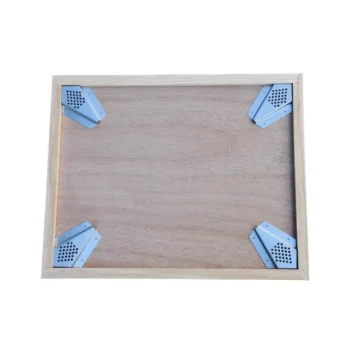
Beehive Bottom Boards serve as critical diagnostic interfaces within the hive structure, acting as the primary tool for post-winter mortality assessment. They function as a passive collection platform that accumulates biological debris and waste generated by the colony throughout the winter, transforming physical waste into actionable data regarding colony health.
The quantity of bee carcasses and winter debris found on the Beehive Bottom Boards provides essential data for assessing colony vitality. This physical evidence allows technicians to quantitatively evaluate cold resistance and disease stability, specifically to measure the success of different genetic insemination models.
The Diagnostic Role of Debris Accumulation
Passive Waste Collection
The fundamental function of the bottom board during winter is the passive collection of gravity-fed waste. Since hives are rarely opened during extreme cold, the bottom board becomes the sole record of internal colony activity.
It captures a comprehensive sample of hive debris. This includes wax cappings, biological waste, and, most critically, the carcasses of bees that died during the overwintering period.
Quantifying Colony Vitality
The volume of matter collected is not arbitrary; it is a direct indicator of colony stress. Technicians analyze the "winter debris" to form a quantitative picture of the colony's health.
A heavy accumulation of carcasses often indicates poor vitality. Conversely, a cleaner board suggests the colony maintained a tight cluster and managed its population effectively despite the cold.
Evaluating Genetic Performance
Assessing Cold Resistance and Disease Stability
The debris profile allows for an objective evaluation of how well a colony withstood environmental stressors. By examining the waste, experts can gauge the colony's cold resistance and its stability against disease vectors that may have proliferated during confinement.
This transforms the bottom board from a simple wooden component into a tool for biological audit. It provides the physical proof needed to determine if a colony thrived or merely survived.
Impact of Insemination Models
The data derived from bottom boards is essential for evaluating genetic diversity. Technicians use the mortality rates found on the boards to determine the impact of different insemination models on survival.
If colonies with specific genetic traits consistently show lower debris and lower mortality on their bottom boards, those genetics can be identified as superior for overwintering survival rates.
Understanding the Trade-offs
Mortality vs. Metabolic Efficiency
While bottom boards are excellent for measuring mortality (carcasses), they do not measure metabolic efficiency. To understand how much food the colony consumed to survive, you must rely on precision weighing equipment to measure mass differences, not debris analysis.
Survival vs. Future Potential
Bottom boards provide a retrospective view of the winter; they tell you who survived. However, they do not predict the rate of spring recovery.
To assess future vitality and the efficiency of winter bee replacement, you must look at the brood rearing area. The bottom board helps assess the past, while brood measurement predicts the future.
The Requirement for Standardization
Data from bottom boards is only valid if the environment is controlled. Standard structures, such as Langstroth wooden hives, are required to ensure uniform thermal insulation. Without this standardization, increased debris could be the result of a drafty hive rather than poor genetics.
Making the Right Choice for Your Goal
To effectively evaluate your colonies, you must match the assessment tool to your specific data requirements:
- If your primary focus is Genetic Selection: Prioritize bottom board debris analysis to identify colonies with the highest cold resistance and disease stability.
- If your primary focus is Resource Management: rely on precision weighing to quantify food consumption and determine if metabolic strategies are efficient.
- If your primary focus is Spring Growth: Ignore the bottom board and measure the brood rearing area to predict the colony's replacement efficiency and recovery rate.
By systematically analyzing the waste patterns on Beehive Bottom Boards, you convert raw debris into a strategic map for genetic improvement and colony resilience.
Summary Table:
| Evaluation Metric | Bottom Board Debris | Precision Weighing | Brood Area Analysis |
|---|---|---|---|
| Primary Goal | Mortality & Disease Stability | Resource Management | Future Growth Potential |
| Data Type | Quantitative Waste/Carcasses | Metabolic Efficiency | Spring Recovery Rate |
| Timeline | Retrospective (Past Performance) | Real-time Resource Use | Prospective (Future Outlook) |
| Best For | Genetic Selection | Feed Cost Control | Colony Expansion Planning |
Maximize Your Colony Survival with HONESTBEE Precision Equipment
Unlock the full potential of your commercial apiary with premium beekeeping solutions from HONESTBEE. As a leading global supplier, we provide distributors and large-scale operations with everything from high-durability Langstroth beehive components to advanced honey-filling machines and hive-making hardware.
Whether you need robust bottom boards for genetic evaluation or a complete inventory of essential consumables, our wholesale offerings are designed to enhance your operational efficiency and colony resilience.
Ready to upgrade your equipment? Contact us today to learn how our comprehensive machinery and tool catalog can drive your business forward.
References
- Dariusz Gerula, W. Skowronek. Performance of Bee Colonies Headed by Queens Instrumentally Inseminated with Semen of Drones Who Come from a Single Colony or Many Colonies. DOI: 10.2478/jas-2014-0025
This article is also based on technical information from HonestBee Knowledge Base .
Related Products
- Langstroth Solid Bottom Board for Beekeeping
- Solid Bottom Board Australian Pine Wood Langstroth Bottom Board for Wholesale
- Langstroth Screen Bottom Board for Beekeeping Wholesale
- HONESTBEE Top Bar & Bottom Bar Forming Machine | Bee Frame Machine
- HONESTBEE Wooden Bee Escape Board with Triangle Mesh Design for Beekeeping
People Also Ask
- What are the functions of solid bottom boards for a beehive? Essential Thermal Protection and Winter Survival Tips
- What is the purpose of a solid bottom board for bee hives? Enhance Hive Health and Winter Survival
- How does climate influence the choice between a solid and screened bottom board? Optimize Your Hive for Local Weather
- What is the primary function of a bottom board in a modern modified beehive system? Essential Foundation Guide
- What are the characteristics of a solid bottom board for a beehive? Boost Colony Health and Thermal Insulation