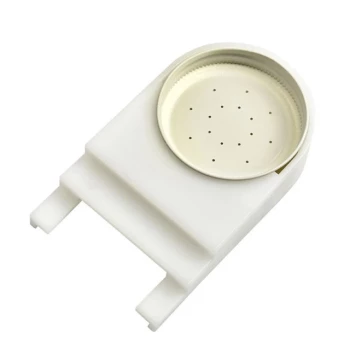
Bulk feeders ensure dosage uniformity by leveraging the honeybee's innate social behavior rather than mechanical distribution alone. These devices deliver a measured volume of a test solution to a cage of bees, triggering trophallaxis, the natural exchange of food between individuals. This biological chain reaction results in the rapid and even distribution of the substance across the entire group.
By relying on trophallaxis, bulk feeders allow researchers to achieve consistent exposure levels for every bee within a specific timeframe, satisfying the strict standardization requirements necessary for laboratory toxicology.
The Biological Mechanism of Distribution
Leveraging Natural Behavior
The effectiveness of a bulk feeder relies entirely on trophallaxis. This is the biological process where bees regurgitate and exchange liquid food with one another.
From Individual to Group
When a few bees access the feeder, they do not consume the solution solely for themselves. They act as vectors, immediately passing the solution to other nestmates in the cage.
Rapid Dissemination
This exchange happens quickly. The agent spreads through the population at a speed that ensures every bee receives a share of the test solution before the supply is exhausted.
Achieving Laboratory Standardization
Meeting Exposure Requirements
In toxicology, it is critical that every subject receives a comparable dose of the pollutant or drug being tested. Bulk feeders provide a practical way to guarantee this dose uniformity without individually force-feeding every insect.
Controlled Dosage Windows
This method works effectively within a specified timeframe. By controlling the volume and the time allowed for consumption, researchers can calculate the exact average dose per bee.
Reducing Handling Stress
Because the distribution is self-regulated by the bees, the group is subjected to less physical handling. This maintains the natural behavior required for accurate test results.
Understanding the Trade-offs
Dependence on Bee Health
Because this method relies on active trophallaxis, it assumes the bees are healthy enough to engage in social feeding. If the test group is lethargic or stressed by other factors, the distribution may become uneven.
The Importance of the Timeframe
The success of this method is bound by time. The exposure window must be long enough to allow for complete exchange, but short enough to prevent the degradation of the test solution.
Ensuring Data Integrity in Bee Toxicology
To maximize the accuracy of your toxicology studies, consider how the feeding mechanism aligns with your specific experimental goals.
- If your primary focus is procedural efficiency: Utilize bulk feeders to rapidly dose large groups without the labor-intensive process of individual handling.
- If your primary focus is dosage standardization: Rely on the trophallaxis mechanism to ensure every bee within the cage receives a statistically similar quantity of the test agent.
By aligning your delivery method with bee biology, you ensure that your toxicity data is both reproducible and scientifically valid.
Summary Table:
| Key Feature | Mechanism / Benefit | Impact on Research |
|---|---|---|
| Distribution Method | Trophallaxis (Social Exchange) | Rapid, even dissemination across the group |
| Consistency | Uniform exposure levels | Meets strict toxicology standardization |
| Bee Welfare | Reduced physical handling | Minimizes stress and maintains natural behavior |
| Efficiency | Batch administration | Saves labor compared to individual dosing |
| Control | Specified volume and timeframe | Accurate calculation of average dose per bee |
Elevate Your Bee Research and Operations with HONESTBEE
At HONESTBEE, we understand that precision is the foundation of success for commercial apiaries and beekeeping distributors. Whether you are conducting scientific toxicology studies requiring uniform dosage or managing a large-scale honey production facility, we provide the industrial-grade tools you need.
Our comprehensive portfolio includes:
- Advanced Machinery: From hive-making to honey-filling machines.
- Beekeeping Equipment: A full spectrum of wholesale tools and essential consumables.
- Expert Support: Solutions tailored to the needs of professional distributors and large-scale apiaries.
Ready to optimize your beekeeping efficiency? Contact us today to explore our wholesale offerings and discover how HONESTBEE can empower your business with high-quality hardware and industry expertise.
References
- Fabio Sgolastra, Ilaria Braschi. Lethal effects of Cr(III) alone and in combination with propiconazole and clothianidin in honey bees. DOI: 10.1016/j.chemosphere.2017.10.068
This article is also based on technical information from HonestBee Knowledge Base .
Related Products
- White Plastic 0.5L Beekeeping Entrance Feeder for Bees
- HONESTBEE Round Hive Top Bee Feeder for Syrup
- HONESTBEE Professional Hive Top Bee Feeder Feeding Solution
- Professional Hive Top Bee Feeder for Beekeeping
- HONESTBEE Entrance Bee Feeder Efficient Hive Front Liquid Feeding Solution for Beekeeping
People Also Ask
- How do you make an entrance feeder for bees? A Guide to Safe & Effective Hive Feeding
- How to make an entrance feeder for bees? A DIY Guide for Safe & Effective Feeding
- How does a bee entrance feeder work? A Simple Guide to Convenient Hive Feeding
- What is a bee entrance feeder and what are its drawbacks? Essential Guide to Hive Security and Feeding Efficiency
- What are the advantages and disadvantages of using an entrance feeder for bees? Balance Convenience and Hive Security.