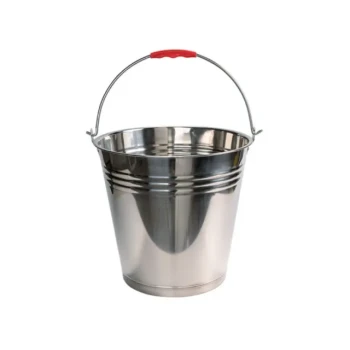
Commercial beekeepers utilize 5-gallon buckets as a primary method for feeding large quantities of sugar syrup to their colonies. These buckets typically feature lids with drilled holes and are deployed in two main ways: they are either positioned directly over the central hole of the hive's inner cover or placed on stands located outside the hives to create a communal feeding station.
Core Insight: The 5-gallon bucket method is designed for scale and speed, allowing beekeepers to rapidly deliver massive caloric resources to colonies during critical seasonal transitions without the frequent refilling required by smaller feeders.
Mechanics of Deployment
Internal Hive Feeding
The most direct method involves placing the bucket over the hole in the hive's inner cover. The holes punched in the bucket's lid allow the bees to access the syrup directly from within the hive. This method keeps the food source close to the cluster and minimizes competition from other insects.
External Stand Feeding
Alternatively, commercial operations may set these buckets on stands outside the hives. This creates an open feeding environment. While less targeted than internal feeding, it allows for faster distribution of syrup across a large apiary without opening individual hives.
Efficient Preparation and Mixing
Handling 5-gallon volumes requires a different workflow than small-scale beekeeping. Efficiency in mixing is critical when managing hundreds of gallons of syrup.
Utilizing High-Speed Mixing Tools
To dissolve large quantities of sugar quickly and consistently, commercial beekeepers often use a paddle attachment connected to a power drill. This mechanical agitation ensures the sugar stays in solution and does not settle at the bottom of the bucket.
Temperature and Measurement
Using hot water significantly aids the dissolving process. To further streamline the workflow, beekeepers often mark specific fill lines on the buckets. These visual guides indicate exactly where to fill the water and sugar levels, ensuring consistent syrup ratios without weighing ingredients for every batch.
Strategic Timing for Feeding
Feeding is not a year-round activity; it is a strategic intervention used to manipulate colony biology.
Promoting Spring Growth
Beekeepers feed syrup in the spring to stimulate the queen to lay eggs. This artificial "nectar flow" encourages rapid colony growth, ensuring the population is large enough to maximize the natural honey harvest later in the season.
Winter Survival and Scarcity
Feeding is also critical during the fall or times of nectar scarcity (dearth). The goal here is to ensure the colony creates and maintains sufficient food supplies to survive the winter months when foraging is impossible.
Understanding the Trade-offs
While 5-gallon buckets are the standard for commercial operations, they are not always the right tool for every context.
Volume vs. Manageability
The primary advantage of the bucket is volume. A 5-gallon bucket minimizes labor by reducing the number of trips required to feed a yard. However, these buckets are heavy and cumbersome to move compared to smaller feeders.
Commercial vs. Hobbyist Methods
For hobbyists, the 5-gallon approach is often overkill. Mason jars with small holes in the lids are the standard for smaller operations. Jars are easier to handle, allow for monitoring intake without lifting heavy equipment, and are sufficient for maintaining a few colonies.
Making the Right Choice for Your Goal
The decision to use 5-gallon buckets depends largely on the scale of your operation and your physical resources.
- If your primary focus is Commercial Scale: Use 5-gallon buckets with power-drill mixing to maximize labor efficiency and ensure colonies have ample stores for winter.
- If your primary focus is Hobby Beekeeping: Stick to Mason jars or smaller feeders to maintain ease of handling and precise monitoring of individual hives.
Select the feeding method that balances your operational efficiency with the specific nutritional needs of your colonies.
Summary Table:
| Feature | Internal Bucket Feeding | External Stand Feeding |
|---|---|---|
| Placement | Over hive inner cover hole | On communal stands in apiary |
| Targeting | Specific to one colony | Open to all nearby colonies |
| Protection | High (sheltered from pests) | Low (accessible by other insects) |
| Labor Level | Moderate (requires opening hive) | Low (no hive entry needed) |
| Primary Use | High-precision caloric delivery | Rapid yard-wide distribution |
Elevate Your Commercial Apiary with HONESTBEE
Managing large-scale feeding operations requires more than just technique; it requires professional-grade equipment that can stand up to the rigors of the field. HONESTBEE specializes in catering to commercial apiaries and distributors, providing a comprehensive wholesale catalog that streamlines your workflow and boosts productivity.
From heavy-duty hive-making and honey-filling machinery to high-capacity feeding tools and essential industry consumables, we provide the full spectrum of equipment needed to scale your business. Our mission is to empower commercial beekeepers with reliable hardware and honey-themed cultural merchandise that adds value to every stage of your operation.
Ready to optimize your wholesale supply chain? Contact HONESTBEE Today to Discuss Your Volume Requirements
Related Products
- 5 Gallon Pail Opener Bucket Opener Tool for Honey Bucket
- Food Grade Plastic Honey Bucket Pail for Beekeeping
- Premium Stainless Steel Honey Tank Bucket Pail with Reinforced Handle and Polished Finish
- Stainless Steel Pail Perch Bucket Bench
People Also Ask
- What is a bucket opener? The Essential Tool for Safe and Efficient Lid Removal
- Is it advisable to use a screwdriver instead of a bucket opener? Avoid Injury and Container Damage
- What are the benefits of using a bucket opener? Boost Safety & Efficiency in Your Operations
- What are the main benefits of using a bucket opener? Enhancing Safety and Preservation
- How does a bucket opener contribute to food safety and product quality? Ensure a Clean, Contaminant-Free Seal Break