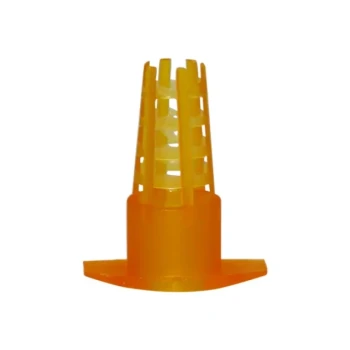
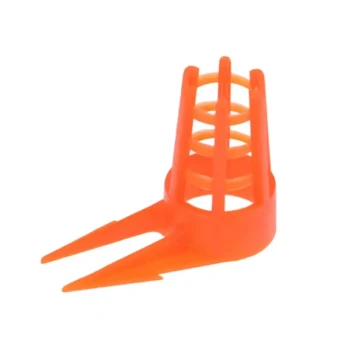
The interaction between conical openings and screw systems creates a rapid-release mechanical interlock that completely replaces the need for adhesives or complex clips in queen rearing. This specific design allows beekeepers to secure or remove an entire cell bar—typically holding 12 queen cells—into a frame in a matter of seconds, fundamentally changing the pace of apiary operations.
The core value of this system is the shift from manual, single-unit handling to rapid, batch-level processing. By utilizing a mechanical friction fit, apiaries can achieve the high-throughput efficiency required for commercial queen breeding and royal jelly production.
The Mechanics of Efficiency
The Conical-Screw Interface
The system relies on conical openings located at the ends of specialized cell bars. These openings are designed to mate perfectly with a screw positioning system installed on the rearing frame.
Rapid Batch Movement
Rather than handling individual cells, this mechanism allows the operator to manipulate a full row of units simultaneously. An entire bar of 12 cells can be snapped into place or removed instantly without tools.
Elimination of Bonding Agents
Traditional methods often require bonding individual cups to wooden bases using wax or glue. The screw and cone system utilizes mechanical pressure to hold the bar, rendering these messy and time-consuming adhesive steps obsolete.
Operational Workflow Benefits
Seamless Langstroth Integration
While the attachment mechanism is specialized, the carrier remains the standard Langstroth frame. This ensures that despite the upgraded internal mechanics, the frames still fit perfectly into standard rearing colonies for incubation and transport.
Simplified Inspection
Technicians can inspect the progress of queen cells or harvest royal jelly by simply detaching the bar. There is no need to disturb the structural integrity of the frame or risk damaging cells by prying them off glued surfaces.
Direct Molding Capability
The specialized bars often feature pre-spaced notches. This allows wax cups to be molded directly onto the bar, further streamlining the process by combining cup creation and bar preparation into a single step.
Understanding the Trade-offs
Equipment Compatibility
Adopting this system requires a commitment to specific hardware. You cannot easily mix these specialized cell bars with standard wooden frames that lack the corresponding screw positioning system.
Dependency on Precision
The efficiency of the friction fit relies on the precise alignment of the screws and the integrity of the conical openings. Wear and tear on these mechanical points over years of use could eventually reduce the stability of the hold compared to single-use adhesive methods.
Making the Right Choice for Your Goal
If your primary focus is Commercial Scale: The conical-screw system is essential for reducing labor costs, allowing you to process thousands of cells with batch-level speed.
If your primary focus is Grafting Safety: The segmented design inherent to these bars allows you to separate mature cells by bending the bar, minimizing physical shock to the developing queens.
If your primary focus is Workflow Simplicity: Utilize the direct molding features to eliminate the cup-bonding phase entirely, removing one of the most tedious bottlenecks in queen rearing.
This mechanical evolution moves queen rearing from a craft of manual assembly to a streamlined process of modular precision.
Summary Table:
| Feature | Traditional Methods | Conical-Screw System |
|---|---|---|
| Attachment Type | Wax/Glue adhesives | Mechanical friction fit |
| Handling Speed | Single-unit manual handling | Rapid batch-level movement |
| Processing Unit | Individual queen cells | Full bars (approx. 12 cells) |
| Labor Demand | High (cleaning/bonding) | Low (snap-in/snap-out) |
| Scalability | Limited by manual labor | Optimized for commercial scale |
| Integration | Custom/Variable | Standard Langstroth compatible |
Scale Your Queen Rearing Operations with HONESTBEE
Maximize your apiary's productivity with HONESTBEE’s professional-grade queen rearing equipment. We specialize in supplying commercial apiaries and distributors with the full spectrum of beekeeping tools, from specialized hive-making machinery and honey-filling systems to high-precision cell bar components.
By choosing HONESTBEE, you gain a partner dedicated to streamlining your workflow with durable hardware and essential industry consumables. Contact us today to discuss our wholesale offerings and discover how our modular precision tools can transform your commercial output.
References
- Slobodan Dolašević, Ružica Ždero Pavlović. Comparison of time consumption between traditional and innovative methods of producing Queen cell cups. DOI: 10.5937/animtrend25200d
This article is also based on technical information from HonestBee Knowledge Base .
Related Products
- Premium Nicot Style Cell Bar Holder and Queen Cell Cup Holder System
- JZBZ Langstroth Queen Rearing Frame for Beekeeping
- JZBZ Style Shipping Cell Protector for Queen Rearing Kit
- JZBZ Style Push-In Cell Protector for Professional Queen Rearing Kits
- JZBZ Type Wide Base Plastic Queen Cell Cups for Base Mounting and Queen Rearing
People Also Ask
- What roles do specialized queen cell cups play in royal jelly production? Optimize Your Hive's Secretion and Yield
- What role do specialized queen rearing tools play in developing mite-resistant honeybee stock? Master Genetic Selection
- What materials are used to make artificial queen cell cups for grafting? Beeswax vs. Plastic Guide
- Why is a diluted royal jelly solution applied to queen cell cups? Boost Acceptance in Artificial Grafting
- How does the standardized depth of queen cell cups affect larval acceptance? Boost Success with 6mm Precision